What are the physical characteristics of a snake?
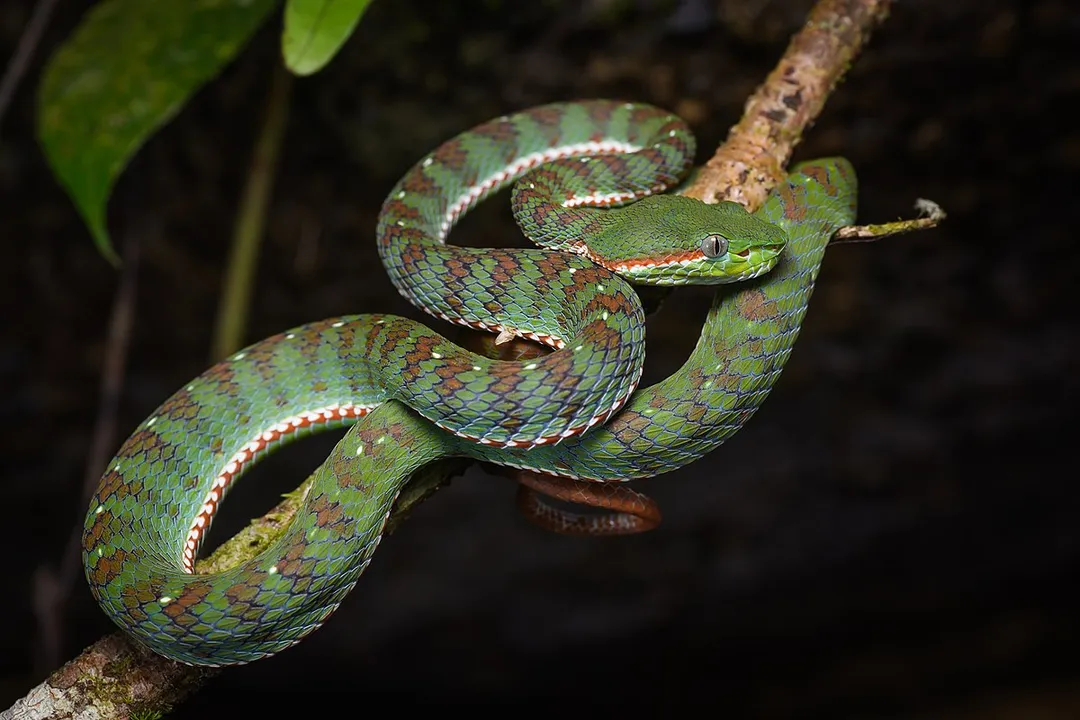
Snakes represent a highly successful group of reptiles characterized primarily by their lack of external limbs. [4][6] This defining feature, the elongated, limbless body, is supported by an impressive skeletal structure allowing for complex locomotion across various terrains. [4][9] They belong to the suborder Serpentes, a lineage that has adapted this form over millions of years. [4]
# Limbless Form
The absence of forelimbs and hindlimbs is immediately apparent, yet their movement is anything but simple. [4] Instead of relying on appendages, snakes engage specialized musculature connected to their extensive set of ribs. [4][9] The underside of the snake is covered in large, specialized scales known as ventral scales. [4] These broad scales, often contrasting with the smaller dorsal scales, provide the necessary friction and purchase against the ground, enabling serpentine motion, rectilinear movement, or sidewinding, depending on the species and substrate. [4] The sheer number of vertebrae, sometimes exceeding two hundred, combined with ribs attached to nearly every segment, grants them remarkable flexibility and the ability to exert force against surfaces efficiently. [4][9]
# Scales Cover
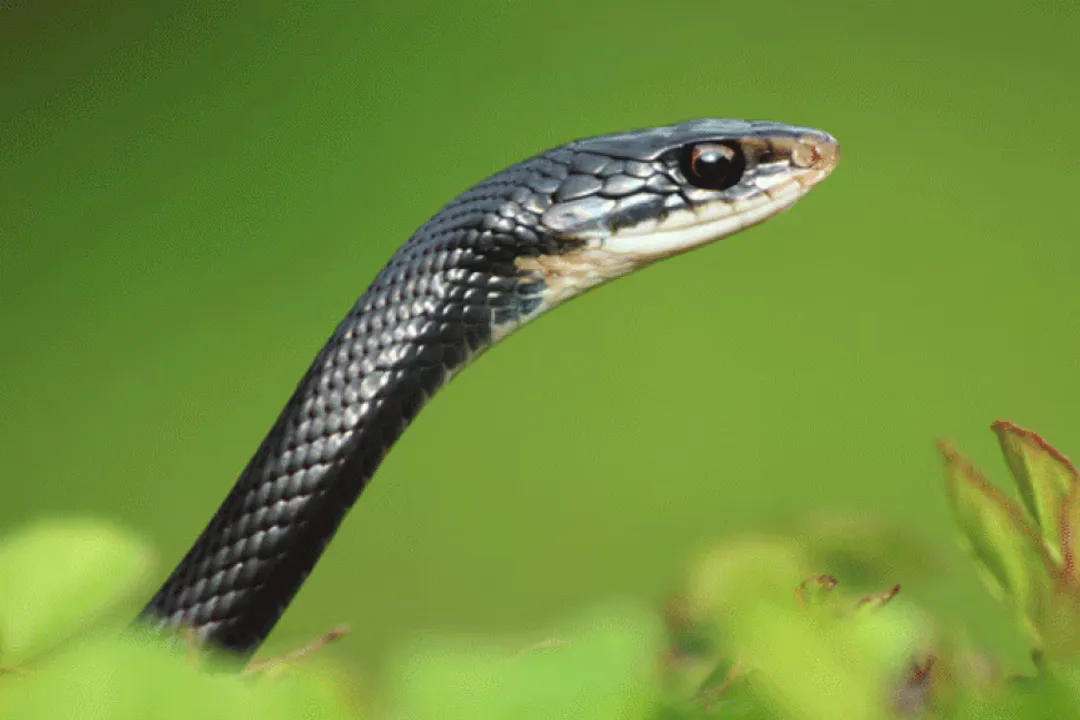
The entire body surface of a snake is covered in scales, which are essentially folds in the epidermis composed of keratin—the same protein found in human hair and nails. [4][6] This skin is periodically shed in a process called ecdysis, allowing the snake to grow and clear away parasites. [4][6] The texture of these scales varies significantly across different families and species; some snakes possess smooth, glossy scales, while others feature keeled scales, which have a distinct ridge running down the center. [7][10] The patterns and coloration resulting from these scales are vital, serving purposes ranging from cryptic camouflage that helps them blend into their surroundings to aposematism, or warning coloration, signaling toxicity or danger to potential predators. [7][10] Examining the arrangement and shape of the scales on the head and belly is often a key method used by biologists and field experts to help correctly identify different snake species. [7][10]
# Head Mobility
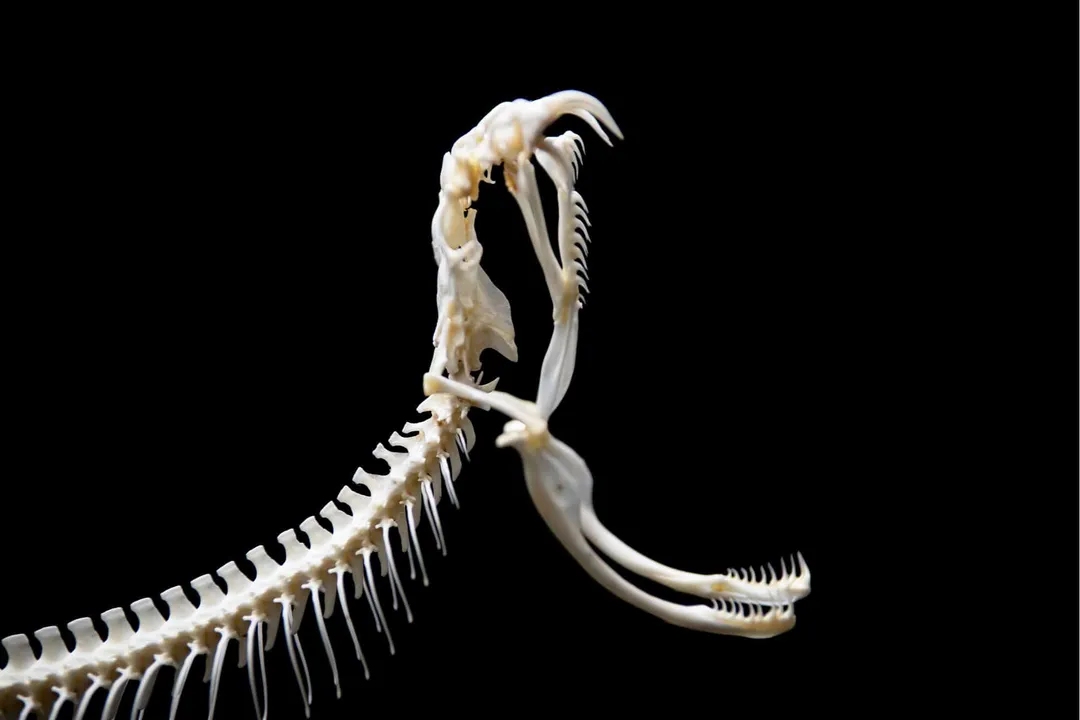
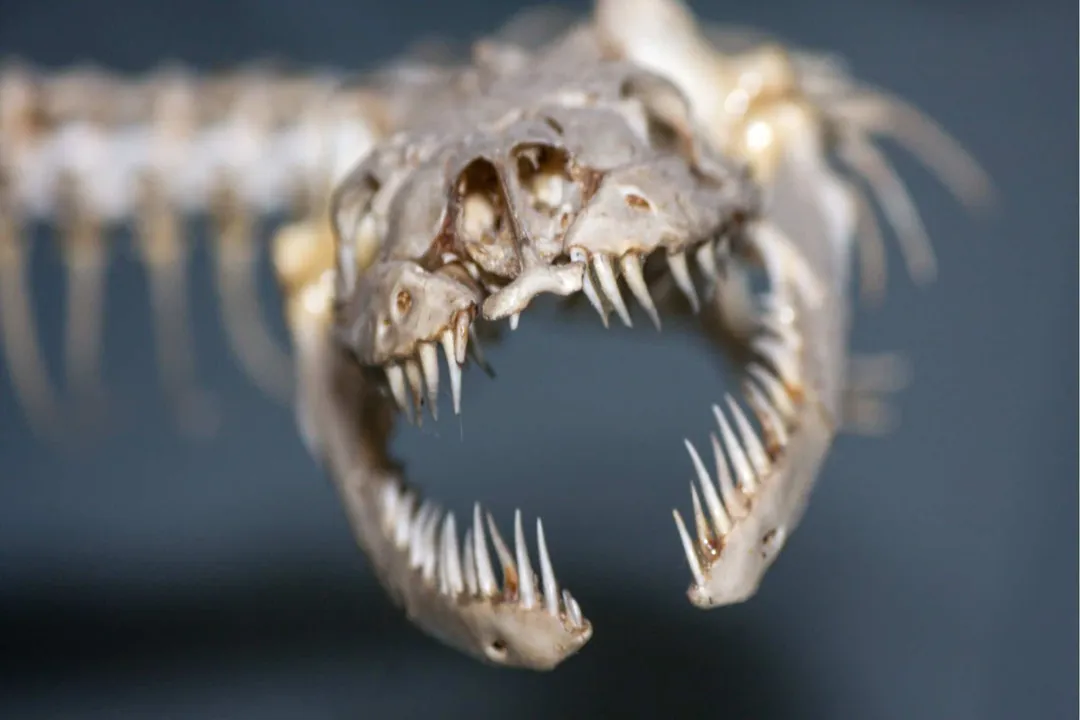
The head structure of a snake is uniquely adapted for its predatory lifestyle, particularly its feeding mechanism. [9] While the head is often distinctly shaped compared to the neck, some aquatic species exhibit a more gradual transition. [1] A critical adaptation lies in the skull and jaw structure: snakes possess kinetic skulls where the bones are loosely connected. [1] The two halves of the lower jaw are not fused at the chin joint; instead, they are joined by a highly elastic ligament. [1][9] This anatomical arrangement allows the lower jaw to spread wide and move independently, enabling the snake to unhinge its jaws and swallow prey items substantially larger than its own head. [1][4][9]
# Teeth Structure
Snakes are equipped with numerous teeth, but unlike mammals, they typically possess homodont dentition, meaning the teeth are generally uniform in shape rather than differentiated into incisors, canines, and molars. [1][9] These teeth are usually recurved, pointing backward towards the throat. [1] This backward curve is instrumental in securing slippery prey and ensuring that once a bite is taken, the prey slides down the throat rather than pulling free. [9] Venomous species have specialized, often enlarged, fangs connected to venom glands, which can be fixed or hinged, depending on the specific venom delivery system. [1]

# Sensory Input
Since snakes lack external ears and external nasal openings, their primary senses for locating food and navigating involve smell, vibration detection, and unique thermal sensing in some groups. [6] They do not possess movable eyelids; instead, the eye is protected by a transparent, fixed scale called a spectacle. [4][6] Because the spectacle is fixed, snakes do not blink, which can sometimes give them an unnerving stare. [4]
The most significant sensory tool for "tasting" the air is the forked tongue. [4][6][9] The tongue flickers rapidly, collecting airborne chemical particles which are then inserted into the Jacobson’s organ, or vomeronasal organ, located in the roof of the mouth. [4][9] This process provides the snake with a highly directional sense of smell and taste, crucial for tracking prey. [4] Furthermore, pit vipers, which include rattlesnakes, copperheads, and cottonmouths, possess specialized facial pits located between the nostril and the eye. [1][6] These pits are highly sensitive thermal receptors that allow the snake to "see" the infrared radiation (heat) emitted by warm-blooded prey, even in complete darkness. [1][6]
# Internal Features
The elongated body necessitates unique internal organ configurations. [4] A significant adaptation to this body shape is the reduction of certain internal structures. Most snakes possess only one functional lung, typically the right one, which is significantly elongated to occupy a larger portion of the body cavity. [4][6] The left lung is usually rudimentary or entirely absent. [4] This physiological compromise frees up space within the constricted torso. Moreover, the liver, which is long and slender, is situated toward the front of the body, followed by the intestines. [4]

# Size Range
The sheer physical diversity in size across the approximately 3,900 known species of snakes is astounding. [6] Some species, like the Barbados threadsnake, remain thread-like, measuring only a few inches in length. [1] In stark contrast, the largest snakes, such as the Green Anaconda or the Reticulated Python, can reach lengths exceeding twenty feet and possess immense girth. [1][6] The specific morphology—whether extremely slender for arboreal life or heavily built for ambush hunting—is directly tied to the snake’s ecological requirements and typical prey size. A slender snake requires more frequent, smaller meals to maintain energy, whereas a heavy-bodied constrictor can consume a massive meal and survive for weeks or months between feedings. [4] This range in physical adaptation highlights the evolutionary success of the snake body plan across nearly every terrestrial environment, save for the polar regions. [6]
Related Questions
#Citations
Physical features of snakes | Britannica
Description and Physical Characteristics of Reptiles - All Other Pets
Snake Physical Characteristics: What Makes These Reptiles Unique?
Snake - Wikipedia
What do Snakes Look Like? - PetMD
Snakes Facts and Information | United Parks & Resorts - Seaworld.org
Learn How to Identify Snakes | Mississippi State University ...
Snake Characteristics | Kentucky Snake Identification
Snake Anatomy — Their Faces, Skeleton, Body, and More!
DNR: Fish & Wildlife: Snakes - IN.gov