What coloration feature often distinguishes the belly region of *Rena humilis* from its dorsal side?
Answer
The belly region is frequently described as being lighter in coloration
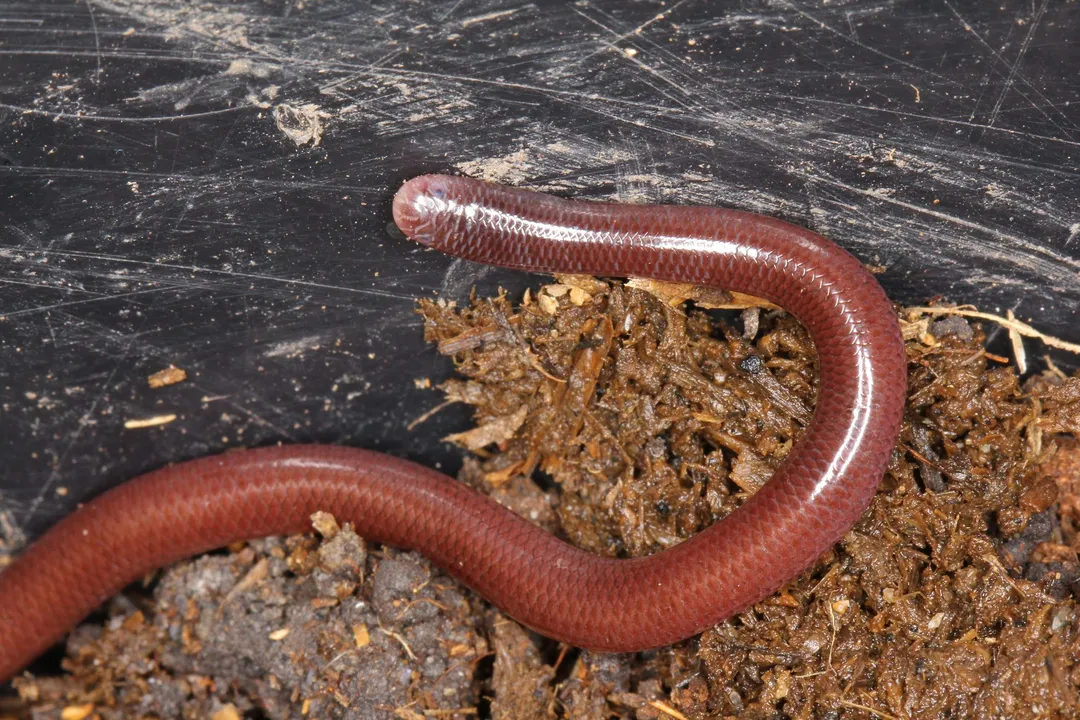
While the dorsal side of the Western Blind Snake displays a range of muted, earthy tones such as brown and gray, sometimes with dark speckling, the coloration of the underside presents a consistent difference. The belly region, or ventral side, is typically noted as being lighter in color compared to the upper (dorsal) surface of the snake. This lighter belly coloration contributes to the snake's overall camouflage when it occasionally surfaces, helping it blend with leaf litter or disturbed soil, even though its primary habitat is hidden.
Related Questions
What common objects compare to the diameter of the slender Western Blind Snake?What texture characterizes the scales of *Rena humilis* that aids its subterranean movement?What specific marking is found at the very terminus of the blunt tail of *Rena humilis*?What anatomical feature causes the eyes of the Western Blind Snake to be largely non-visible externally?What common food sources are reflected by the small mouth structure of *Rena humilis*?What coloration feature often distinguishes the belly region of *Rena humilis* from its dorsal side?Which feature distinguishes *Rena humilis* from many pit vipers regarding head shape?What is the generally reported maximum length for adult Western Blind Snakes?How do the scales of *Rena humilis* compare to True Blind Snakes (Typhlopidae) regarding pattern uniformity?What characteristic of the *Rena humilis* head contributes to its rudimentary profile?