Which family represents the extreme miniaturization found in wasps, measuring as little as 0.139 mm long?
Answer
Mymaridae (fairyflies)
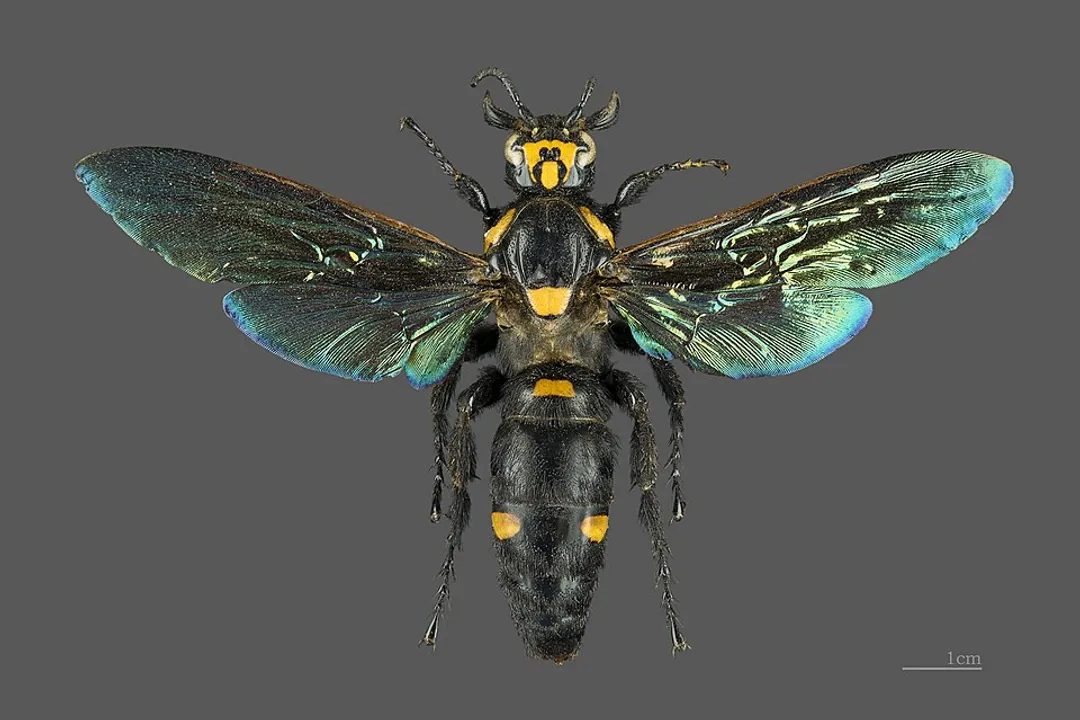
The diversity in size within the wasp lineage is vast, ranging from massive species to some of the smallest known insects. The family Mymaridae, commonly known as fairyflies, holds the record for the smallest insects in this group, with individuals measuring only about 0.139 mm in length. This extreme smallness is remarkable considering the lineage also produced giants like the Asian giant hornet and large parasitoids, suggesting that selection has repeatedly favored vastly different body plans across different clades.
#Videos
Wasp Evolution - YouTube
Related Questions
What geological period suggests the origin of the wasp lineage based on its ancestry within the broader neuropteroid branch?What taxonomic issue arises when defining the group solely as 'wasps' (Apocrita excluding ants and bees)?Which family represents the extreme miniaturization found in wasps, measuring as little as 0.139 mm long?What evolutionary process, characterized by a significant reduction in body size, impacted ancestral wasps in the Mid-Triassic?What specialized mechanism have several lineages of endoparasitoid wasps co-opted to ensure the successful development of their progeny within a host?According to newer phylogenomic analysis of the *Polistinae + Vespinae* ancestor, what key feature was likely present at the beginning of eusociality?Which specialized group of wasps actively gathers pollen inside their bodies, acting as effective pollinators for plant families like *Penstemon*?What major finding challenges the traditional view regarding the origin of sociality within the Vespidae family, based on modern phylogenomic data?What distinguishes the predatory behavior of lineages like Vespidae and Crabronidae from the reproductive strategy of parasitoids like Ichneumonidae?What mechanism does the 'plasticity-first' hypothesis propose could simultaneously create specialized, less fertile females and fully developed females in an ancestral wasp?