Wasp Evolution
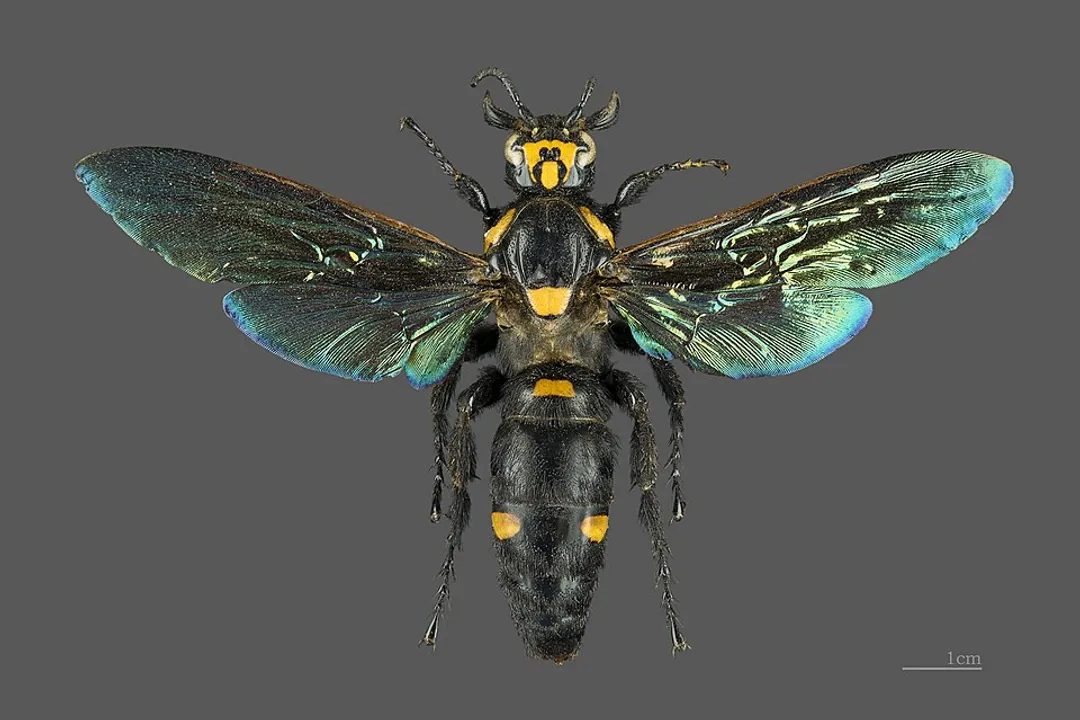
The insect order Hymenoptera, which encompasses the familiar ants, bees, and wasps, represents one of the most diverse animal groups on the planet, ranking third in species richness. Tracing the lineage of wasps reveals an ancestry that reaches deep into the geological past, intertwined with the very beginnings of complete metamorphosis. Current fossil evidence suggests that the ancestors of wasps, along with their close relatives, the snakeflies and alderflies, belong to the broader neuropteroid branch of the insect family tree. This places the origin of the wasp lineage no earlier than the Late Permian period.
# Deep Roots
The earliest fossil evidence pointing directly to the wasp lineage appears later, in the Mid-Triassic period, approximately 240 million years ago. Intriguingly, these ancestral wasps were often very small creatures. Paleontological findings suggest these early insect groups experienced a profound "miniaturization bottleneck," where a significant reduction in body size shaped their subsequent evolution and body structure. The broader group that contains wasps, bees, and ants—the suborder Apocrita—emerged later, likely during the Jurassic, and had already diversified into many of the modern superfamilies by the Cretaceous period.
The Hymenoptera order as a whole is estimated to have evolved between $281$ and $310$ million years ago, with the oldest known fossils resembling modern sawflies (Symphyta). Sawflies, which lack the narrow waist characteristic of true wasps, are generally considered ancestral to the rest of the order.
# Paraphyletic Line
Defining what constitutes a "wasp" is central to understanding this evolutionary picture, as the term itself describes a collection of insects that does not form a neat, single evolutionary branch, or clade. In the strict taxonomic sense, a wasp is defined as an insect belonging to the narrow-waisted suborder Apocrita, excluding ants (Formicidae) and bees (Anthophila).
Because ants and bees evolved directly from ancestors that would otherwise be classified as wasps, the group "wasps" is considered paraphyletic. This means that if you follow the lineage backward, you find a common ancestor, but that ancestor also gave rise to the bees and ants, which are taxonomically excluded from the "wasp" group. Therefore, ants and wasps are very closely related, with ants being nested within the broader structure that includes wasps.
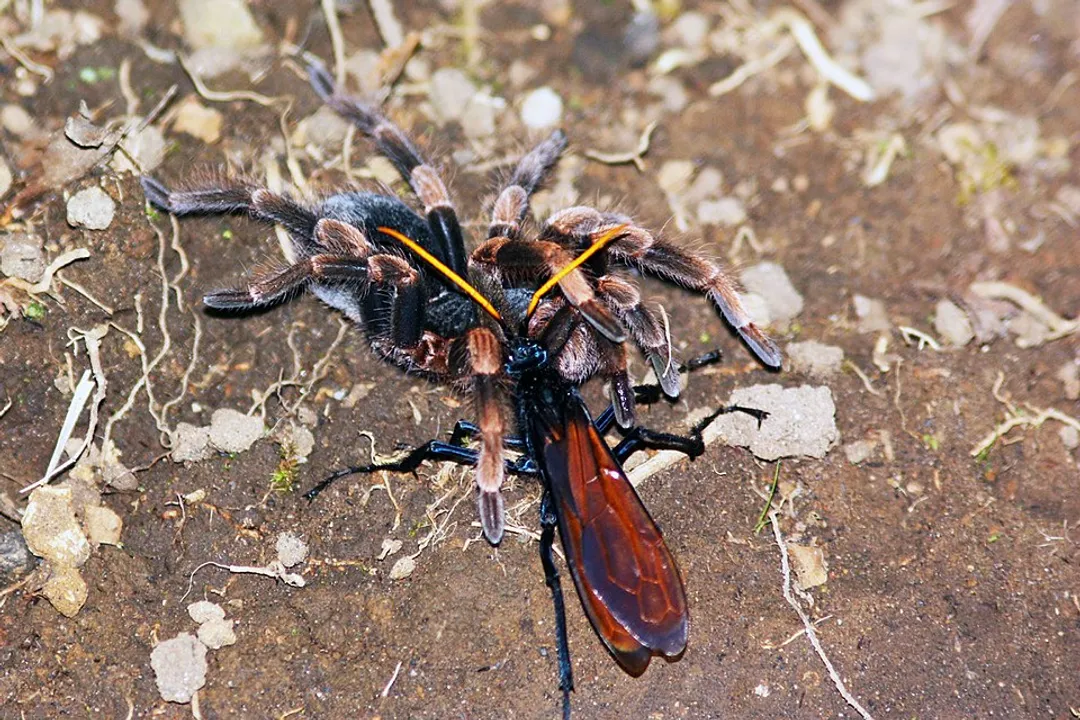
This complexity is reflected in the immense diversity of the group. Wasps are cosmopolitan, having spread across the globe except for the polar regions, encompassing well over one hundred thousand described species, with many more awaiting discovery. Size variation is staggering: the smallest known insects, found in the family Mymaridae (fairyflies), measure as little as long, while the largest social wasp, the Asian giant hornet, can reach . It is remarkable that a lineage that experienced an early miniaturization bottleneck—leading to insects smaller than a period on this page—could also later give rise to the monumental tarantula hawk or the massive hornets. This historical pressure toward small size, contrasted with the subsequent evolution of giants, suggests that selection has repeatedly favored extreme body plans across different wasp clades.
# Predatory History
The lifestyle of these ancient insects laid the groundwork for the vast ecological roles observed today. The direct ancestors of bees, for instance, were predatory wasps that lived around $120$ million years ago. These ancestors, like many modern solitary wasps, sustained their developing young by hunting and paralyzing other insects, bringing the provisions back to the nest. This predatory behavior, where prey is subdued with venomous stings, remains a core characteristic of many solitary wasp families today.
The predatory/parasitoid spectrum is incredibly detailed:
- Predators: Many lineages, including Vespidae and Crabronidae, capture prey (often other insects) to provision their larvae. Some specialize, like the beewolves (Philanthinae), which hunt bees, including honeybees.
- Parasitoids: A vast number of species are parasitoids, laying eggs on or within a host arthropod; the wasp larvae consume the host, often killing it only upon pupation. The Ichneumonidae, for example, are renowned for their long ovipositors used to reach deeply hidden hosts.
- Kleptoparasites: Species like the Cuckoo wasps (Chrysididae) are nest robbers, exploiting the parental care of other wasps by laying their eggs in stocked nests.
A particularly specialized evolutionary path involves the co-option of viruses. Several lineages of endoparasitoid wasps have "domesticated" viruses, such as the Polydnaviruses (PDVs), which deliver essential virulence factors that suppress the host's immune system, allowing the wasp progeny to develop successfully. This convergence of virus domestication has happened at least three times independently within parasitoid wasps, showcasing an extreme path of evolutionary specialization.
Even outside of predation and parasitism, some wasps contribute significantly to ecosystems. While the majority do not pollinate efficiently due to a lack of specialized hairs for pollen collection, groups like the Masarinae (pollen wasps) actively gather both nectar and pollen inside their bodies, making them effective pollinators for certain plant families like Penstemon. In a specialized mutualism, the minute fig wasps (Agaonidae) are the exclusive pollinators for nearly a thousand species of fig trees, representing a tight coevolutionary bond.
# Social Shift
Evolution toward sociality is not universal among wasps. The overwhelming majority of species are solitary, where the female forages and builds nests independently for her own offspring. Sociality, marked by overlapping adult generations and cooperative brood care, is largely confined to the Vespidae family, specifically within the Vespinae and Polistinae subfamilies.
Recent sophisticated phylogenomic studies using hundreds of genetic loci have dramatically refined our understanding of this transition, overturning decades of prior assumptions. A major finding challenges the traditional view that sociality in Vespidae arose only once. Modern data suggest eusociality originated twice independently within the Vespidae family. This evidence separates the social habits of the Stenogastrinae (hover wasps) from those of the Polistinae and Vespinae.
Furthermore, the theory suggesting a smooth, stepwise ascent—from solitary life to casteless nest-sharing, and only then to eusociality—has been challenged. This older concept supported the idea that early social wasps had rudimentary castes, meaning any physiological differences between future queens and workers appeared only after adulthood (no Preimaginal Caste-Biasing, or PCB).
# Ancestral Castes
The newer phylogenomic analysis focusing on the Polistinae + Vespinae ancestor paints a different picture, suggesting that PCB was likely present at the outset of eusociality in this lineage. This implies that distinct developmental trajectories, leading to physiologically different female offspring, were established before adulthood, potentially even including morphological differences.
This finding supports the subsocial route over the polygynous family hypothesis, proposing that the evolution hinged on mother-daughter interactions and the resulting subfertility of the first cohort of daughters (the future workers). In a solitary ancestor where nutrition dictated fertility, a mother provisioning multiple offspring simultaneously could easily result in some daughters being less nourished, thus becoming naturally subfertile and predisposed to helping the mother rather than reproducing themselves.
This abrupt emergence of differentiated castes contrasts with the slow, incremental model. One mechanism proposed for this synchronized trait development is the "plasticity-first" hypothesis. Under this model, existing phenotypic plasticity—like a pre-existing mechanism for seasonal diapause (dormancy) found in bivoltine ancestors—could be co-opted. If an environmental cue (like the onset of a temperate season or resource scarcity) triggered this developmental switch, it could simultaneously create a group of specialized, less fertile females (gynes destined for diapause/queens) and a group of full-development females (putative workers), all without sequential mutations for each new caste difference. Phenotypic accommodation, where the environment shapes traits first, followed by genetic accommodation reinforcing those changes, offers an explanation for the simultaneous appearance of progressive provisioning, nest-sharing, and caste division in the ancestor of paper wasps and yellowjackets.
The continuous usefulness of wasps in pest management highlights the stability of their predatory and parasitoidal strategies over millions of years. While the evolution of sociality involved complex developmental shifts, the fundamental skill set—paralyzing prey, nesting, and laying eggs near a food source—has remained consistent for the vast majority of wasp lineages, whether they live solitarily or in large, complex colonies. Understanding these deep evolutionary pathways, from the microscopic parasitoid specialized in host manipulation to the emergence of complex societies, reveals a group of insects defined by incredible adaptability across both form and function.
#Videos
Wasp Evolution - YouTube
Related Questions
#Citations
Wasp - Wikipedia
Do ants and wasps have a close common ancestor? Why ... - Reddit
Evolution and Fossil Record of Bees - Museum of the Earth
Fossils clarify the origins of wasps and their kin: Alderfly ancestors ...
Wasp Evolution - YouTube
major evolutionary transitions in parasitic wasps - PubMed
Phylogenomic Evidence Overturns Current Conceptions of Social ...