Which Canadian park became the base for establishing disease-free conservation herds after the 1957 rediscovery?
Answer
Elk Island National Park (EINP).
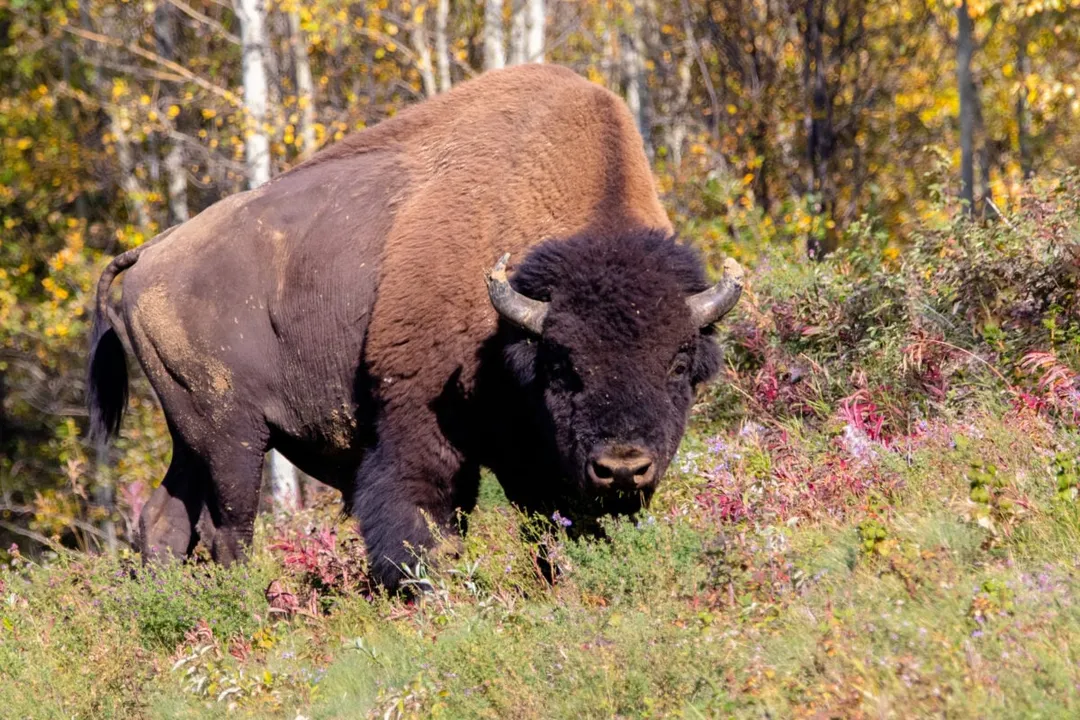
The near-annihilation of the wood bison, bringing numbers down to fewer than 300 by the early 1900s, was dramatically altered by the 1957 discovery of a small, isolated, and genetically pure herd within Wood Buffalo National Park. This discovery formed the basis for recovery efforts. Elk Island National Park (EINP) subsequently became a crucial staging area, where disease-free conservation herds were established using these surviving pure animals. These EINP populations were then utilized as the primary source animals for reintroduction initiatives across the wood bison's former range, both within Canada and internationally.
Related Questions
What metric generally distinguishes wood bison from plains bison (Bison bison bison)?Where is the peak of the shoulder hump located in the wood bison relative to the front legs?What physiological adaptation allows wood bison to survive severe seasonal food scarcity?What critical environmental challenge did the Alaskan reintroduction of wood bison face due to unique winter conditions?Which specific diseases carried by introduced plains bison spread to wood bison herds in WBNP?By what approximate percentage are wood bison typically heavier than plains bison?What is the approximate gestation period for female wood bison following breeding during the rut?When did the Canadian government relocate surplus plains bison into Wood Buffalo National Park (WBNP)?Which Canadian park became the base for establishing disease-free conservation herds after the 1957 rediscovery?What is the sense in which wood bison are considered the closest living relatives to the extinct steppe bison (*Bison priscus*)?What specific feeding advantage does the wood bison’s massive head provide when reaching forage in winter?