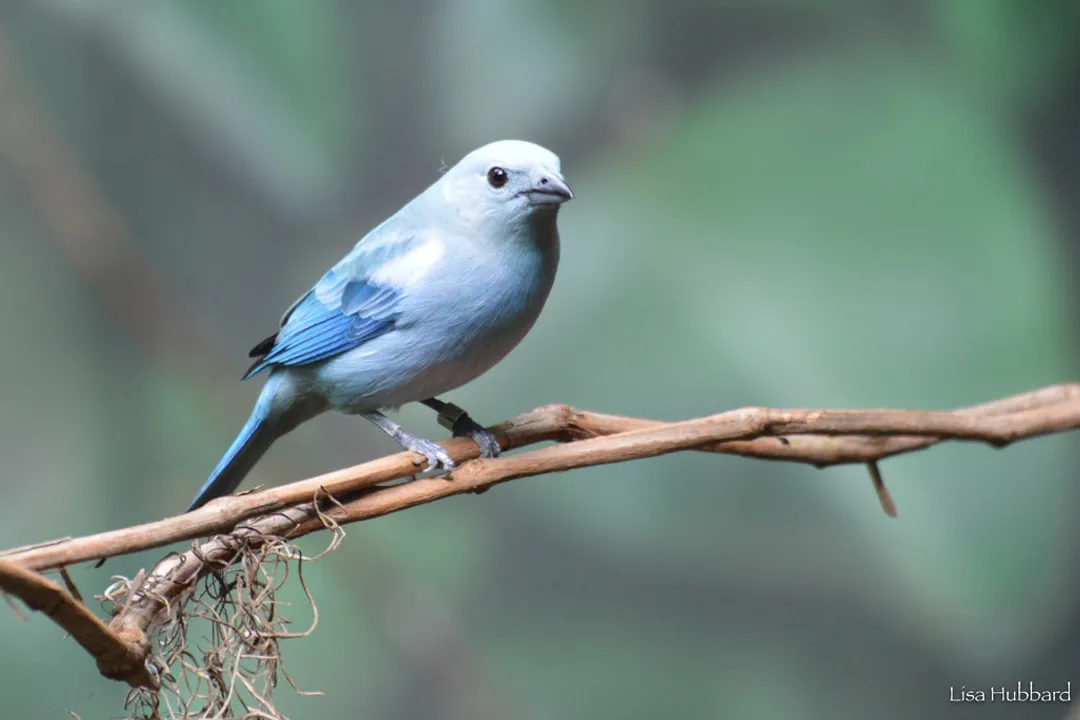
Which anatomical feature is typically described as darker, often appearing dusky or blackish-blue on the Blue-gray Tanager?
Answer
The wings and tail feathers
The wings and tail feathers of the Blue-gray Tanager are typically darker, often appearing dusky or blackish-blue, creating a contrast with the paler body.
#Videos
Stunning Blue-gray Tanager Takes a Bite | September 20, 2023
Related Questions
What is the scientific name for the bird most commonly identified as a "blue tanager"?Compared to some of its more vividly colored relatives, how is the appearance of the adult Blue-gray Tanager described?Which anatomical feature is typically described as darker, often appearing dusky or blackish-blue on the Blue-gray Tanager?What is a significant environmental factor regarding the Blue-gray Tanager's distribution?What geographical characteristic defines the Blue-gray Tanager's extensive range?What term describes the dietary preference of the Blue-gray Tanager, meaning its diet relies heavily on fruit?What specific foraging behavior involves catching insects in short, acrobatic sallies into the air?What evolutionary trait does the species' comfort around human habitation suggest?What feature on the Blue-gray Tanager's underparts can be crucial for identification when viewing the bird from below?Which two specific zoos are mentioned as having featured the Blue-gray Tanager in their exhibits?