Where is the Blue-gray Tanager observed to be more common than in primary, undisturbed forest?
Answer
Secondary forest resulting from slash-and-burn agriculture followed by abandonment
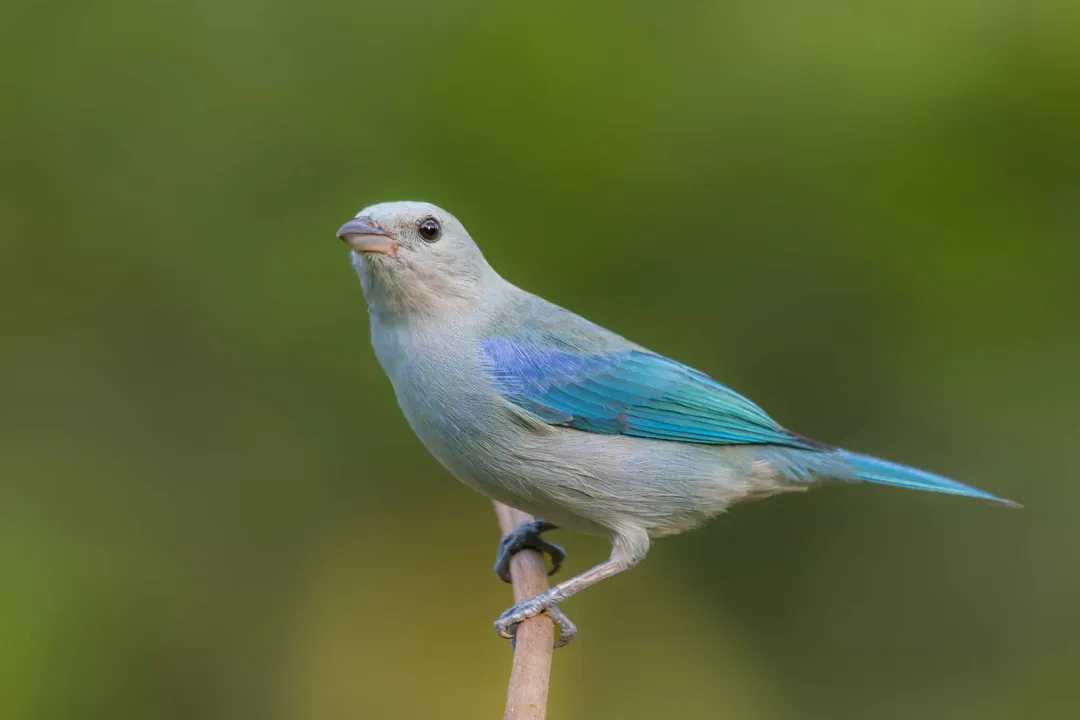
Studies observing birds in the Brazilian Amazon revealed that the Blue-gray Tanager species is more common in secondary forest resulting from slash-and-burn agriculture followed by abandonment than it is in primary, undisturbed forest.
Related Questions
What is the current IUCN conservation status for the Blue-gray, Blue-backed, Blue-necked, and Blue-capped Tanagers?What is the estimated global population size for the Blue-gray Tanager?Where is the Blue-gray Tanager observed to be more common than in primary, undisturbed forest?What is identified as the major stressor for the high-altitude specialist, the Blue-capped Tanager?What specific human impact is noted as a threat to the Blue-necked Tanager, despite its wide distribution?How does the Blue-gray Tanager's reaction to human disturbance contrast with the Blue-capped Tanager's?Which genus does the Blue-backed Tanager belong to, making it the sole member of that group?What is the expected lifespan of the Blue-capped Tanager in the wild?What is the primary identified threat noted for the highly adaptable Blue-gray Tanager?At what approximate elevation range, in meters, is the Blue-capped Tanager primarily found in the Andes?