What are the characteristics of the blue-gray tanager?
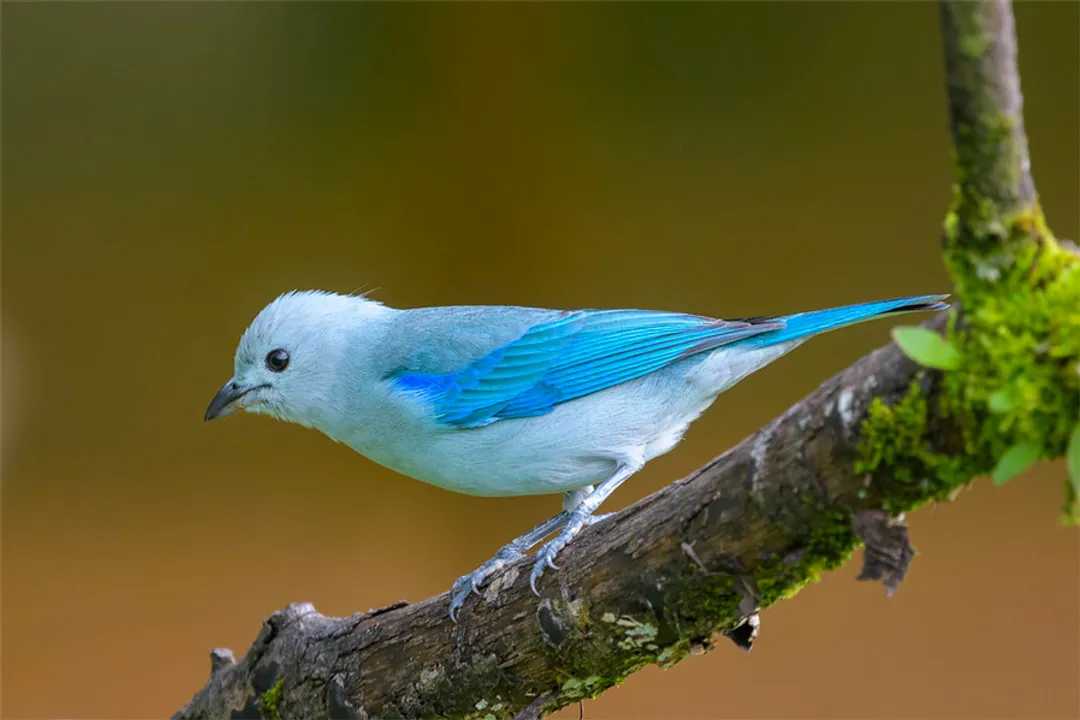
The Blue-gray Tanager presents a rather understated elegance when compared to some of its flashier tropical relatives. While the name suggests a simple coloration, observing this bird in good light reveals a creature far more nuanced than its title implies. This is one of the most widespread and familiar tanagers found across the Americas, easily identifiable once you know what features to look for, even if its primary color palette is muted compared to, say, a Scarlet Tanager. [1][3] For many birdwatchers across its extensive range, spotting this species is a common occurrence, often in the very backyard garden, suggesting an affinity for human habitation that sets it apart from many deep-forest specialists. [7]
# Plumage Details

The defining feature of the Thraupis episcopus is, naturally, its coloration, which leans heavily toward various shades of pale blue and gray. [1][3] The majority of the body plumage is often described as a soft, smoky blue-gray. [3] However, this base color is rarely uniform across the entire bird. The head can often appear slightly darker or duskier than the back and underparts. [3] Looking closely, the wings and tail feathers tend toward blackish, sharply edged with that signature blue, providing contrast when the bird is perched or flying. [3] The throat and chest tend to be the palest areas, sometimes appearing almost whitish or a very light, washed-out blue. [3]
Perhaps the most crucial field mark, which helps distinguish it even in poor lighting or from a distance, is the striking white eye-ring. [1][2][3][7] This ring encircles the eye, creating a distinct, bright punctuation mark against the otherwise dusky or gray feathers of the face. [3] It’s a small detail that makes a big visual difference. The bill is entirely black, short, and somewhat stout, appropriate for a diet that mixes fruit and insects. [3] Similarly, the legs and feet are dark gray or blackish. [3] For those observing younger birds, the juvenile plumage is noticeably duller; youngsters often appear more grayish or washed-out overall, lacking the crispness of the adult blue tones. [3] An interesting point for observers is that the male and female birds look remarkably alike, which simplifies identification once you are certain of the species, as you don't need to look for secondary sexual characteristics in the colors. [3]
If you are viewing this bird in deep shadow, where the true blue tones are lost, focusing on the size—it’s a medium-sized tanager, generally around 18 centimeters in length—and that bright, unmistakable white eye-ring will confirm your identification long before you can appreciate the subtle blue highlights on its wings. [4]
# Range Habitat
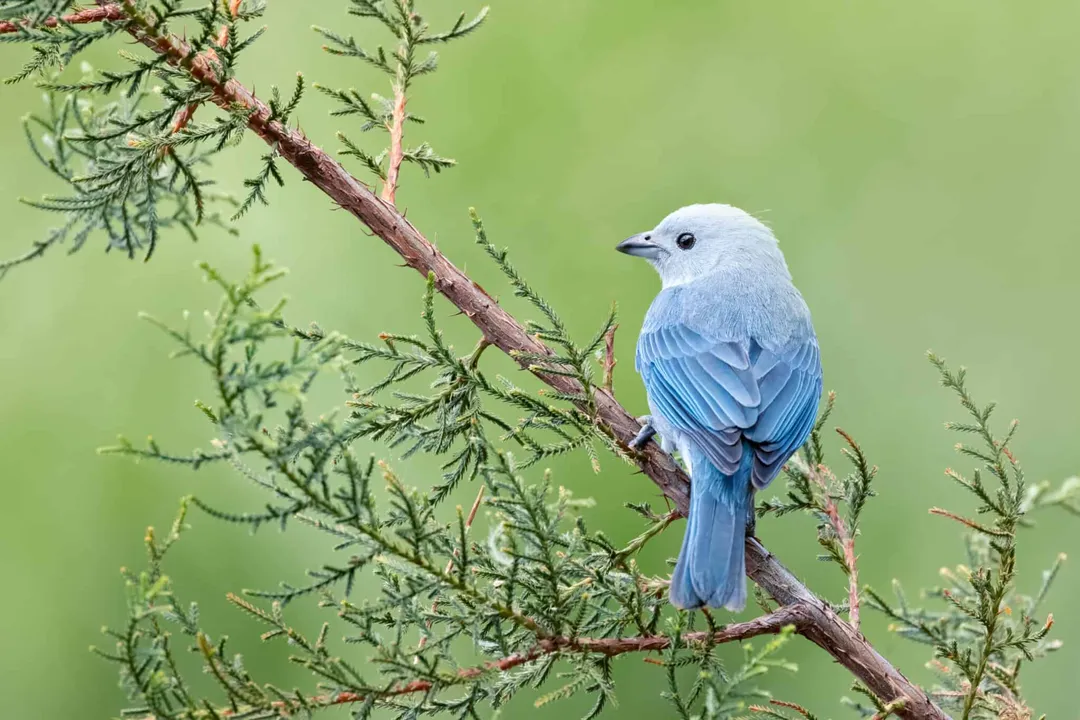
The geographical reach of the Blue-gray Tanager is vast, covering a significant portion of the Americas from south of the Tropic of Cancer down toward the southern cone of South America. [1] Specifically, its distribution stretches from southern Mexico, through Central America, and then continues south along the Andean foothills, reaching as far as northwestern Argentina and Uruguay. [1] This broad expanse means that birders in locations as diverse as Costa Rica, Colombia, Venezuela, Ecuador, and Brazil are likely to encounter them. [1]
This wide range speaks volumes about their environmental flexibility. Unlike many colorful tanagers that are tied strictly to primary, undisturbed rainforests, the Blue-gray Tanager thrives in disturbed and open habitats. [1][7] They are frequently found in open woodlands, at forest edges, and, perhaps most commonly, in areas modified by humans: gardens, parks, groves, and even suburban settings. [1][3][7] This preference for semi-open country and proximity to human settlements is a significant characteristic. In fact, in many urban centers within their range, they may serve as the most common or easily visible tanager species, acting as a kind of 'urban sentinel' for local birdwatchers who might otherwise have to venture deep into wilder areas to spot other members of the family. [1] Their ability to adapt means that changes in land use, such as clearing forest for agriculture or development, may not always lead to local population declines, unlike for more habitat-specialized species.

# Diet Foraging
The feeding habits of the Blue-gray Tanager highlight its versatility as a consumer of both plant and animal matter. [3] Primarily, these birds are frugivorous, meaning fruit forms a major component of their diet. [1][3] They consume a wide variety of berries and small fruits, often exhibiting no hesitation in feeding on the fruits of introduced or ornamental plants found in gardens and parks, alongside native species. [1]
However, to support their energy needs, especially during the demanding breeding season, they supplement their fruit intake with insects. [1][3] This mixed diet allows them to be opportunistic feeders, adjusting what they eat based on seasonal availability. Their foraging style is generally active; they move quickly through the middle and upper canopy layers, peering or probing for food. [1] They are not typically ground feeders, preferring to work the branches and foliage. [1] Observing them can sometimes be frustrating for those hoping for a prolonged view, as they often flit from perch to perch, consuming a berry or snatching an insect before moving on quickly. [1]
# Behavior Sociality
Blue-gray Tanagers are generally observed in pairs or small family groups, though they can also join mixed-species foraging flocks, a common behavior among Neotropical passerines. [1][3] They are noted for being quite bold and relatively unafraid of humans, especially in areas where they are accustomed to people, such as urban parks or zoo settings. [7] This lack of pronounced shyness makes them easier to study and observe than some other species that retreat immediately upon detecting a person nearby. [7]
Their vocalizations are also a key characteristic for identification. The typical song is not melodic in the traditional sense but is described as a simple, rapid series of high-pitched chirps or trills. [1][3] It can often sound somewhat buzzy or wheezing in quality. [3] They are active singers, especially during the breeding season, and these short, somewhat grating calls are often the first indication of their presence before the bird is sighted. [1]
# Nesting Habits
When it comes to reproduction, the Blue-gray Tanager shows a strong preference for secure cavities for nesting. [1][3] This behavior often leads them to utilize abandoned woodpecker holes, but they are also quite ready to adopt artificial nest boxes placed by humans. [1][3] They form monogamous bonds, typically remaining with a single partner for breeding. [1] The clutch size is relatively small, usually consisting of two to four eggs. [1] The use of cavities offers a degree of protection against predators compared to open-cup nests, which is a beneficial strategy given their wide exposure in semi-open habitats. A curious point for observers is noticing how readily they utilize man-made structures; in areas where natural holes might be scarce due to intensive tree removal, a well-placed nest box can become an invaluable resource for local breeding pairs. [3]
# Popularity Status
The abundance and wide distribution of the Blue-gray Tanager mean that, globally, it is not considered threatened. The International Union for Conservation of Nature (IUCN) lists its status as Least Concern (LC). [1] This classification stems from its extremely large geographic range and its apparently large and stable population, which seems capable of accommodating habitat changes across its territory. [1]
Despite its common status, it remains a popular bird to keep in aviculture or observe in zoological settings, which attests to its visual appeal despite its muted palette. [2][7] Zoos, such as the Louisville Zoo and the Cincinnati Zoo, have housed this species, showcasing it as a representative of the Neotropical avifauna. [2][7] This sustained interest, even among common species, confirms that beauty in the bird world isn't solely dependent on vibrant reds or dazzling greens; the subtle, soft tones of the Blue-gray Tanager hold their own appeal for bird lovers across its many habitats. [5]
Related Questions
#Citations
Blue-gray Tanager Thraupis episcopus - Birds of the World
Tanager, Blue-gray - Louisville Zoo
Blue-gray tanager - Wikipedia
Blue Tanager (Blue-Grey Tanager) - Thraupis episcopus - A-Z Animals
Blue-gray tanager bird species description - Facebook
Meet the Colorful Birdorable Blue-gray Tanager: A Tropical Delight!
Blue-Grey Tanager - Cincinnati Zoo & Botanical Garden
Tanagers | Smithsonian's National Zoo and Conservation Biology ...
Blue-Gray Tanager - Stay connected with nature and your friend