Where might an adult spotted Stegostoma tigrinum typically be located compared to its striped juvenile counterpart?
Answer
Along the outer reef slopes or deeper sandy plains
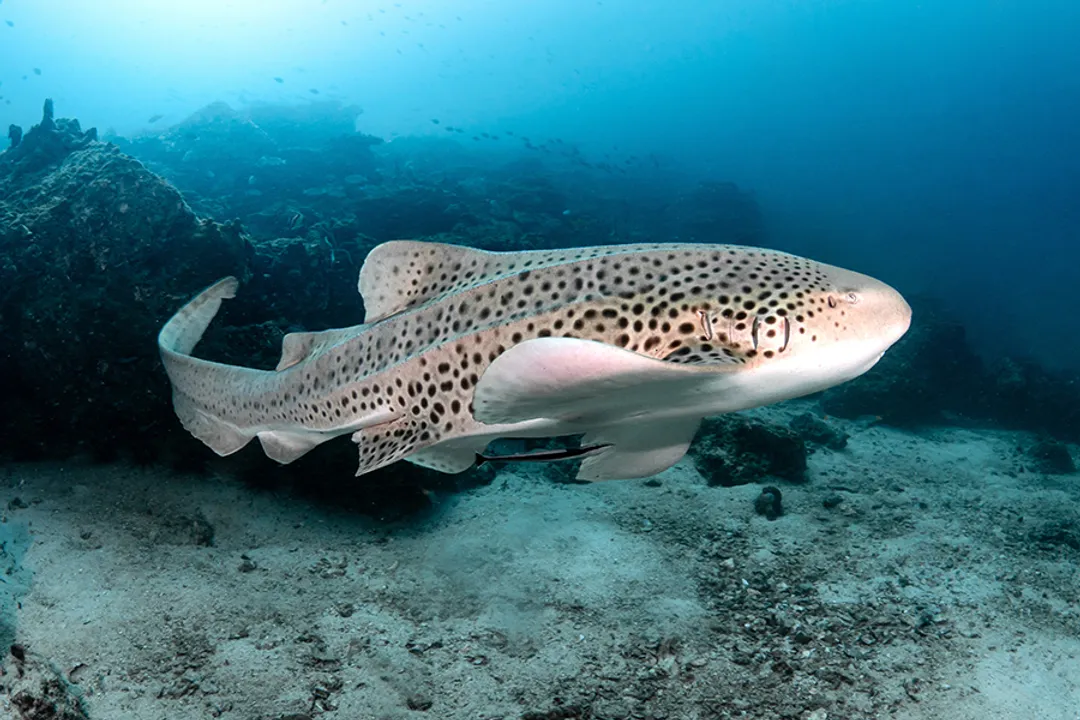
There is a noticeable correlation between the maturity level of the zebra shark, its physical appearance (spotted adult vs. striped juvenile), and its preferred spatial location. Juveniles are often associated with shallower, more protected nursery environments, such as very shallow reef flats or sheltered lagoons, which offer safety for recruitment. Conversely, as the sharks mature into the spotted adult phase, they tend to utilize habitats that are slightly more exposed or deeper. This often means they can be found along the outer reef slopes or across the deeper sandy plains within their established tropical habitat belt.
Related Questions
How does the pattern of adult Stegostoma tigrinum contrast with its juvenile phase?Since the zebra shark is distinctly benthic, where will one typically not find Stegostoma tigrinum cruising?Which critical location, known for its reef complexes, supports healthy populations of Stegostoma tigrinum along its northern and eastern coastlines?What combination of substrates do preferred habitats for the benthic zebra shark include?What range, in meters, do researchers frequently note for common sightings of the zebra shark during foraging activity?What significant geographic role does the Malay Archipelago serve regarding Stegostoma tigrinum distribution?Observing a striped zebra shark suggests that search patterns should focus on what type of environment, reflecting a healthy recruitment zone?What global conservation status has the IUCN assigned to the species Stegostoma tigrinum?Which body of water is specifically mentioned as a location where zebra shark populations are known to exist within the Indian Ocean basin?Where might an adult spotted Stegostoma tigrinum typically be located compared to its striped juvenile counterpart?