Observing a striped zebra shark suggests that search patterns should focus on what type of environment, reflecting a healthy recruitment zone?
Answer
Shallower, sheltered inner reefs or lagoon environments
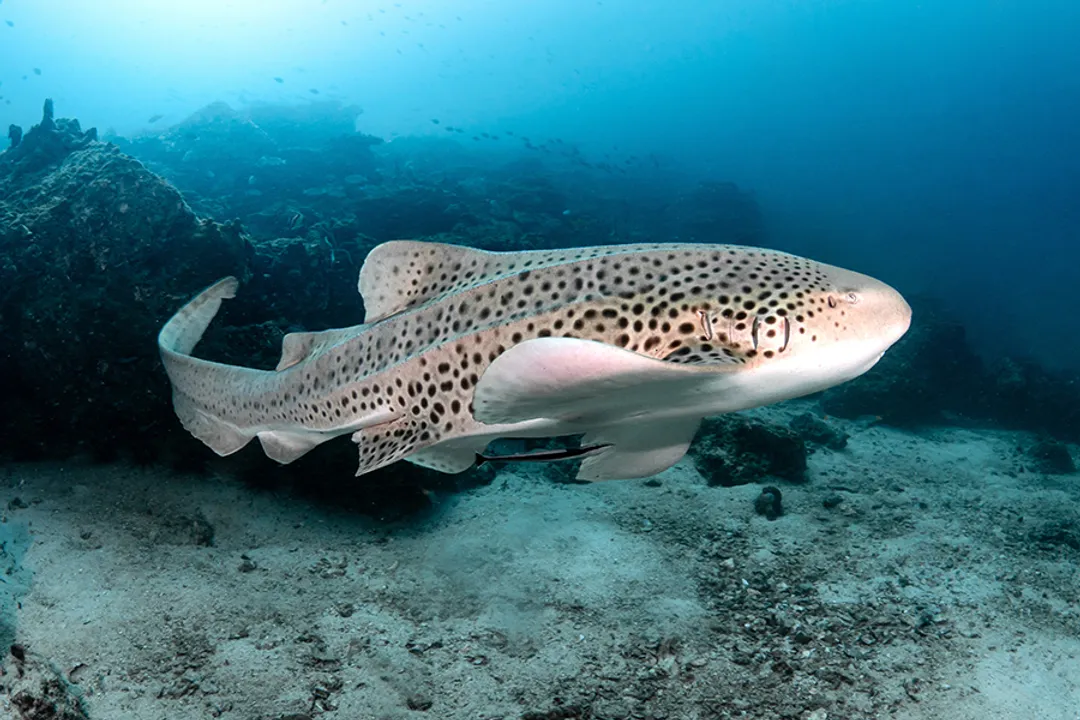
The appearance of a shark directly correlates with its likely location due to life stage habitat shifts. A striped individual confirms the presence of juveniles, which generally utilize shallower, more protected areas functioning as nursery grounds. These protected nurseries often manifest as sheltered lagoon environments or very shallow reef flats. Therefore, if striped individuals are observed, it indicates a healthy recruitment process nearby, suggesting that exploring more sheltered inner reef areas might yield greater success for encounters than searching deeper, more exposed habitats favored by adults.
Related Questions
How does the pattern of adult Stegostoma tigrinum contrast with its juvenile phase?Since the zebra shark is distinctly benthic, where will one typically not find Stegostoma tigrinum cruising?Which critical location, known for its reef complexes, supports healthy populations of Stegostoma tigrinum along its northern and eastern coastlines?What combination of substrates do preferred habitats for the benthic zebra shark include?What range, in meters, do researchers frequently note for common sightings of the zebra shark during foraging activity?What significant geographic role does the Malay Archipelago serve regarding Stegostoma tigrinum distribution?Observing a striped zebra shark suggests that search patterns should focus on what type of environment, reflecting a healthy recruitment zone?What global conservation status has the IUCN assigned to the species Stegostoma tigrinum?Which body of water is specifically mentioned as a location where zebra shark populations are known to exist within the Indian Ocean basin?Where might an adult spotted Stegostoma tigrinum typically be located compared to its striped juvenile counterpart?