Where is the birthplace of the Zebu firmly rooted according to archaeological evidence?
Answer
Indian subcontinent
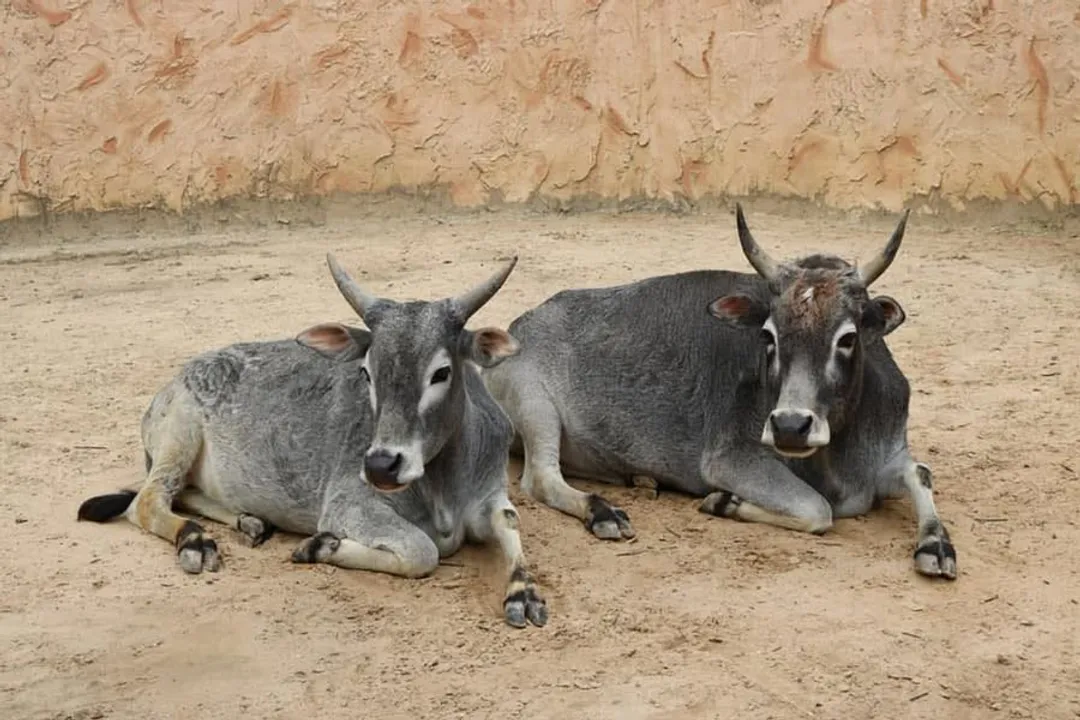
Archaeological findings firmly anchor the origin and domestication of the Zebu to the Indian subcontinent, a region that is now primarily modern-day India. This area provided the challenging initial environmental pressures, such as extremely high ambient heat and significant loads of tropical parasites, which historically drove the natural selection favoring the specific traits Zebu are known for. These indigenous traits include superior heat tolerance and inherent resistance to various endemic tropical diseases, establishing a deep, long-standing connection between the animal and its ancestral South Asian homeland.
Related Questions
What is the scientific designation for Zebu cattle, recognized by their shoulder hump?Where is the birthplace of the Zebu firmly rooted according to archaeological evidence?Which physiological feature allows Zebu efficient evaporative cooling compared to European breeds?What is the primary confirmed composition of the Zebu hump, rather than a traditional belief?Which specialized Zebu derivative was developed primarily in the US Gulf Coast states?Which Pennsylvania zoo houses Zebu in its Children's Adventure area?Which continent received Zebu cattle via a significant dispersal route moving westward from their origin?Which South American country is noted as a massive hub utilizing Zebu extensively in its cattle ranching sector?How does the Zebu coat contribute to reducing heat absorption from solar radiation?Miniature Zebu are often concentrated in what type of North American land use setting?