Where do Costa's Hummingbird sightings become noteworthy and arguably rare?
Answer
Once they venture beyond southeastern California, southern Nevada, Arizona, and Utah boundaries
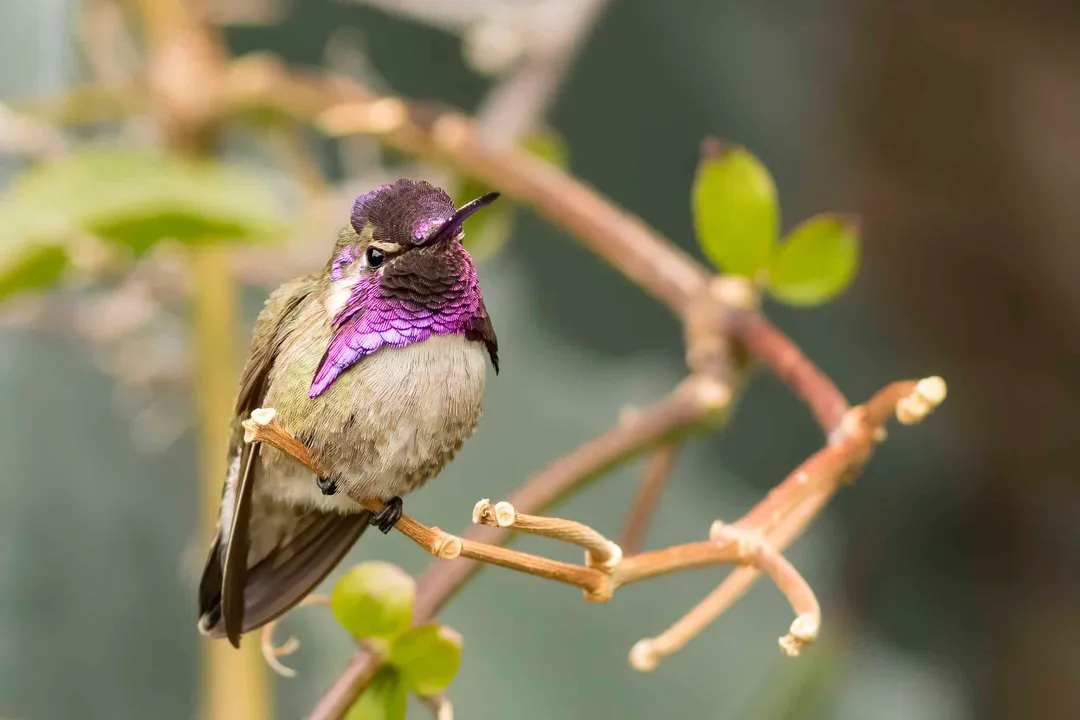
The perception of rarity for the Costa's Hummingbird is intrinsically linked to geography. Within its specialized and restricted core range—which encompasses parts of southeastern California, southern Nevada, southern Arizona, and southwestern Utah—the bird is a relatively common sight during the breeding season. However, the moment this species moves outside these established geographic and seasonal boundaries, such as being spotted in locations like the Willamette Valley of Oregon, the sighting immediately becomes noteworthy, significant, and is considered rare because the bird is far outside its expected distribution pattern.
Related Questions
What feature easily identifies a male Costa's Hummingbird?Which habitats do Costa's Hummingbirds favor in their typical breeding grounds?Where do Costa's Hummingbird sightings become noteworthy and arguably rare?How does the abundance of Anna's Hummingbird compare in many West Coast areas?What key feature helps distinguish female Costa's Hummingbirds from Black-chinned Hummingbirds?What distinctive sound does a Costa's Hummingbird produce during its steep dive?How are appearances far outside the expected geographic range of Costa's Hummingbirds classified?Which native flowering shrubs do Costa's Hummingbirds especially favor when in bloom within their arid territories?What primary factor makes the Costa's Hummingbird population vulnerable despite general "Least Concern" status?Which interior regions form the core summer residency range for Costa's Hummingbirds?What causes the intense purple coloration seen in the male Costa's Hummingbird gorget?