Are Boelen's pythons rare?
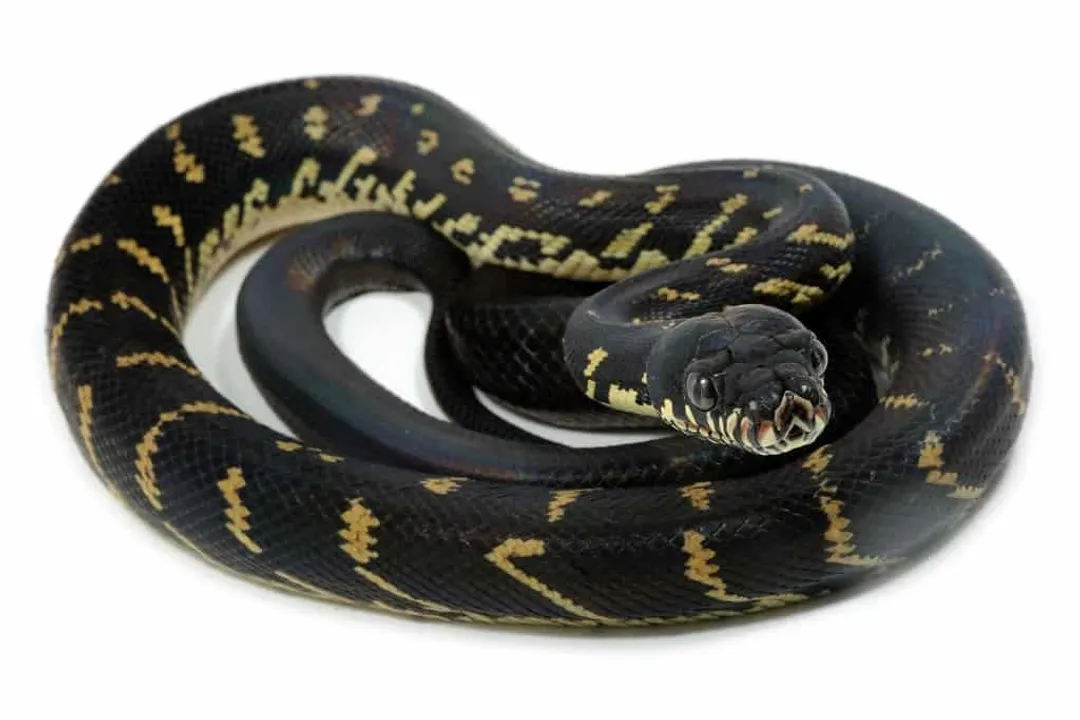
The striking serpentine beauty known as Boelen's python immediately brings forth questions about its availability, largely because glimpses of this creature online often come with the disclaimer that it is among the rarest snakes globally. This perception isn't unfounded; Simalia boeleni is certainly not a common sight in hobbyist collections or even frequently documented in its natural environment. [2] Its allure stems from a magnificent appearance contrasted sharply with its near-elusive nature in the world outside its remote home range.[1]
# Visual Profile
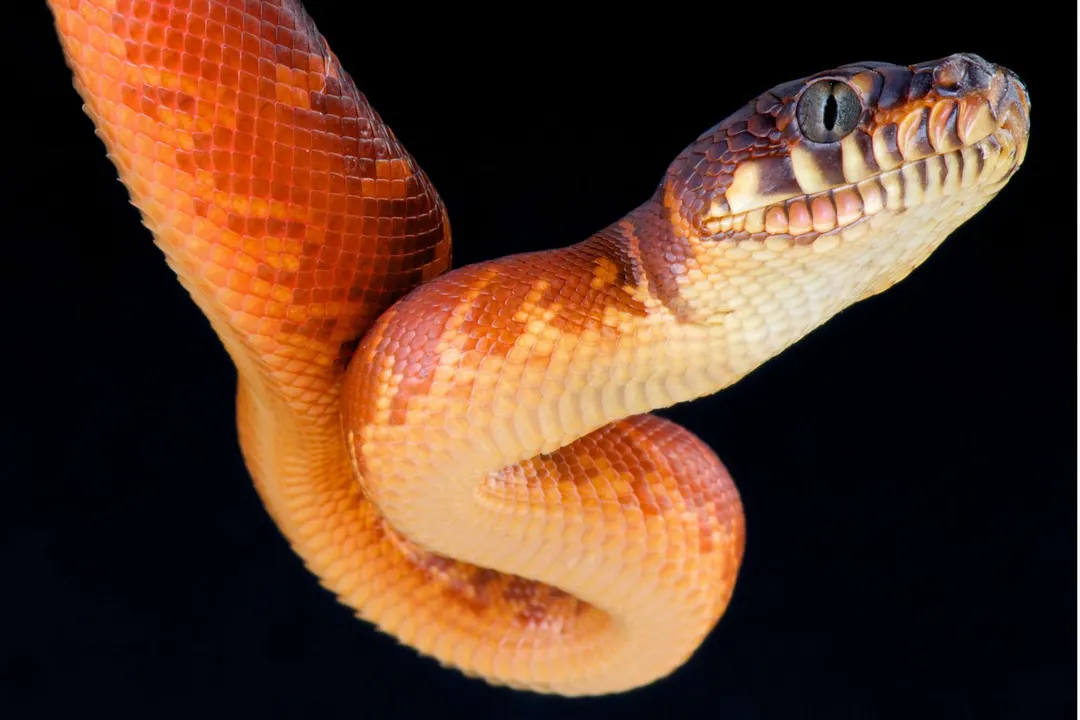
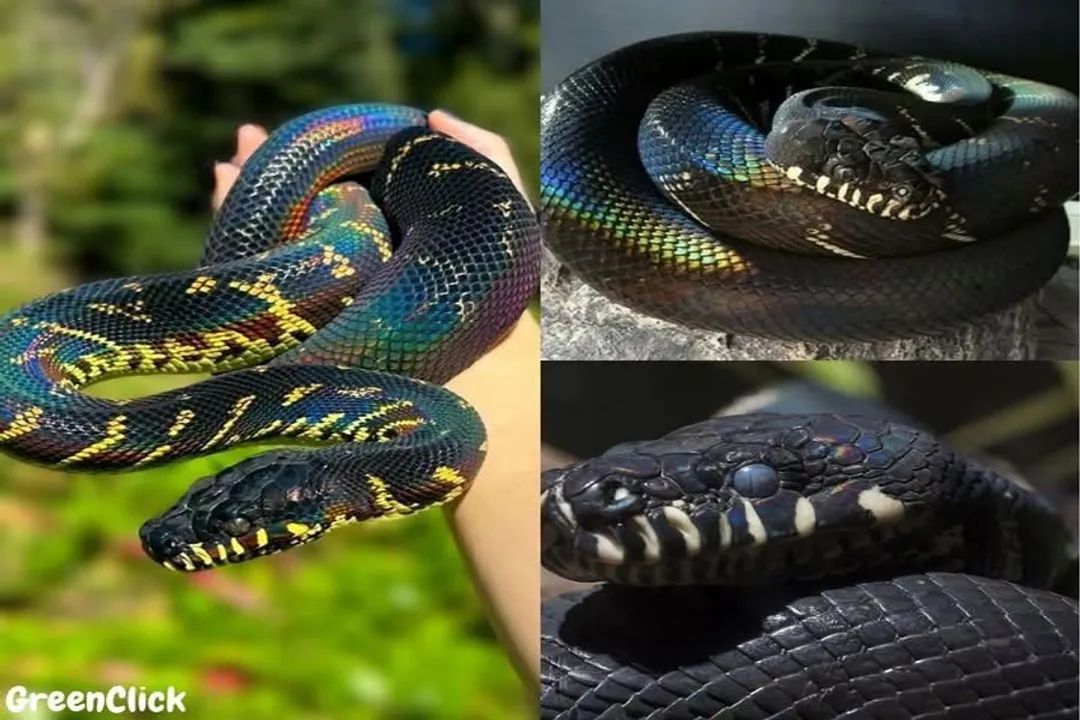
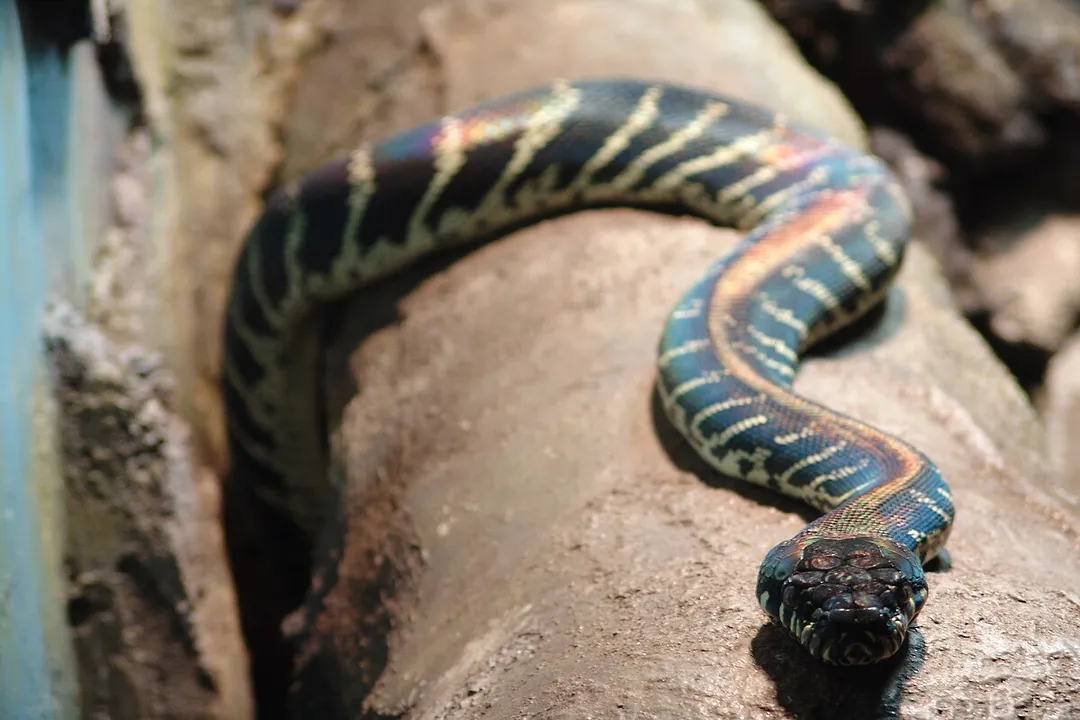
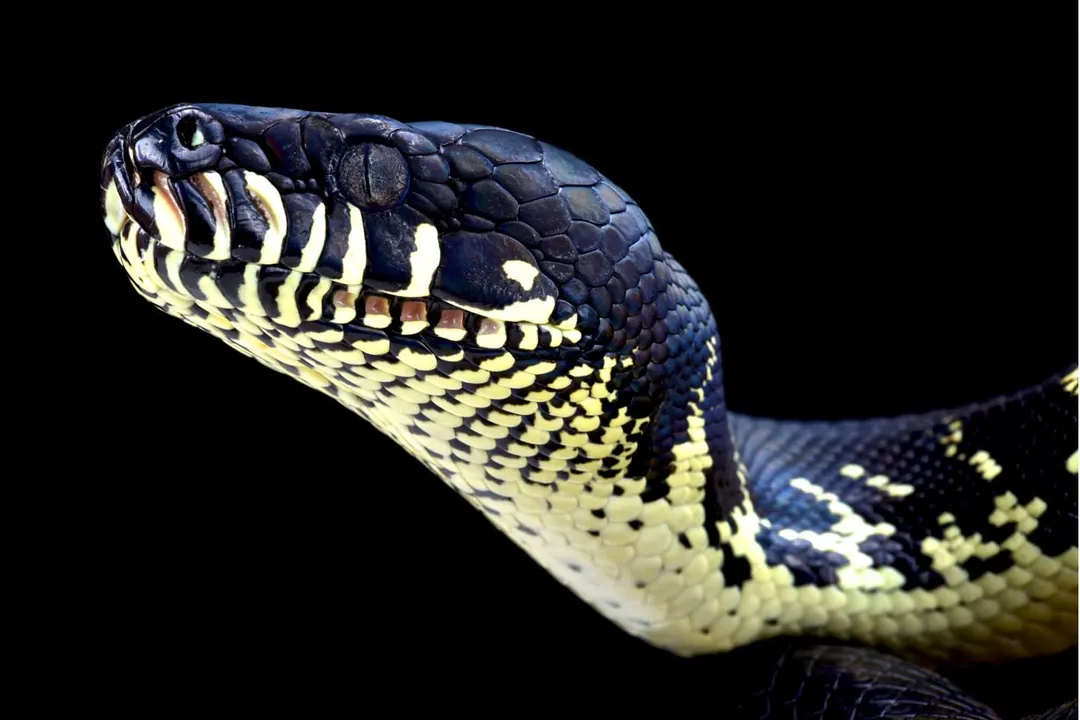
Boelen's python possesses a truly distinctive look that sets it apart from many other pythons. It is characterized by a deep, glossy black base color beautifully patterned with iridescent bands of blue, green, or yellow that shimmer depending on how the light catches the scales. [1][3] This iridescence is what makes any clear photograph or video so captivating, leading to its frequent appearance on social media feeds dedicated to unusual reptiles. [6][7]
In terms of size, these snakes are substantial, generally reaching lengths between 2 and 3 meters. [3] Their scientific classification places them in the genus Simalia, and they bear the name in honor of J. T. Boelen. [1] Their ecological niche is specific: they inhabit the montane rainforests, often referred to as cloud forests, of New Guinea, spanning both the Indonesian and Papua New Guinea sides of the island. [1][3] They are described as being terrestrial or semi-arboreal, meaning they spend time both on the forest floor and climbing through vegetation. [3]
# Distribution Isolation
The fundamental reason Boelen's python maintains its status as rare is intrinsically tied to its highly restricted geographical distribution. Unlike widely distributed species found across multiple continents or vast island chains, Simalia boeleni is confined to the high-altitude regions of New Guinea. [1][3] This geographical isolation naturally limits population density and accessibility for both researchers and collectors.
The environment they thrive in—high-elevation, perpetually moist cloud forests—presents an immediate challenge to population monitoring and recovery efforts. [1] Furthermore, this specialized habitat is precisely what makes them vulnerable. As noted by various observations, habitat loss due to human activity, coupled with the illegal collection of these stunning reptiles for the exotic pet trade, places significant pressure on already fragmented populations. [1]
It is interesting to observe the online chatter surrounding this snake. While images and videos—sometimes highly publicized—circulate widely, generating significant buzz, the actual verified trade volume or the number of individuals known to science remains incredibly low. [2][7] This disparity suggests that while the image of the snake is common on the internet, the actual animal is exceedingly scarce, making verification of a truly wild sighting or even a legitimate captive specimen very difficult for the average observer.
# Legal Status
The combination of their rarity and desirability has placed Boelen's pythons under strict international protection, which significantly impacts their availability. For many years, possession or trade of this species has been heavily regulated, often requiring specialized permits that are exceedingly difficult for private individuals to obtain. [5] In many jurisdictions, acquiring one is effectively illegal without documentation proving captive breeding under authorized government oversight. [4]
This strict legal framework, intended to protect the species from over-collection in the wild, inadvertently reinforces their reputation for rarity within the non-scientific community. When expert herpetologists discuss these snakes, they often emphasize the extreme difficulty of even locating one in their native habitat, suggesting that encounters are rare even for those actively searching in the field. [9] Mark O'Shea, for instance, points to the sheer luck involved in seeing one while in the field. [9] This contrasts with the less specialized needs of more common pythons. For example, a species like the Burmese Python, while large, has a broader environmental tolerance, which translates to larger, more accessible wild populations and established captive breeding programs globally. The Boelen's python simply does not have that buffer.
# Field Rarity
When considering whether a species is rare, we must look at field data, not just captive availability. For Boelen's pythons, field data is sparse. Expert observations suggest that even professional herpetologists working within the New Guinea highlands might go their entire careers without a confirmed sighting. [9] This points to naturally low population densities or extremely effective cryptic behavior, or both.
Even successful documentation often relies on capturing, photographing, and releasing an animal, which is a major event for the researchers involved. [9] The excitement generated by a recent video circulating online, showing what appears to be a wild or semi-wild specimen, underscores how exceptional any new footage is. [7] For the enthusiast considering the challenges of this snake, it’s crucial to understand that even achieving the perfect captive environment would be a significant undertaking. Because they require consistently cool, humid, high-elevation conditions, replicating their natural environment accurately in a standard home setup—even if the animal could be acquired legally—presents a high husbandry hurdle related directly to their specialized habitat needs.
# Conservation Outlook
Ultimately, the answer to whether Boelen's pythons are rare is a resounding yes. They are rare due to a combination of restricted endemic distribution, specialized habitat requirements, and the unsustainable pressures of illegal collection. [1][3] While public awareness, often sparked by incredible photographs, is high, this awareness must translate into effective conservation action, particularly protecting their fragile cloud forest homes in New Guinea. [1] Until captive breeding programs become established, verifiable, and legal on a wider scale—a prospect hampered by the difficulty in meeting their environmental needs—the Boelen's python will remain one of the most sought-after and infrequently seen snakes on Earth. [5] For now, the best way for most people to appreciate this magnificent species is through high-quality imagery and supporting organizations dedicated to preserving their unique habitat.[1][9]
#Videos
Meet 2 Of My Super Rare Boelens Pythons - YouTube
Related Questions
#Citations
Simalia boeleni - Wikipedia
One of the rarest snakes in the world, Boelen's python, shedding its ...
Boelen's python Animal Facts - Simalia boeleni
Boelen's python of New Guinea is endangered - Facebook
Meet 2 Of My Super Rare Boelens Pythons - YouTube
Say hello to one of the world's rarest pet snakes, the Boelen's ...
Boelen's Python - Facts, Diet, Habitat & Pictures on Animalia.bio
Mark O'Shea - The Official Website