Which dominant allele typically causes solid black coloration by overriding the Agouti gene?
Answer
Dominant E^D allele at the E locus.
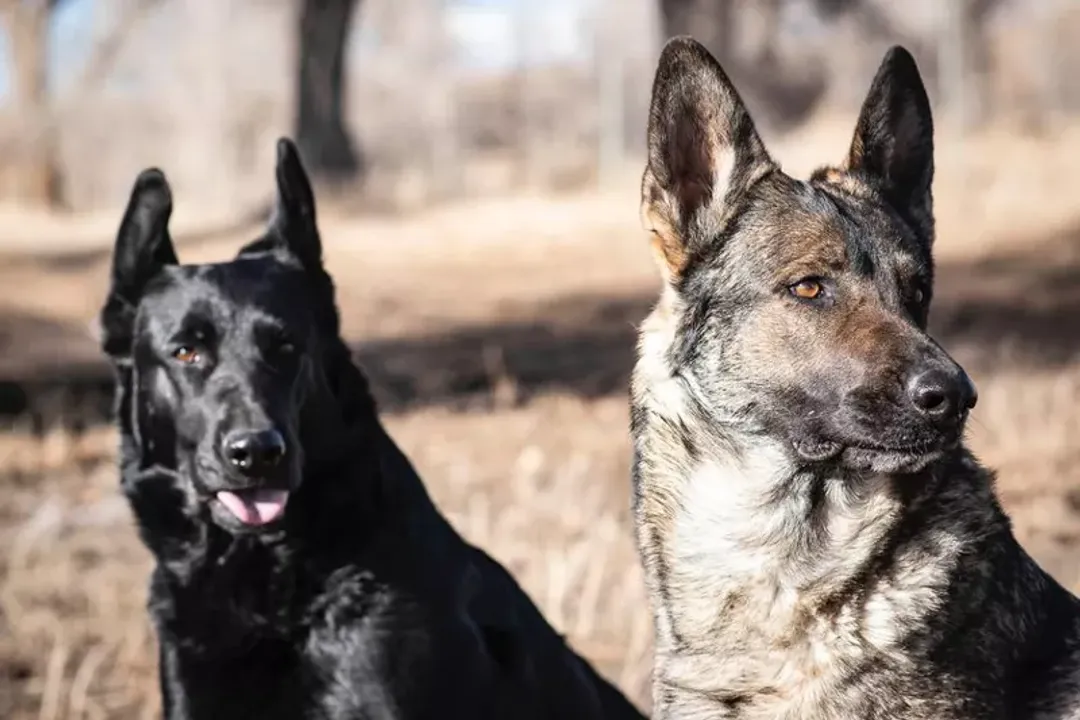
The manifestation of a solid black coat, where hair shafts are uniformly black from root to tip, is typically attributed to the presence of a dominant allele designated as E^D, found at the E locus. This dominant allele exerts a powerful regulatory effect, instructing the coat to produce black pigment across the entire body surface. This action effectively masks or overrides the instructions provided by the Agouti gene, which would otherwise direct the creation of the characteristic banded coloration seen in sable patterns. Because the E^D gene is dominant, inheriting even one copy is sufficient for the dog to display the solid black phenotype, regardless of the underlying Agouti configuration.
Related Questions
What function does the Agouti (A) series of genes control in German Shepherds?Which dominant allele typically causes solid black coloration by overriding the Agouti gene?What specific feature defines a black sable coat pattern on the individual hair shaft?What visual characteristic creates a primary source of confusion between a black sable and a solid black GSD?What is suggested about the historical prevalence of the sable coat color in German Shepherds?What detail should an observer look for on the guard hairs along the back ridge to distinguish a black sable?Why does only one copy of the dominant E^D gene cause a dog to appear solid black?What are the two main reasons cited for the high perceived rarity of the black sable German Shepherd?What effect does a breeder focusing on uniform solid black dogs have on their litters?How does the undercoat of a black sable typically differ from that of a solid black German Shepherd?