Are Costas hummingbirds rare?
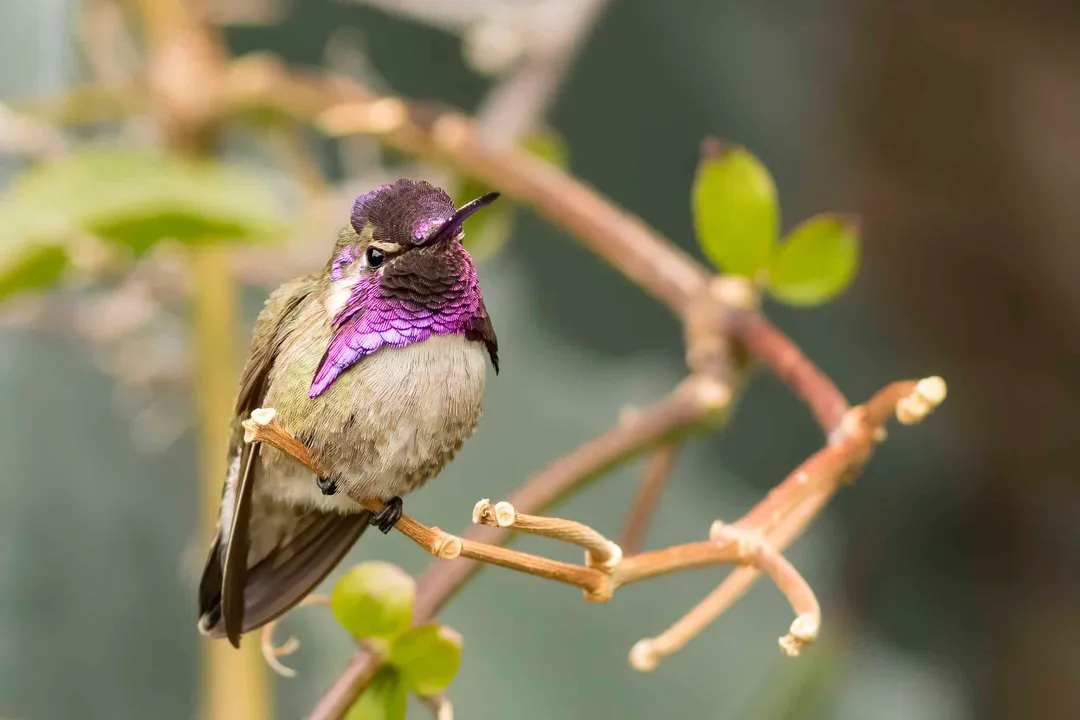
The perception of a Costa's Hummingbird being rare depends heavily on where you are looking, as this species occupies a relatively restricted and specialized range across the American Southwest. [1][5][6] While they are a relatively common sight in the arid landscapes of southeastern California, southern Nevada, southern Arizona, and southwestern Utah during breeding season, [1][5][7] their presence becomes immediately noteworthy—and arguably rare—once they venture beyond these established boundaries. [2][8] If you live in, say, the Willamette Valley of Oregon, spotting one is an event worthy of local news coverage because the bird is far outside its expected distribution. [2] Therefore, the answer isn't a simple yes or no; it’s an issue of geographic context and migration timing.
# Core Distribution
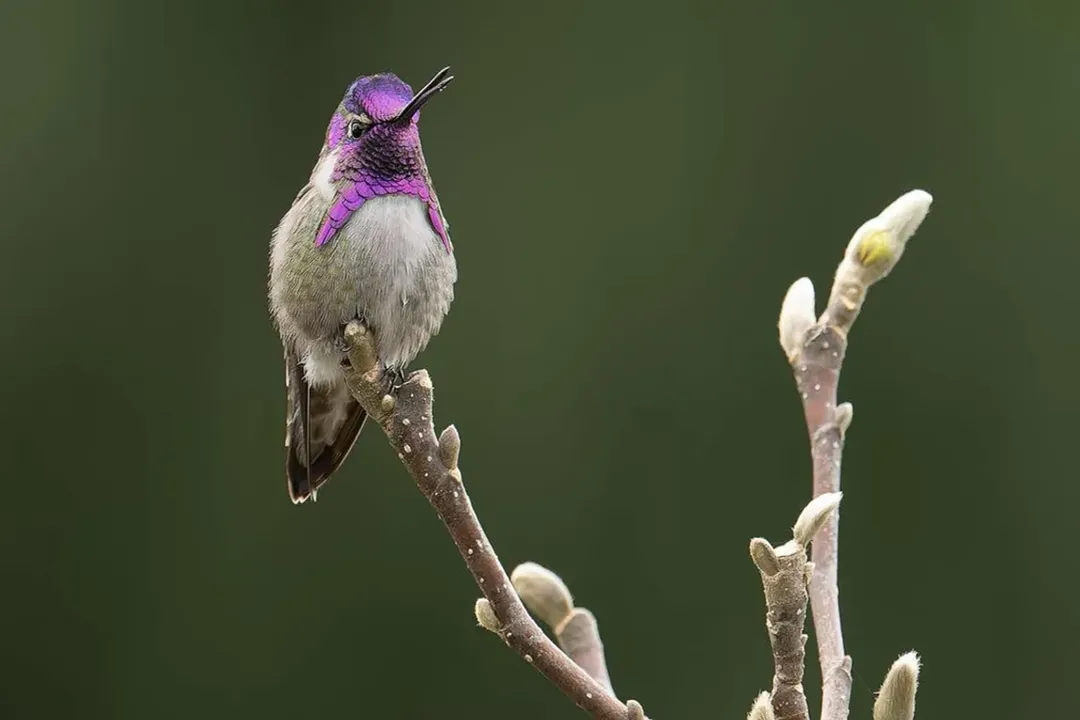
The typical breeding grounds for the Costa's Hummingbird are decidedly dry and scrubby. [1][5] These birds favor the desert scrub, creosote bush flats, and sagebrush habitats. [1][6] In Arizona, for example, they are closely associated with the Sonoran Desert ecosystem. [5] Their core range includes the interior regions of southern California, much of the lower deserts of Nevada, and southern Utah, often avoiding the immediate coastal areas. [1][7] This preference for hot, dry environments is fundamental to understanding their distribution; they are not typically backyard birds in the way a widespread species like the Anna's Hummingbird might be across the West Coast. [5]
If you look at the map of their typical summer residency, they are very much not rare within that specific ecological niche. [7] They are a defining species of that arid biome. [5] However, the total area they cover is small compared to many other North American hummingbirds, which inherently makes them locally common but globally less ubiquitous. [1][6] For the dedicated birder operating within the core range, finding a Costa's is a regular occurrence during the appropriate season, not a rare stroke of luck. [5]
# Appearance and ID
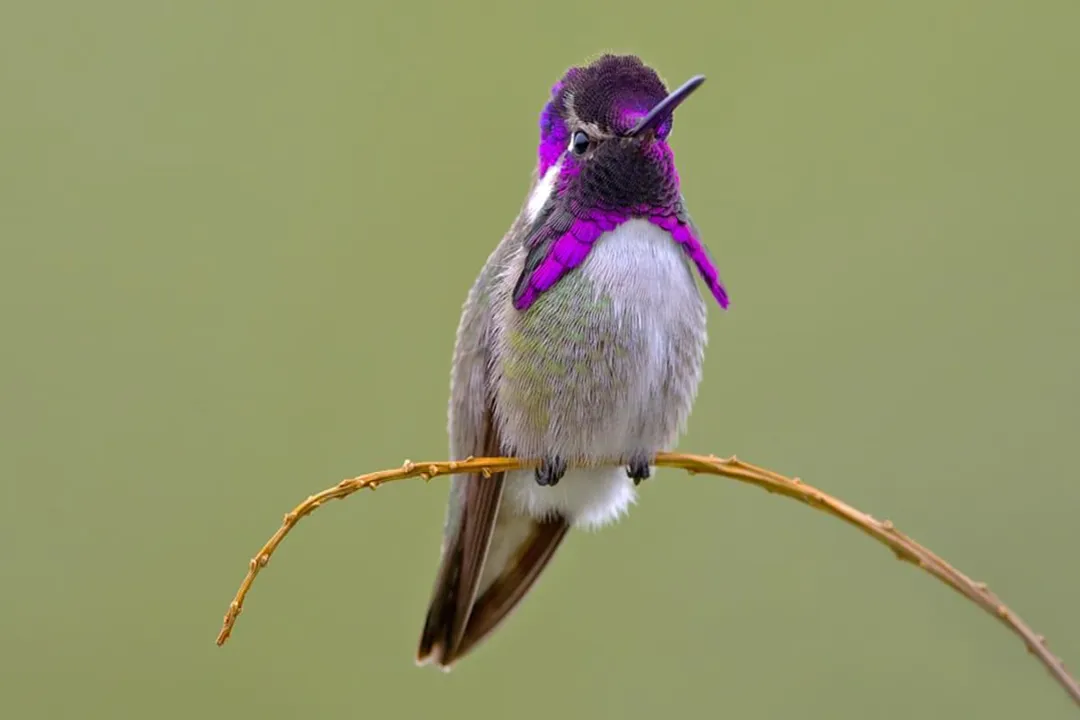
Once you know what you are looking for, identifying a Costa's Hummingbird is rather straightforward, particularly the male. [3][6] The male is easily identified by its dramatic, iridescent purple gorget that flares out, often described as looking like a set of magenta-purple mustaches or a wide collar. [1][3] This distinctive feature contrasts with the rich rufous or buffy underparts. [6] The purple coloration, caused by structural light rather than pigment, is intensely noticeable when the sun hits it just right. [3] This vivid display is the main reason why birders post photos excitedly online when one visits their yard, signaling a successful identification of a species with localized fame. [4][9]
Females and juveniles, predictably, are less flashy and can be trickier to separate from other small hummingbirds. [1][5] They tend to be grayish-brown overall with a whitish throat patch that might show faint dusky streaks. [1] A key identifier, even for the female, is the presence of rusty or buffy coloration on the flanks and tail, which helps distinguish them from, for example, Black-chinned Hummingbirds. [5][6] Seeing that vibrant purple flash in the desert is a guaranteed "lifer" moment for many, solidifying the bird's reputation as a spectacular, if localized, prize. [9]
# Vagrancy Status
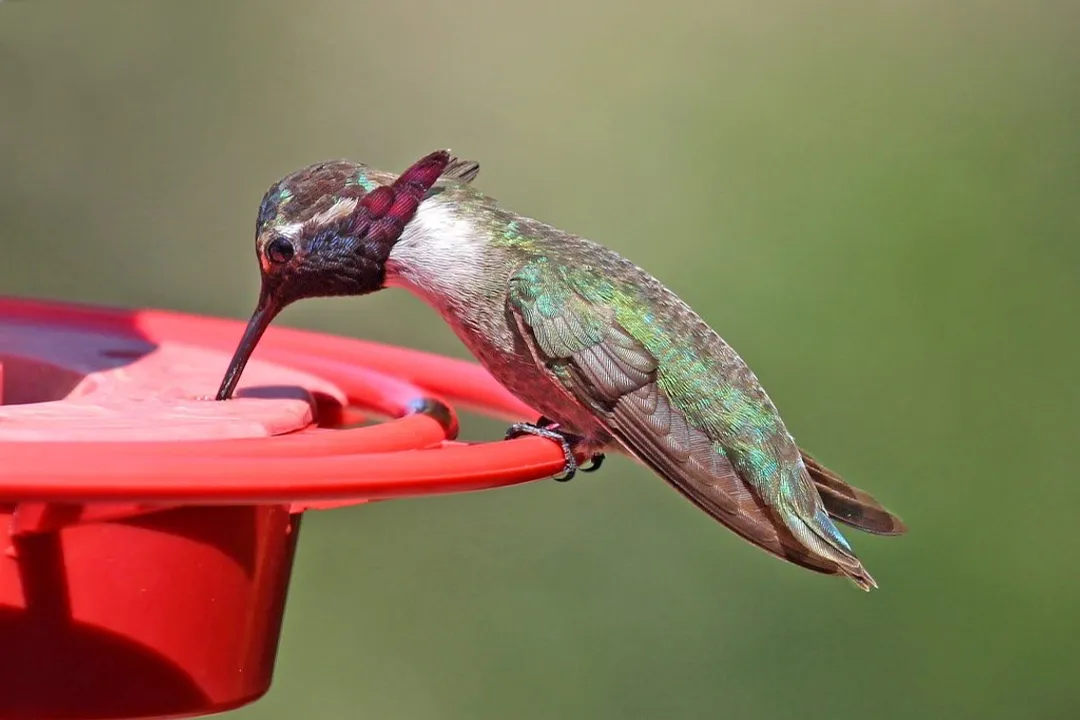
The concept of "rarity" spikes dramatically when the Costa's Hummingbird appears far outside its usual desert home. [8] These occurrences are classified as vagrancy—a bird appearing well outside its expected seasonal or geographic range. [2] Sightings in places like the Willamette Valley in Oregon, a location far north and west of their typical range, become highly unusual events that draw significant local attention. [2] When this happens, birders who normally only encounter species like Rufous or Anna's Hummingbirds have a genuine opportunity for a rare find. [2][8]
Consider the implications of a sighting far north, such as in South Dakota; such an appearance immediately signals that the bird has significantly overshot its normal migration route or gotten lost entirely. [8] This contrasts sharply with seeing one in, say, the Phoenix area in March, where they are expected visitors or residents. [5] Reports detailing these far-flung visits—like a Costa's showing up in a non-desert backyard in February—often generate excitement because the species is simply not expected there. [2][4] It highlights the challenges and occasional surprises inherent in tracking mobile wildlife across continents.
If we were to think of this spatially, the density of the population drops off a cliff at the edge of the Great Basin and the higher mountain ranges bordering the Southwest. [7] For the casual observer in a state like South Dakota, seeing one is an extremely rare, perhaps once-in-a-lifetime event, as evidenced by excited posts when one occasionally shows up near a feeder far from the usual routes. [8][9]
# Feeding and Territory Defense
It is fascinating to observe how their established habits interact with the human-modified landscape, particularly concerning backyard feeders. [3] In their native desert environment, Costa's Hummingbirds are known to aggressively defend feeding territories centered around prime nectar sources, whether those are native flowering shrubs like brittlebush or, increasingly, nectar feeders placed by homeowners. [5][7] They are especially noted to favor desert willow and globemallow when in bloom within their arid territories. [7]
An observation shared among backyard enthusiasts in the Southwest is that successful feeding stations often mimic the vertical structure of the desert scrub. [3] Unlike some other hummingbirds that might prefer open feeders, Costa's seem particularly attracted to feeders placed near protective cover, perhaps because this mirrors their natural tendency to establish a territory around a known, defensible food source within their scrub habitat. [5] This suggests that for those hoping to attract them during the breeding season in Arizona or California, placing feeders near low-growing, dense shrubs might increase your chances of a reliable visitor, offering a small competitive edge over simply hanging a feeder out in the open lawn. [3] Their survival is tied to the availability of both nectar and insects, as they must snatch small arthropods from the air or spiderwebs to provide necessary protein for their young. [1]
# Conservation Perspective
While the species is generally not listed as Endangered or Threatened on a wide scale, conservation concern exists primarily due to its highly specialized habitat requirements. [7] The total breeding range is quite small, making the population vulnerable to habitat loss within the desert scrub ecosystem. [1][7] Data from sources focusing on avian conservation highlight that specialized species tied to fragile or rapidly changing environments inherently face higher relative risk than generalists. [7] For instance, sustained drought or extensive development of creosote flats directly removes the necessary nesting and foraging structure for this species. [7]
The general status often remains "Least Concern" on broader scales, but localized pressures can have immediate impacts on local population density. [1] Monitoring migration patterns and vagrancy events, while primarily interesting to birders, also serves as an indirect indicator of broader environmental stressors that might be pushing birds off their typical routes. [8] This reliance on a specific, limited biome means that while they are numerous in the desert, they are inherently less secure globally than a highly adaptable species with a huge range. [1]
# Vocalizations and Display
The song of the Costa's Hummingbird is another notable feature, though perhaps less frequently heard than its spectacular flight displays. [1] The male’s song is a complex series of musical, chattering notes, often delivered during courtship dives. [3] A unique element of their behavior is the steep dive they perform, which, upon pulling out, produces a distinctive, buzzing sound from specialized outer tail feathers. [1][6] This acoustic signature is another way birders confirm an ID when the bright gorget might be hidden or obscured by shadow, offering auditory confirmation of the visual rarity. [3]

# Rarity Defined by Geography
To truly gauge the rarity of the Costa's Hummingbird, one must compare it to its neighbors. In many parts of the West, the Anna's Hummingbird is far more abundant and adaptable, maintaining year-round residence in many coastal and urban areas where Costa's are seasonal visitors or absent entirely. [1][6] The Rufous Hummingbird, conversely, is a true long-distance migrant, often seen moving through large swathes of the West during spring and fall migrations, making it widespread seasonally. [1]
The Costa's sits in a middle ground: common in a small, hot patch, and rare everywhere else. [2][8] This specialized niche means that if a birder is targeting a "Big List" of Western hummingbirds, the Costa's is a required stop in the arid Southwest, but skipping that region means missing it entirely. [7] For the casual observer in a state like South Dakota, seeing one is an extremely rare, perhaps once-in-a-lifetime event, which is why their appearance generates such excitement on community groups. [8][9] It is a species whose rarity is entirely dependent on the observer's longitude and latitude relative to the Sonoran and Mojave Deserts. [5]
Related Questions
#Citations
Costa's Hummingbird - All About Birds
Rare Costa's hummingbird visits Willamette Valley, Oregon
Costa's Hummingbird
Rare male caliope hummingbird sighting in pacific northwest
Costa's Hummingbird - Tucson Bird Alliance
Costa's Hummingbird | Audubon Field Guide
[PDF] Costa's Hummingbird (Calypte costae)
Costa's Hummingbird - South Dakota Birds and Birding
My lifer Costa's Hummingbird! : r/birding - Reddit