Are Rough-legged Hawks rare?
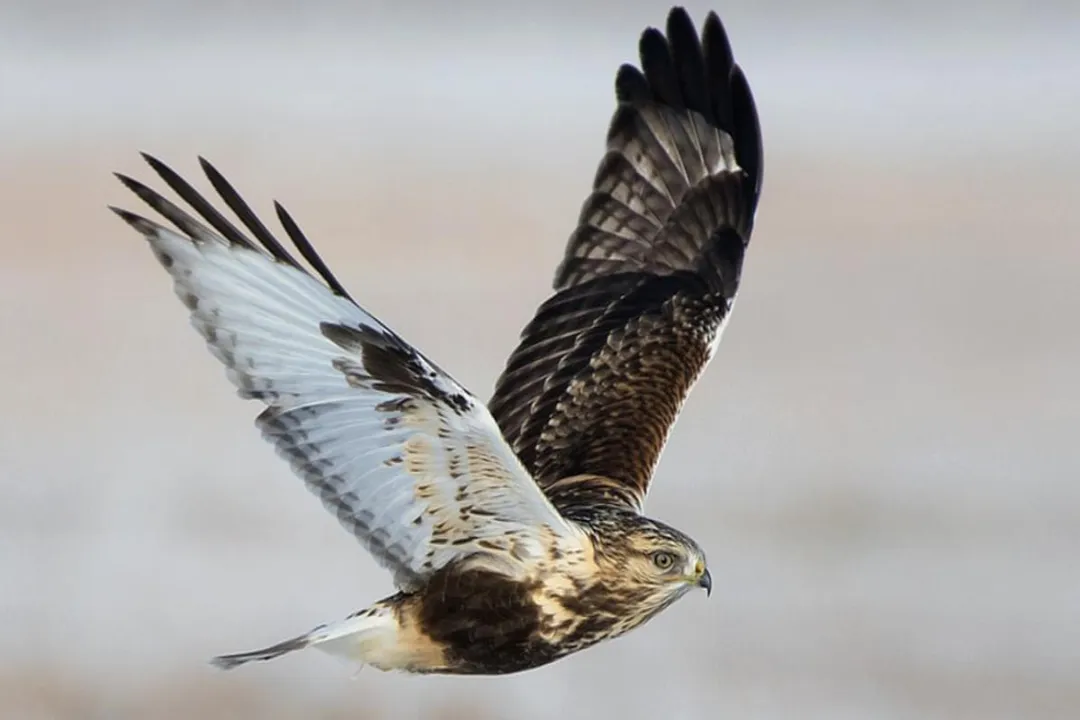
The perception of a Rough-legged Hawk's abundance often hinges entirely on where and when you are looking. If you happen to be strolling through the open landscapes of the lower forty-eight United States in January, you might understandably consider this bird rare; it’s a seasonal visitor, not a permanent resident like a Red-tailed Hawk. [1][7] However, looking at the bigger picture, the Rough-legged Hawk—also known as the Rough-legged Buzzard in some regions [2][4]—is widespread across vast northern territories, making it far from rare on a continental or global scale. [1]
# Arctic Breeding
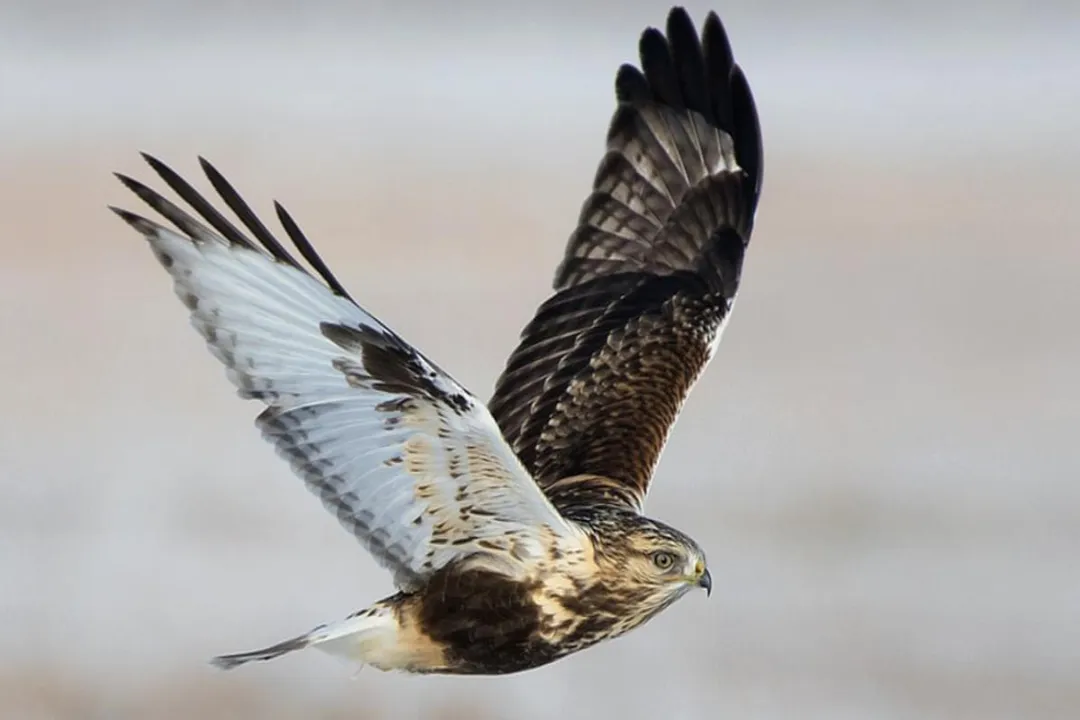
These powerful Buteo hawks make their home during the nesting season in the Arctic tundra of North America. [7] This breeding range extends across the northern reaches of the continent, and globally, the species maintains a circumpolar distribution. [1][2] While their reproductive grounds are remote and often inaccessible to casual observers, the population base supporting these migrations is extensive. [7] The species is not currently listed as globally threatened, suggesting that its overall numbers remain healthy across its massive range. [4]
# Seasonal Movement
The presence of Rough-legged Hawks in more southerly locations is entirely dictated by migration. [2] They are considered long-distance migrants. [7] When the northern snows cover their primary prey base, these birds move south into the United States and southern Canada to find more accessible hunting grounds for the winter months. [1][2]
This migratory nature means that the timing of your sighting is everything. A bird spotted in Illinois in February is not necessarily common there, but it signals the broader movement pattern of the species across the continent. [3] Conversely, attempting to find one on its breeding grounds in July would be futile, as the birds are busy nesting far above the tree line. [7]
# Key Features
Distinguishing this hawk from other soaring raptors requires attention to specific details, especially since they are often seen at a distance or in flight. [3] Rough-legged Hawks come in two general color patterns, known as light and dark morphs. [1][8]
For identification in flight, observers often look for a few consistent field marks:
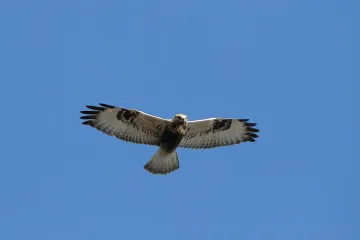
- Dark Wrist Patch: Perhaps the most reliable field mark, visible on both light and dark individuals, is a dark patch on the underside of the leading edge of the wing, near the "wrist" joint. [3][8]
- Belly Patch: A distinct dark patch covering the belly or lower breast is another excellent identifier, though it can sometimes be less noticeable in the darkest morphs. [1][3]
- Tail Pattern: The tail is usually white underneath with several dark bands, with the terminal band being the widest and most noticeable. [9] In flight, this distinct tail pattern sets it apart from other North American Buteos. [8]
- Wing Shape: They possess relatively long, slender wings compared to some of their bulkier cousins, aiding them in their preferred hunting style over open terrain. [3]
If you observe a hawk soaring with these dark patches contrasting against a lighter background—often on the underside of the wings—you are very likely watching a Rough-legged Hawk, regardless of its overall body darkness. [3]
# Population Fluctuation
The stability of the Rough-legged Hawk population is intimately tied to the harsh environment in which it breeds. [7] A key factor influencing their winter dispersal patterns is the availability of their primary prey: lemmings. [2]
In years when lemming populations experience a significant crash in the Arctic, the hawks must push further south or west during their winter migration to secure adequate food resources. [6] This phenomenon can create a temporary local surge in sightings across areas further south, leading some local birders to believe the species is having an exceptionally good year, when in reality, it might reflect scarcity up north. Conversely, in peak lemming years, fewer birds might venture into the lower 48 states because sustenance is readily available closer to the breeding grounds. [2] Keeping track of these local sightings across multiple winters can provide a better qualitative sense of their population cycles than observing a single season in isolation. [5]
When planning a winter outing specifically dedicated to finding this species, looking toward wide, open areas like agricultural fields, grasslands, or coastal salt marshes provides the best odds. [6] They prefer environments that mimic their tundra home, allowing them to hover and scan the low vegetation for small mammals. Targeting these habitats during the mid-morning hours, after the ground has warmed slightly allowing rodents to become more active, can significantly increase your chances of success over simply scanning the trees along a highway, though they certainly do use elevated perches like utility poles when available. [6]
# Regional Status Context
Understanding whether a bird is "rare" necessitates defining the geographic area of interest. For instance, if you are looking at migratory bird reports for a specific state like Maryland or Ohio during the winter, a Rough-legged Hawk will certainly be less common than a year-round resident hawk, making it a "special" find for local counters. [3] Birding organizations often list them as "accidental," "rare," or "uncommon" based on their typical winter range boundaries. [4]
However, this localized status contrasts sharply with their reality in, say, northern Alaska or the Northwest Territories in summer, where they are an expected, if difficult-to-spot, breeder. [1][7]
To put the concept of rarity into a more concrete perspective, consider the monitoring efforts themselves. Organizations that conduct raptor migration watches often track these birds heavily during spring and fall movements across bottlenecks like Hawk Ridge or coastal points. [3] The numbers reported during these intense, focused watch periods can sometimes number in the thousands over a season, confirming that the population is substantial, even if the individual bird is often solitary in your local park. [3] If a place records zero individuals over an entire winter season, that suggests the local wintering territory for that year did not support any, rather than indicating a catastrophic population collapse across the entire species.
# Identification Nuances
While the field marks are useful, the similarity between the light morph Rough-legged Hawk and a very pale Red-tailed Hawk can sometimes cause confusion for even experienced observers. [8] A helpful comparative check involves focusing on the entire wing signature. The Rough-legged Hawk often exhibits a greater degree of white, especially on the leading edge of the wing and the base of the primaries, appearing somewhat more "airy" in flight compared to the heavier, dark trailing edge usually seen on a Red-tailed Hawk. [1][9] Furthermore, if you can confirm the dark wrist spot and the banded tail, the identification becomes nearly certain, regardless of the overall body color variation. [3] This species truly tests an observer’s ability to look past the general impression and focus on the critical anatomical details when identifying raptors overhead. [8]
Related Questions
#Citations
Rough-legged Hawk - All About Birds
Rough-legged buzzard - Wikipedia
Rough-legged Hawk - Raptor Identification - HawkWatch International
Rough-legged Buzzard | The Peregrine Fund
Hybrid Rough-legged x Red-tailed Hawk in Nebraska - Facebook
Buteo lagopus - Rough-legged hawks - Animal Diversity Web
Rough-legged hawk - The Raptor Center
Rough-legged Hawk | Audubon Field Guide