What is the behavior of the Costa's hummingbird?
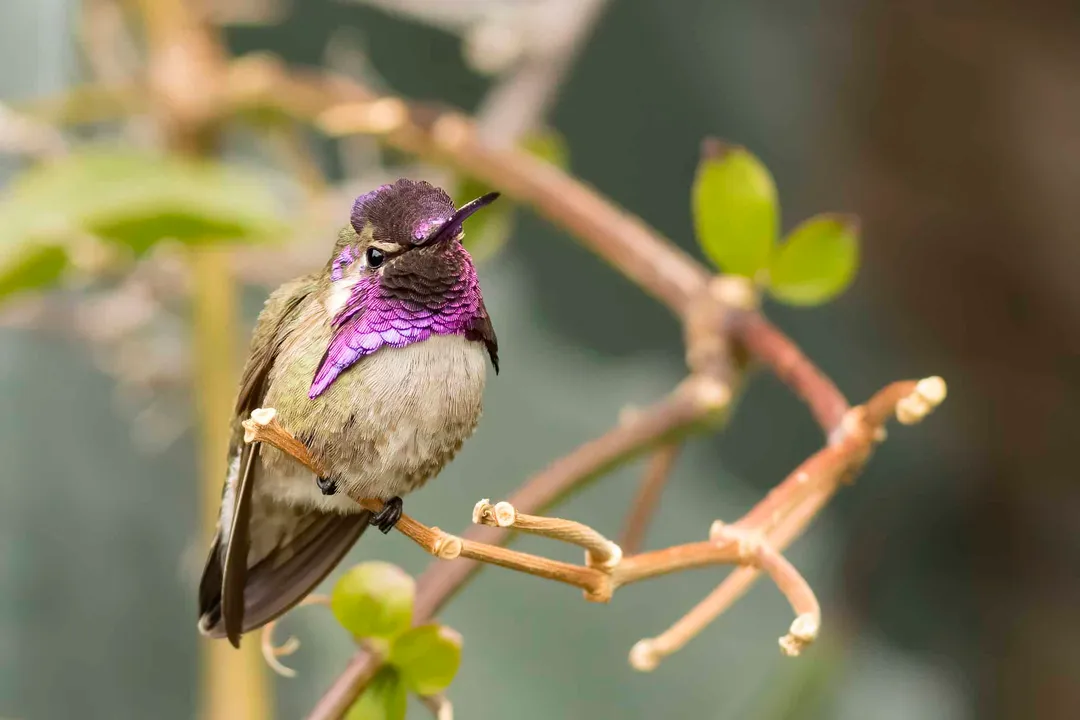
The Costa's Hummingbird, often recognized by the male’s dramatic purple crown and gorget, exhibits a set of behaviors finely tuned for survival in the arid and semi-arid landscapes of the American Southwest and Baja California. [1][2] Their daily routines revolve around intense feeding, rigorous territorial defense, and some of the most acrobatic mating displays found among North American birds. [4][5] Understanding their behavior means watching how meticulously they manage their energy budget in environments where resources can fluctuate dramatically. [2]
# Male Display
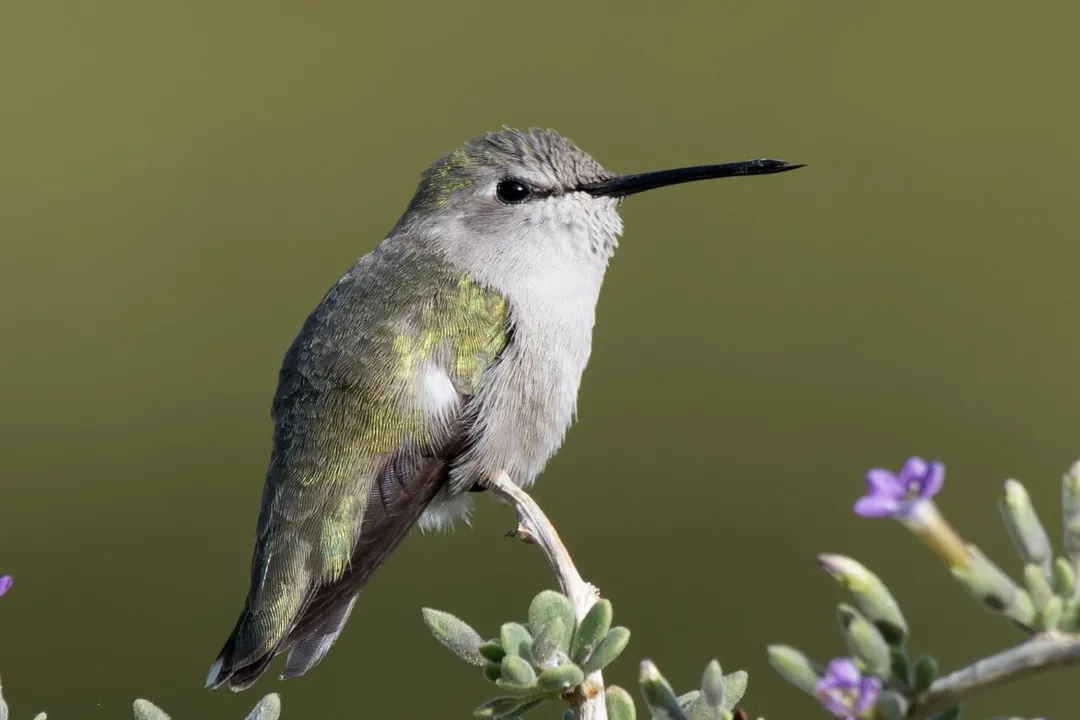
The most striking behavior associated with the Costa's Hummingbird is the male’s elaborate courtship flight, a necessary performance to attract a female during the breeding season. [5] This display is characterized by a tremendous, high-speed vertical dive, which can begin at heights exceeding 100 feet. [5] As the male reaches the bottom of his rapid descent—a maneuver that requires immense physical exertion—he pulls up sharply. [5] It is during this upward pull that the specially shaped feathers of his gorget (throat patch) and crown catch the light, creating a dazzling flash of iridescent magenta or violet. [5][1] The visual spectacle is paired with a distinct sound, often described as a ringing or chiming sound created by the air vibrating through his tail feathers during the dive. [5]
It is fascinating to consider the energy trade-off inherent in this aerial ballet. In the resource-scarce environment they inhabit, such an intense, high-velocity dive represents a significant caloric investment. [2] A successful male must balance the need to impress a female with the physiological cost of such an expenditure, suggesting that only the healthiest individuals, capable of rapidly replenishing the lost energy through focused feeding, can maintain this level of display activity throughout the breeding period. [4]
# Vocal Patterns
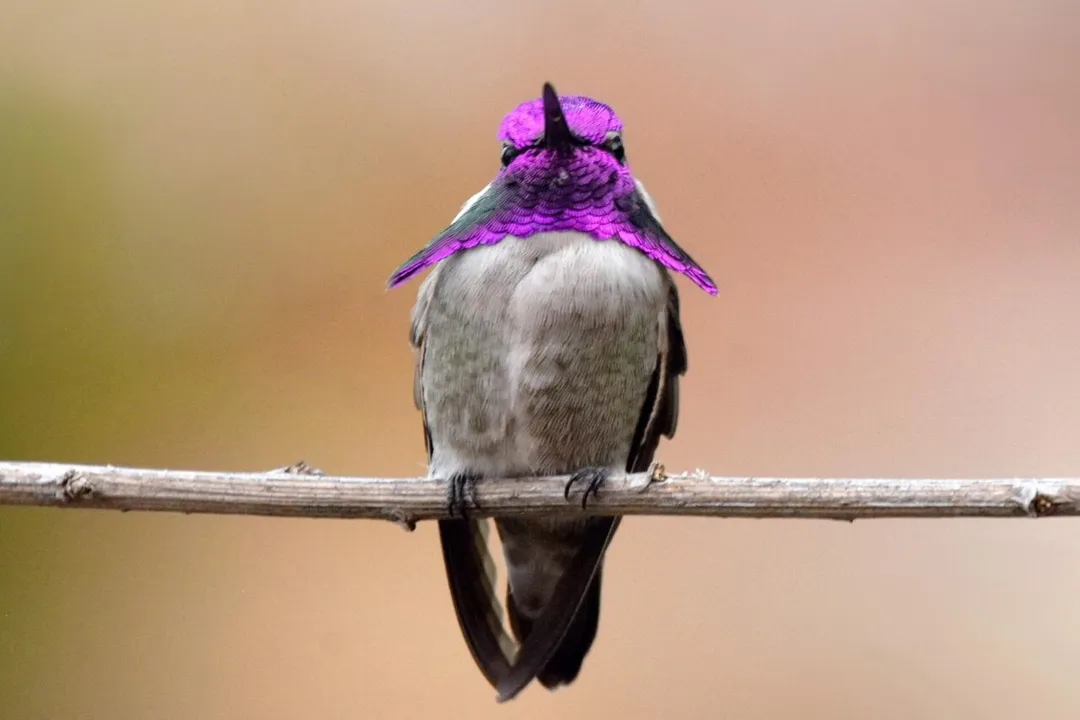
While the visual display gets much of the attention, Costa's Hummingbirds are also highly vocal, using different sounds for communication, alarm, and territorial signaling. [9] Males often vocalize from a favored perch, delivering sharp, buzzy calls, sometimes repeated in quick succession. [9] Their song is generally described as a series of rapid, high-pitched chips, buzzes, and short warbles that lack the sustained melodic quality seen in some other bird species. [9] During territorial disputes or aggressive interactions, the vocalizations become sharper and more insistent. [9] Females tend to be quieter overall, though they still produce calls, particularly near the nest site. [1]
# Territory Guarding
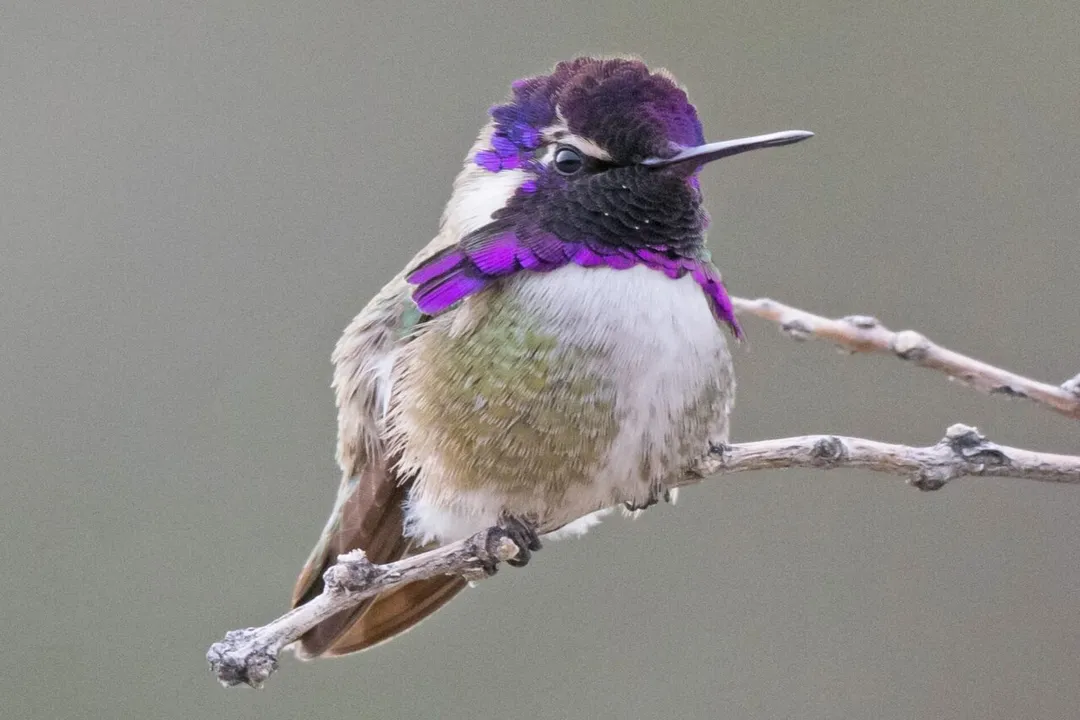
Costa’s Hummingbirds are known for their aggressive defense of feeding territories, especially when flowers are abundant. [3] The male typically establishes and defends a patch of flowering plants or a feeder, driving away other hummingbirds, regardless of species, as well as larger birds that attempt to encroach upon his domain. [3][6] This defense is an active, persistent job. [3]
The territorial defense usually involves quick aerial chases, accompanied by aggressive calls and darting flights around the intruder. [3] If a rival bird is perceived, the defending male will often fly up and dive down repeatedly, using his speed to intimidate the trespasser into leaving the lucrative area. [3] This behavior is closely linked to resource availability; in areas with scattered, sparse resources, a male might defend a small core area around a favored perch or feeder, rather than a large swathe of land. [3] The primary goal is to ensure that a disproportionate share of the available high-quality nectar is available for his own consumption, which directly supports his energetic needs for territorial maintenance and courtship. [4]
# Feeding Behavior
Like all hummingbirds, the Costa’s primary diet consists of nectar, which fuels their incredibly high metabolism. [1][2] They visit many flowers throughout the day, often probing multiple blooms in quick succession, a behavior sometimes called "trap-lining" where they follow a regular route between favored patches of flowers. [4] They show a preference for red or orange tubular flowers, though they will feed on various species. [2][1]
However, nectar alone is insufficient for protein and nutrient needs, especially for breeding males and nesting females. [4] Consequently, they spend a significant portion of their active hours gleaning or catching small arthropods, such as gnats, spiders, and aphids. [1][6] These insects provide the necessary building blocks for feather growth, egg production, and tissue maintenance. [4] In the desert scrub environment they favor, the availability of these insects can dictate reproductive success. [2] Observing a hummingbird’s feeding frequency in the desert reveals an incredible feat of efficiency; a small bird needs to take in calories roughly every ten to fifteen minutes just to maintain its basal metabolic rate during peak activity. [2] This necessity for near-constant fuel intake drives their seemingly non-stop activity throughout the day.
# Nest Building
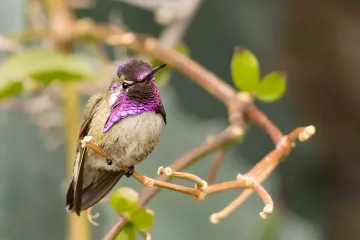
The responsibility for nesting and raising the young falls almost entirely to the female Costa's Hummingbird. [4] She constructs a tiny, cup-shaped nest, often hidden in a low shrub or small tree, typically positioned only a few feet off the ground. [4][1] The construction materials are a testament to avian engineering. The primary structure is built from plant down, such as that from dandelions or thistles, woven tightly together. [4] To give the nest structural integrity and camouflage, the female binds the exterior with fine plant fibers and spider silk. [4] The spider silk is particularly important as it allows the nest to stretch as the nestlings grow, adapting to the increased mass without tearing. [4] She usually lays two small, white eggs, which are incubated solely by her. [4]
# Social Space
Outside of the brief and intense mating interactions, Costa's Hummingbirds are generally solitary creatures. [3] While they might tolerate each other in a richly provisioned area—such as a backyard feeder with high traffic—these are usually tense associations rather than cooperative groupings. [3] They do not form flocks, and once the breeding season concludes, the strong territorial behaviors wane as the birds disperse. [6] Their focus shifts back entirely to solitary foraging and preparation for migration, or, for non-migratory populations, enduring the winter months by balancing limited resources against survival needs. [6][1]
Related Questions
#Citations
Costa's Hummingbird
Costa's Hummingbird
Behavior - Costa's Hummingbird - Calypte costae
Watch: The Male Costa's Hummingbird Puts On One Wild ...
Calypte costae (Costa's hummingbird) | INFORMATION
Costa's Hummingbird ⋆ Tucson Bird Alliance
Costa's hummingbird behavior and territorial defense
Costa's Hummingbird