What primary factor makes the Costa's Hummingbird population vulnerable despite general "Least Concern" status?
Answer
Highly specialized habitat requirements tied to fragile desert scrub ecosystems
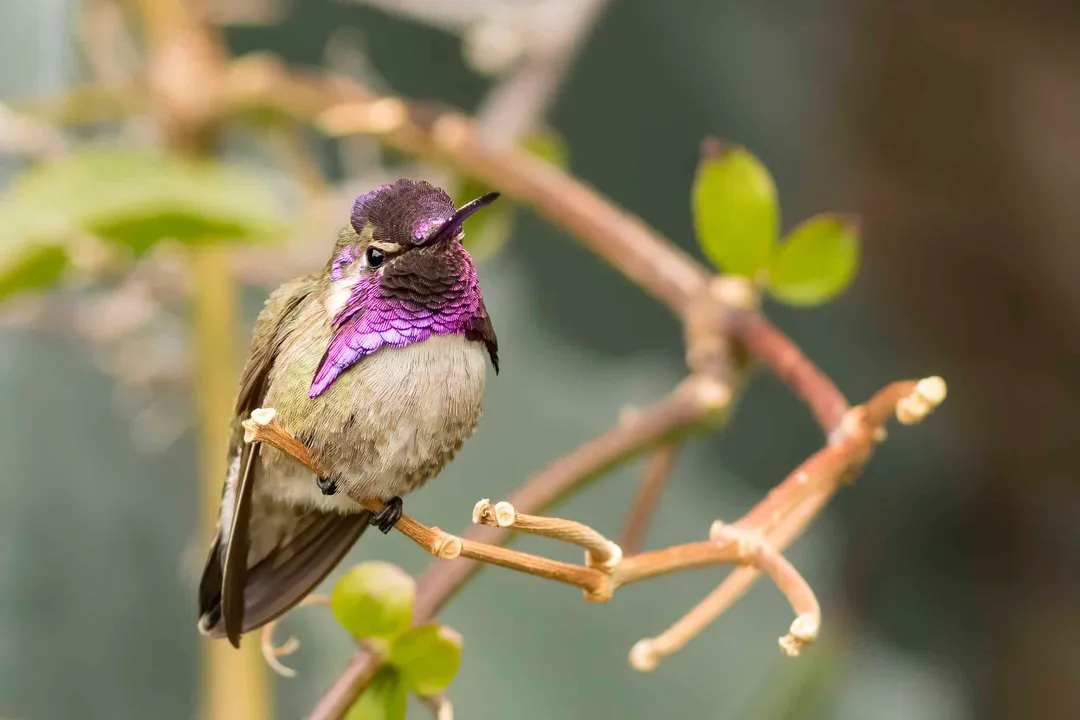
While the Costa's Hummingbird often retains a broad conservation status of 'Least Concern' on a large scale, its overall population faces relative risk due to its extreme habitat specialization. The species relies entirely on the desert scrub ecosystem, which has a relatively small total breeding range. Consequently, any negative impact, such as sustained drought or large-scale development that removes essential creosote flats or foraging structures, directly and immediately diminishes the necessary nesting and foraging capabilities for the species, making them inherently less secure globally than highly adaptable generalists.
Related Questions
What feature easily identifies a male Costa's Hummingbird?Which habitats do Costa's Hummingbirds favor in their typical breeding grounds?Where do Costa's Hummingbird sightings become noteworthy and arguably rare?How does the abundance of Anna's Hummingbird compare in many West Coast areas?What key feature helps distinguish female Costa's Hummingbirds from Black-chinned Hummingbirds?What distinctive sound does a Costa's Hummingbird produce during its steep dive?How are appearances far outside the expected geographic range of Costa's Hummingbirds classified?Which native flowering shrubs do Costa's Hummingbirds especially favor when in bloom within their arid territories?What primary factor makes the Costa's Hummingbird population vulnerable despite general "Least Concern" status?Which interior regions form the core summer residency range for Costa's Hummingbirds?What causes the intense purple coloration seen in the male Costa's Hummingbird gorget?