Why are Tibetan Spaniels rare?

The Tibetan Spaniel, a breed often confused with its more famous Asian cousins like the Pekingese, Lhasa Apso, or Shih Tzu, holds a relatively low profile in the global canine community. [7] This low visibility translates directly into a reputation for being rare, a fact often observed by those familiar with the breed who note their scarcity in parks or at dog shows. [2] Understanding why this ancient breed remains uncommon requires looking back at its origins in the high altitudes of Tibet and tracing its measured introduction to the wider world. These dogs were not initially bred for mass appeal or widespread dispersal; their purpose was closely tied to the religious and domestic life within Tibetan monasteries and noble homes. [8][5]
# Monastic Beginnings
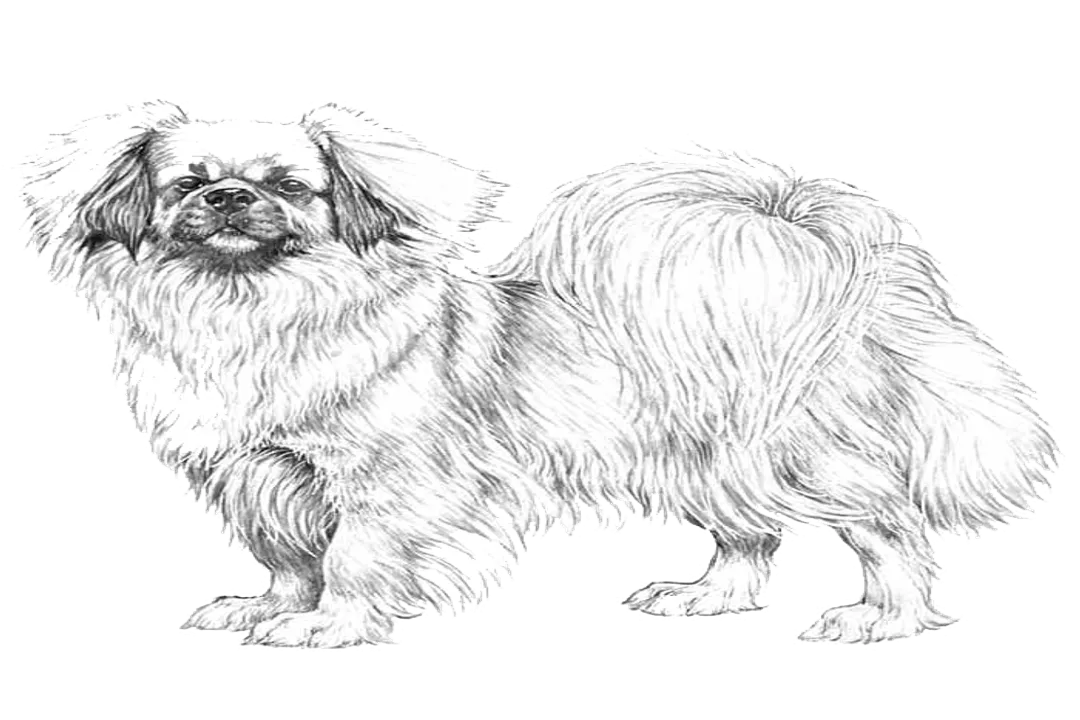
For centuries, the Tibetan Spaniel developed in a relatively isolated environment within Tibet. [3] They were highly valued companions and watchdogs within the monasteries. [5] Functionally, they were often utilized as small sentinels, perched atop high walls or prayer wheels to alert monks to approaching strangers. [8][3] This historical role meant their population was inherently limited by the size and location of these enclosed communities. [8] Unlike breeds developed for widespread utility, such as herding across vast agricultural lands, the Tibetan Spaniel’s existence was geographically constrained to the Tibetan Plateau. [3][5]
Unlike many small companion breeds whose lines were intentionally scattered across various royal courts to ensure genetic diversity and propagation, the focus seems to have remained tightly focused on preserving the type within their native environment. [8] They were viewed as sacred animals, sometimes referred to as "little lions". [3] This religious and cultural attachment likely discouraged the casual exchange or export of the dogs in early times, reinforcing a naturally small and localized breeding pool. [8] This historical inbreeding, while perhaps preserving type, also sets the stage for modern rarity when a restricted gene pool is finally introduced to a broader global market.
# Western Introduction
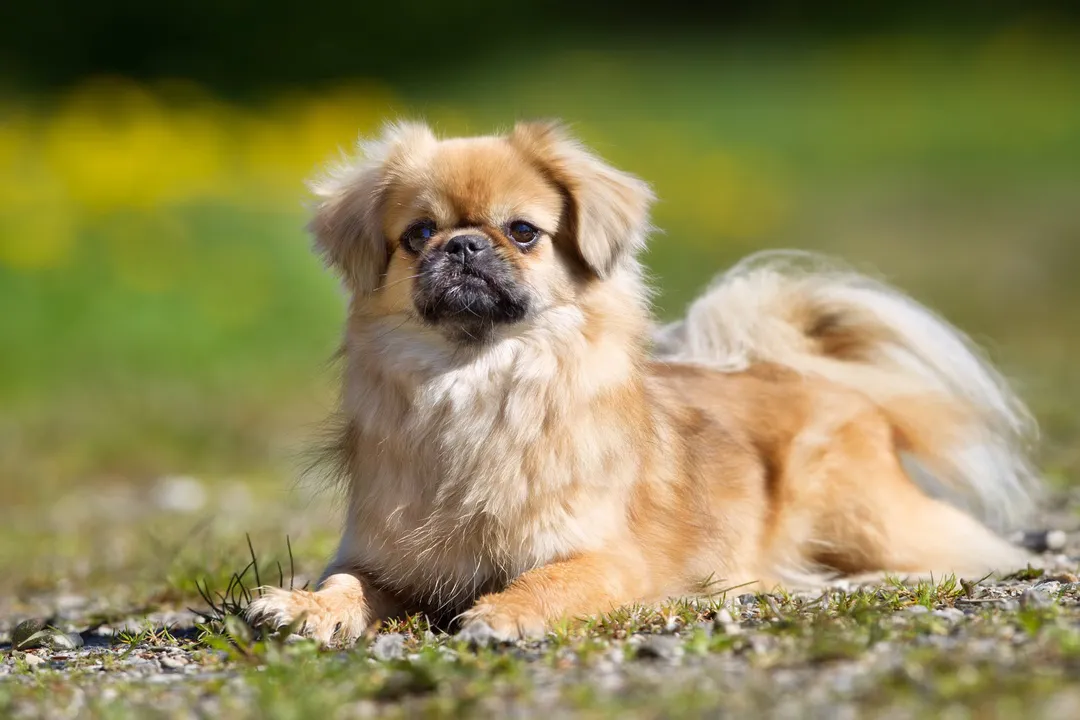
The journey of the Tibetan Spaniel out of Asia was a slow and deliberate process, unlike the rapid exchanges that characterized the development of many other modern breeds. [8] While the exact timeline is complex, the breed did not become established in the West until the mid-20th century. [3] The initial stock brought from Tibet to England and other Western countries was small, consisting of only a few foundational individuals. [8] This scarcity in the foundational population naturally restricts the speed at which a breed can proliferate globally.
The development of breed clubs in the West, such as The Tibetan Spaniel Club of America (TSCA), which formed in 1966, marks the beginning of formalized breeding efforts outside their homeland. [5] However, starting a registered, recognized breed population from just a handful of imported dogs inherently creates a bottleneck. Even with dedicated breeding programs, it takes decades for a small founding group to produce enough progeny to become a commonly seen breed, especially when compared to breeds that arrived with much larger initial stock or had an earlier, more aggressive introduction. [8]

# Breed Status

Recognition by major kennel clubs is another factor influencing visibility and, consequently, population size. The American Kennel Club (AKC) officially recognized the Tibetan Spaniel in 1995. [3] While recognition often boosts popularity, the breed was relatively late to gain this status compared to other Asian imports, meaning they spent a longer period in relative obscurity within the broader American dog-owning public. [3]
The lack of widespread recognition or promotion in earlier decades means the breed never achieved the early adoption curve seen by some of their contemporaries. For instance, a dog that gained popularity in the early 1900s has had a century to build its numbers, whereas a breed gaining recognition in the 1990s is starting from a much lower base. [3] Even now, while acknowledged, they remain outside the top tiers of registration statistics, confirming their status as a less common choice. [3]
# Distinctive Appearance
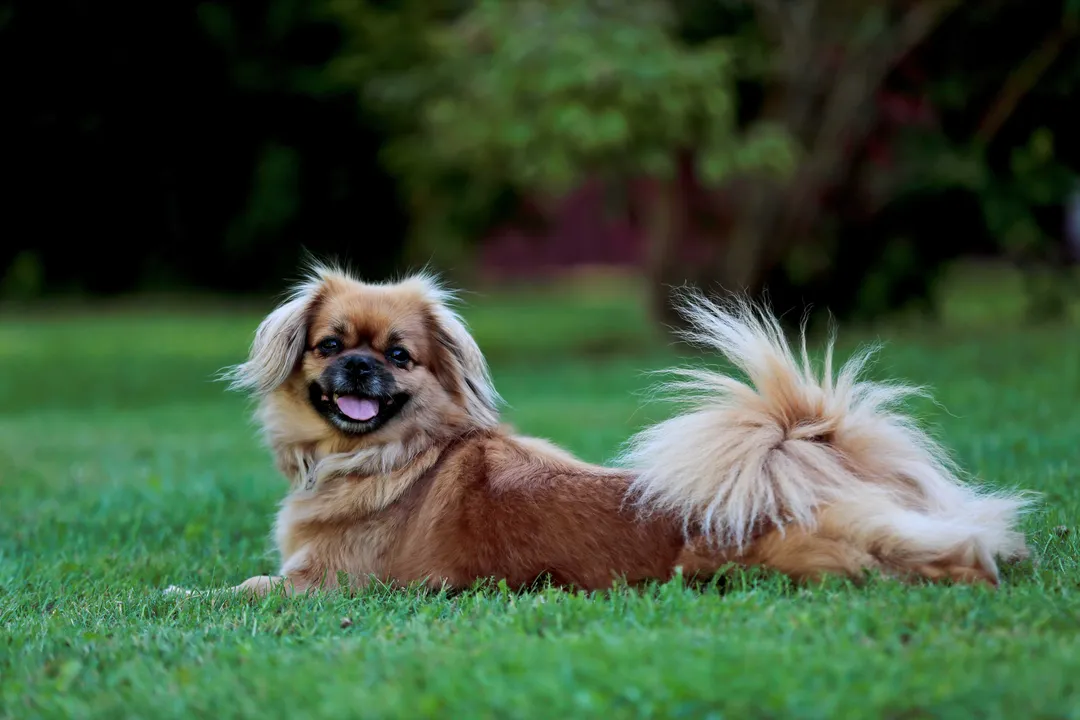
The Tibetan Spaniel’s unique look, while charming to enthusiasts, may not appeal to the broadest segment of the potential dog-buying public. They are classified in the Non-Sporting Group by the AKC. [1] They are compact, generally weighing between 9 and 18 pounds, and possess a distinct, level gait. [1] Their double coat is profuse, especially around the ears, neck, and tail. [1]
One feature that often causes confusion, and perhaps contributes to their rarity by association, is their appearance in comparison to other Asian breeds. [7] Many potential owners looking for a small, long-coated dog might default to more prevalent breeds like the Shih Tzu or Lhasa Apso simply due to higher visibility and availability. [7] The Tibetan Spaniel doesn't look like a typical "spaniel" in the Western sense, which might deter those searching for a dog matching that familiar profile. [7]
It is worth noting that their slightly longer-than-tall body structure and their distinctive, intelligent expression set them apart from the flatter faces often associated with some other Asian imports, yet this distinctiveness doesn't seem to have translated into massive mainstream demand. [6]

# Temperament Niche
A significant aspect of any breed's prevalence is its temperament suitability for the average family. Tibetan Spaniels are known for being intelligent, alert, and independent dogs. [4] They often exhibit what some describe as a "cat-like" demeanor. [4] They bond closely with their families but are not necessarily the exuberant, attention-seeking companions that dominate the popularity charts. [4]
This breed is very devoted to its owners, yet they possess a surprising independence. They are sensitive and can be reserved with strangers. [4] This combination—intense loyalty mixed with independence and a reserved nature—appeals strongly to owners seeking a devoted companion that doesn't require constant, overwhelming physical attention, but it might not suit those looking for an overtly boisterous, easily trainable, or universally friendly dog. [4] In a market often driven by high energy or maximal cuddliness, the Tibetan Spaniel's subtle, thoughtful companionship appeals to a smaller subset of owners. [9]
Furthermore, their history as watchdogs means they are naturally observant and may bark to alert their people. [4] While this is a desirable trait for some, it might be less appealing in dense urban environments where excessive noise is a concern, potentially steering some prospective owners toward quieter breeds.
# Bottleneck Analysis and Gene Pool
Considering the breed's timeline—a long history in a small geographical area followed by a very recent, small introduction to the West—we can infer a critical factor in their sustained rarity: the small effective breeding population. When the initial stock arrived, these few dogs became the ancestors for almost all subsequent Tibetan Spaniels in North America and Europe. [8]
If, hypothetically, the founding population consisted of just ten unrelated individuals, the genetic diversity of the entire global population today is mathematically capped by the diversity present in those ten dogs. [8] This small gene pool necessitates careful, sometimes restrictive, breeding practices to avoid the proliferation of genetic issues, which can, in turn, limit the rate of population growth. [6] Breeders must prioritize health and type preservation over sheer numbers, which is the hallmark of responsible breeding in a rare or vulnerable population. [5] While the Embark Vet resource lists several health conditions common to the breed, such as Progressive Retinal Atrophy (PRA) and patellar luxation, [6] responsible breeding aims to screen for these, potentially slowing down the production of viable puppies available to the general public.
A practical application of this small gene pool reality is that a prospective owner might have to wait significantly longer for a puppy from a reputable breeder than for a more common breed. The breeder is not just matching temperament; they are managing a limited genetic inheritance. For example, if a reputable breeder has a line known to carry a recessive trait, they might choose to breed that dog very selectively or not at all for several cycles, effectively removing potential puppies from the marketplace to protect the breed's long-term health. [6]
# Rarity as a Marketing Drawback
The primary reason any breed remains rare is a lack of demand relative to supply, but for a purebred dog, supply is controlled by breeders. [2] If demand is low, breeders produce fewer puppies, thus maintaining rarity. For the Tibetan Spaniel, their niche appeal suggests that the demand has never reached the level necessary to incentivize a large number of breeders to enter the market. [4]
They are often described as wonderful dogs for the right person, [9] but "the right person" is likely someone who has specifically researched breeds outside the Top 50 most popular choices. The lack of general awareness prevents organic growth in demand. A potential new owner browsing for a dog is far more likely to encounter a Labrador Retriever or a Golden Retriever advertisement or see one on the street, reinforcing those choices, than they are to encounter a Tibetan Spaniel. [2] This creates a self-perpetuating cycle: they are rare because few people actively seek them out, and few people seek them out because they are rare and less visible.
To illustrate the difference in market visibility, consider the sheer number of recognized breeds globally. While the exact number fluctuates, the variety of dogs recognized by bodies like the FCI or the European Pet Network is substantial. [10] The Tibetan Spaniel occupies a space where it is recognized [10] but has not captured the public imagination like breeds with widespread media exposure or long-standing popularity in their respective countries of origin. The TSCA notes that their goal is promotion, but promotion takes time, especially when countering centuries of isolation. [5]
The very traits that make them appealing—their smaller size, their intelligence, and their self-contained nature—are also present in other, more common breeds, making the unique combination of the "Tibbie" less of a necessity for many buyers. If a person wants a small, smart dog, they might choose a Miniature Poodle or a Miniature Schnauzer, breeds whose genetics and history are more widely distributed and whose temperaments might be perceived as slightly more biddable for a first-time owner.
In essence, the rarity of the Tibetan Spaniel is a direct consequence of a historical existence confined to a remote religious and geographical area, followed by a slow, carefully managed introduction to the West, resulting in a small foundational gene pool and a highly specific, somewhat niche temperament that appeals to a dedicated but small segment of the global dog-owning population.
Related Questions
#Citations
Tibetan Spaniel Dog Breed Health and Care - PetMD
Are Tibetan Spaniels rare? : r/dogs - Reddit
Tibetan spaniel - Wikipedia
Understanding Tibetan Spaniel Personality Traits - Houndsy
About The Breed | The Tibetan Spaniel Club of America
Tibetan Spaniels - Dog Breeds - Embark
Tibetan Spaniel No, Not A Pekingese, Not a Lhasa Apso, Not a Shih ...
Breed History | Tibetan Spaniel Heal
Five Things You May Not Know about the Enchanting Tibetan Spaniel
Tibetan Spaniel - Europetnet