What is the difference between Costa's and black chinned hummingbirds?
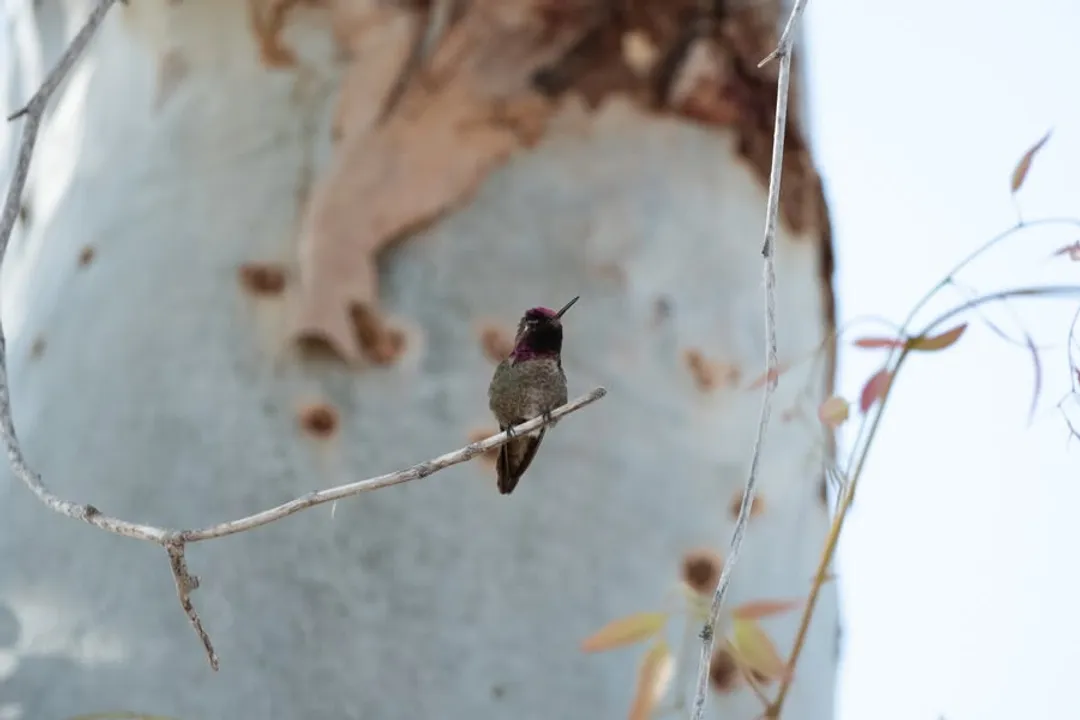
Distinguishing between the Costa's Hummingbird and the Black-chinned Hummingbird often comes down to observing the tiniest details under varying light conditions, a common challenge for birders, particularly where their ranges overlap in the American Southwest. [1][4] While both species share a general small size and rapid wingbeat, the adult males offer the most immediate clues, provided the sun hits their throat feathers just right. [3][5] If you find yourself squinting at a fast-moving jewel, understanding the subtle yet critical differences between Calypte costae and Archilochus alexandri can make the difference between a tentative sighting and a solid identification. [1][8]
# Male Gorget
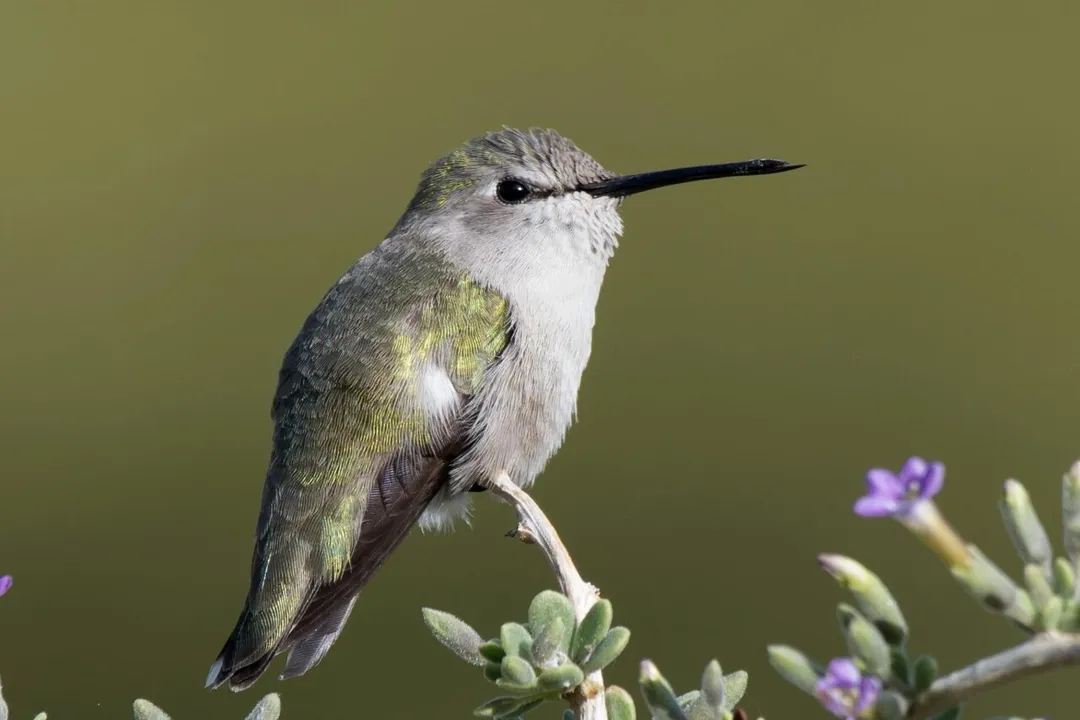
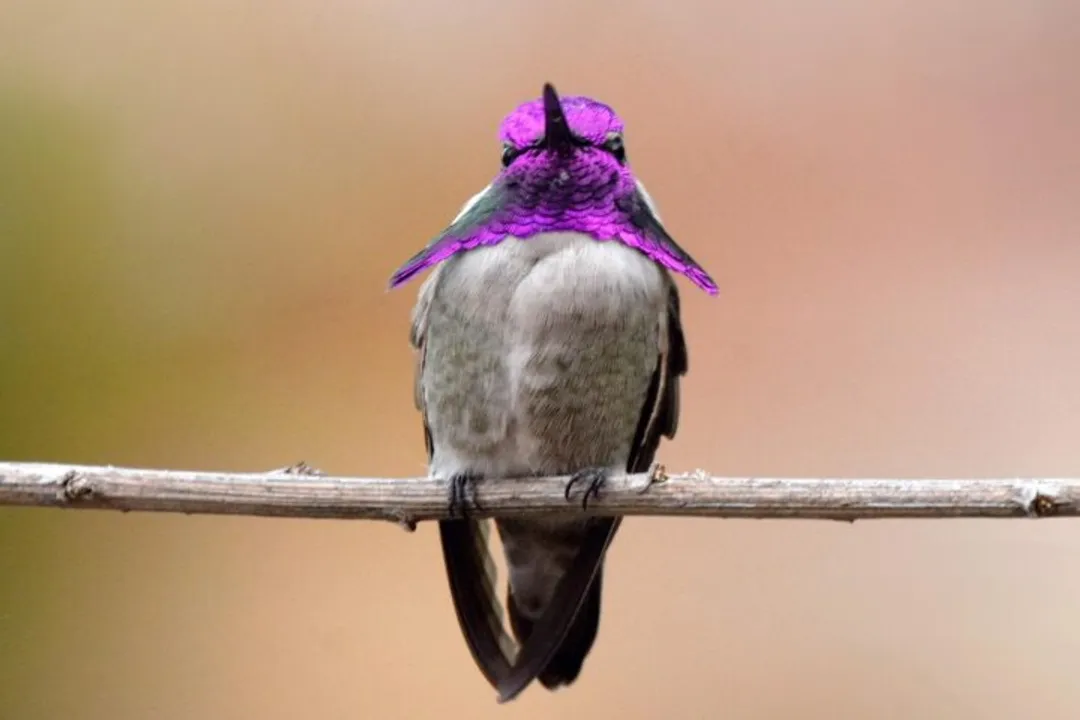
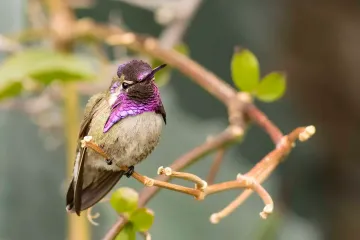
The throat patch, or gorget, is the definitive characteristic for identifying the males of these two species. [5] The adult male Costa's Hummingbird boasts a gorget that is spectacularly iridescent, typically appearing deep purple or magenta. [1][4] What sets the Costa's apart visually, even more so than the color, is the shape: the feathers spread out sideways during display flights, creating a distinctive, flared "whiskers" effect, often described as fan-shaped or spikey, that extends well beyond the sides of the head. [1][5]
Conversely, the male Black-chinned Hummingbird presents a much less flashy gorget in terms of shape. [5] While the center of its throat is deep, velvety black—appearing almost dark brown or bluish-black in poor light—the key is the distinct purple or violet band just below this black area. [4][5] This lower band is usually visible as a narrow, iridescent border only when the light catches it perfectly. [5] Crucially, the Black-chinned male lacks the dramatic side flares seen on the Costa’s; its gorget is narrower and lacks the pronounced side-pointing feathers. [1] If the bird you are watching has a solid, deep purple head that looks slightly fuzzy or flared at the sides, it leans heavily toward Costa’s; if it has a distinct black throat topped by a thin purple line, it is a Black-chinned. [1][5]
# Female ID
Identifying the females and immature birds presents a significantly greater hurdle because they lack the showy gorgets of the adult males. [4] Both female Costa’s and female Black-chinned Hummingbirds are generally duller, sporting pale gray or whitish undersides and brownish-green backs. [1][4]
In female Black-chinned Hummingbirds, look for faint dusky streaking on the throat and perhaps a subtle buffy wash on the flanks. [5] One reliable field mark, often visible on both sexes, involves the tail feathers. [4] The Black-chinned typically shows conspicuous white tips on the outer tail feathers. [4][5]
Female Costa’s Hummingbirds tend to be slightly paler overall on the belly compared to the Black-chinned, sometimes showing a slightly greener wash on the flanks rather than the buffy tone of the Black-chinned. [1] While both may show some pale spots near the tail base, the presence of prominent white tips on the outer tail feathers is a strong indicator pointing toward the Black-chinned species. [4] If you can catch the bird at all in flight to see those tail tips, the ID becomes much clearer. [4]
# Size Shape
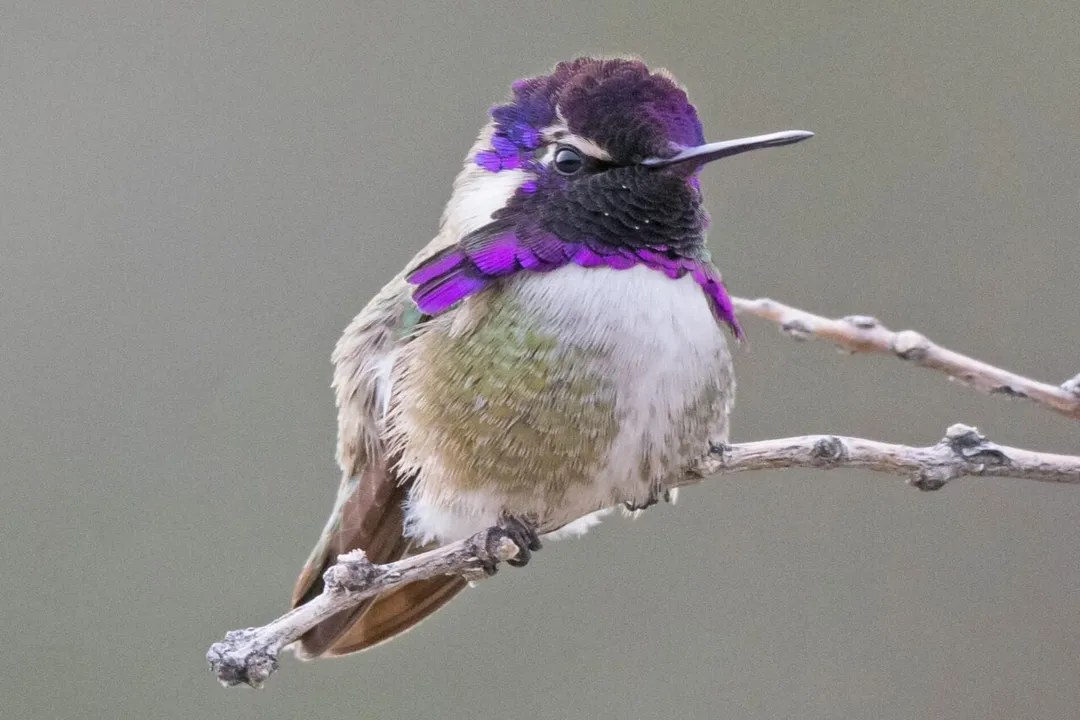
When comparing physical dimensions, the differences are minor but measurable. [1] Costa’s Hummingbirds are generally shorter and stockier, with a shorter bill relative to their body size. [1][5] The bill of the Costa’s is slightly shorter than that of the Black-chinned. [1][5]
The Black-chinned Hummingbird is slightly longer overall, with a notably longer bill. [5] This subtle difference in bill length is important if you are attempting to ID them feeding on specific flower structures, though for casual observation, size differences alone are difficult to judge without a direct comparison. [1] If the bird appears slightly "chunkier" or has a shorter, stubbier profile, it might be a Costa’s; if it seems a bit more slender or elongated, lean toward Black-chinned. [5]
# Range Habitat
Where and when you see the bird provides critical contextual clues, especially since their ranges overlap across parts of the western United States. [4]
The Costa’s Hummingbird is strongly associated with arid, desert, and chaparral habitats. [4][7] They are most numerous in the deserts of the Southwest, such as the Mojave and Sonoran Deserts. [7] In California, for example, they are prevalent in desert scrub and coastal sage scrub environments. [6]
The Black-chinned Hummingbird, while adaptable, prefers more woodland settings, often found near oak woodlands, riparian areas, and canyons. [4][5] They are generally found at lower elevations, though they can breed into foothills. [5] During the breeding season, the Black-chinned is one of the most common hummingbirds in the western United States, frequently found in suburban parks and gardens near water sources. [4][5] If you are observing a bird in a dense, shady canyon with oak trees, the Black-chinned is statistically more likely. [5] If you are observing in open, hot, low-desert scrub during the spring bloom, the Costa’s becomes the primary suspect. [4]
Here is a quick comparison chart summarizing the primary identification markers:
| Feature | Costa's Hummingbird | Black-chinned Hummingbird |
|---|---|---|
| Male Gorget | Deep purple/magenta; distinct flared "whiskers" on the sides [1][5] | Black center, thin violet band below; no side flares [4][5] |
| Female Tail | Outer tail feathers may be plain or have faint pale tips | Outer tail feathers show distinct white tips [4][5] |
| Bill Length | Shorter [1][5] | Longer [5] |
| Habitat | Arid desert, chaparral, dry scrub [4][7] | Woodlands, riparian areas, canyons, suburban gardens [4][5] |
When the birds are not displaying, like when females are foraging quietly, relying solely on the tail tips becomes paramount. If you are new to identification and the bird is only visible for a second, remember this simple probability calculation: in the deepest, driest parts of the Sonoran Desert in March, the odds are overwhelmingly in favor of a Costa’s. [7] Conversely, if you are near a creek in an oak grove near Los Angeles in June, the Black-chinned is the safer bet, even if you cannot confirm the tail tips. [5][6]
# Insight into Observation
It is fascinating how the habitat choice dictates observation strategy. Knowing that the Costa's is tied closely to desert blooms means that during the spring, following bursts of color in arid washes will often lead you to their territory. [7] This dependence on specific desert ephemerals means their presence can be transient, tied directly to local rainfall patterns, making the window for confirming their identity sometimes very short. [7]
For those setting up feeders in areas where both species occur, like the transition zones in Southern California foothills, consider the feeder design. [6] While both species visit feeders, the slightly longer bill of the Black-chinned bird may give it a slight advantage at deeper feeder ports compared to the shorter-billed Costa's, though both generalists will adapt to standard designs. [1][5] A more effective strategy than feeder depth, however, might be placement: feeders near dense, low scrub might attract more Costa’s, whereas those closer to mature trees or water features might favor Black-chinned birds. [4]
Ultimately, while the males offer spectacular, easy-to-read signals—the flared purple fan versus the straight black and violet line—the true test of field skill lies with the duller females. [1][4] In these cases, always try to get a clear view of the tail from behind as the bird flies away; those white tips on the Black-chinned are a real giveaway when the light refuses to cooperate on the throat feathers. [4]
Related Questions
#Citations
Black-Chinned Hummingbird vs Costa's Hummingbird - Bird Buddy
How to distinguish between Anna's, Black-chinned, and Costa's ...
Are these Costa's or Black-Chinned Hummingbirds? Clark County ...
Costa's Hummingbird - Celebrate Urban Birds
Black-chinned Hummingbird Similar Species Comparison
Field Identification - Costa's Hummingbird - Birds of the World
Costa's or Black-chinned hummingbirds? Placerita Canyon, California
Costa's Hummingbird
Hummingbird Identification: An Illustrated Guide to all 14 North ...