Where are significant, non-migratory populations of Blue Wildebeest reliably found year-round outside of the main East African spectacle?
Answer
In countries like Namibia, Botswana, and South Africa, often within national parks.
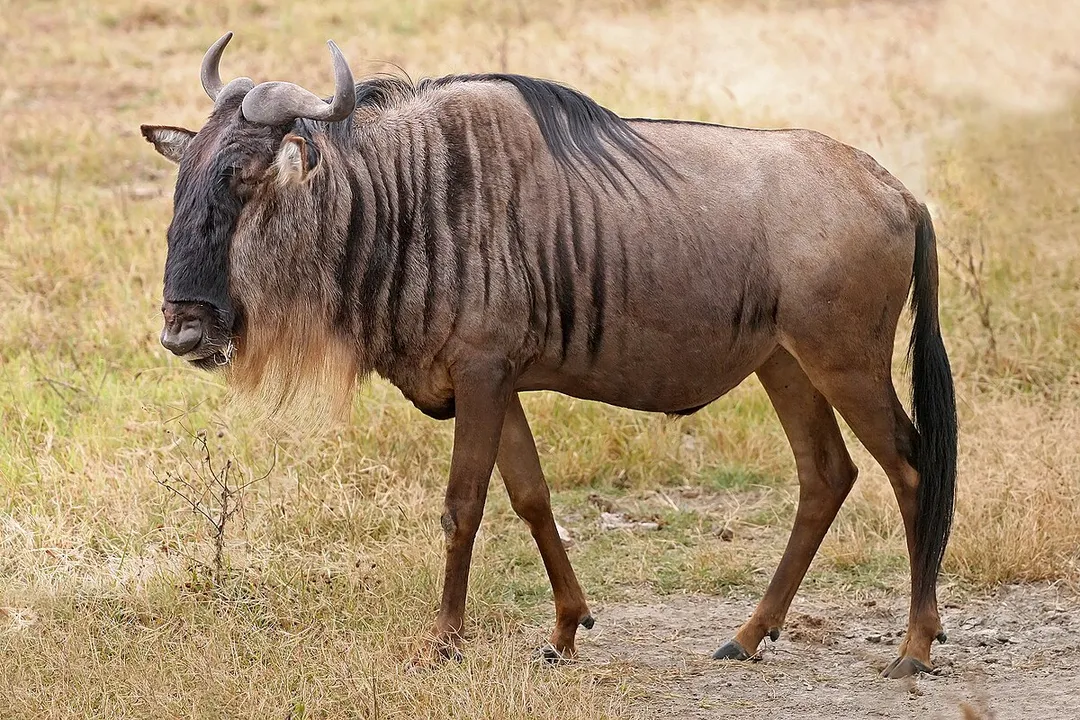
While the Blue Wildebeest is synonymous with the East African migration, its distribution extends into Southern Africa where smaller, resident populations exist. These non-migratory herds are hosted in countries such as Namibia, Botswana, and South Africa, often residing within national parks or private conservancies. Locations like Etosha National Park in Namibia are explicitly mentioned as places offering reliable year-round viewing of these localized groups, which establish home ranges based on local water and grazing availability, unlike their migratory counterparts.
Related Questions
What is the typical arrival window for migrating Blue Wildebeest herds in the Maasai Mara National Reserve in Kenya?What physical characteristic distinguishes the Black Wildebeest (*Connochaetes gnu*) mentioned in the text?Which specific location in Tanzania is cited as crucial for Blue Wildebeest calving grounds within the Serengeti-Mara ecosystem?Why is relying solely on historical averages for timing a Blue Wildebeest river crossing in the Mara potentially misleading for visitors?Where are significant, non-migratory populations of Blue Wildebeest reliably found year-round outside of the main East African spectacle?What is the primary ecological necessity that dictates the fundamental grassland or savanna habitat preference for both wildebeest species?What management strategy is emphasized as critical for safeguarding the Blue Wildebeest population's long-term health in East Africa?What specific South African preserve is named as a primary location where Black Wildebeest populations are currently concentrated?What is the recommended strategy for a visitor hoping to witness the main Blue Wildebeest migration spectacle, according to the advice given about timing?What condition causes the density of the Blue Wildebeest herds to be extraordinarily high in the southern Serengeti plains around February?