Wildebeest Locations
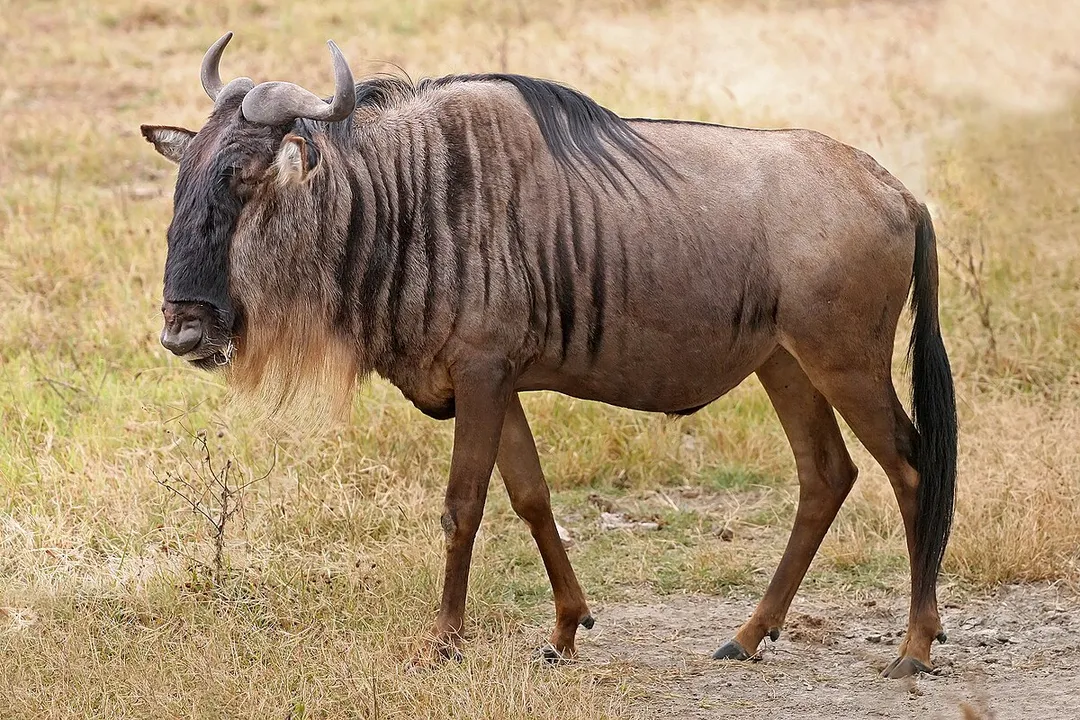
The world of the wildebeest, often called the gnu, is defined by movement and vast, open landscapes, primarily across East and Southern Africa. To understand where you find these iconic animals, one must first acknowledge that there are two distinct species, both holding specific geographical preferences, though one species is famous for its continental migration. The Blue Wildebeest (Connochaetes taurinus), also known as the Brindled Gnu, is the most numerous and the one central to the famous annual spectacle. In contrast, the Black Wildebeest (Connochaetes gnu), or White-tailed Gnu, has a much more restricted historical range, primarily confined to the highveld grasslands of South Africa.
# Two Species
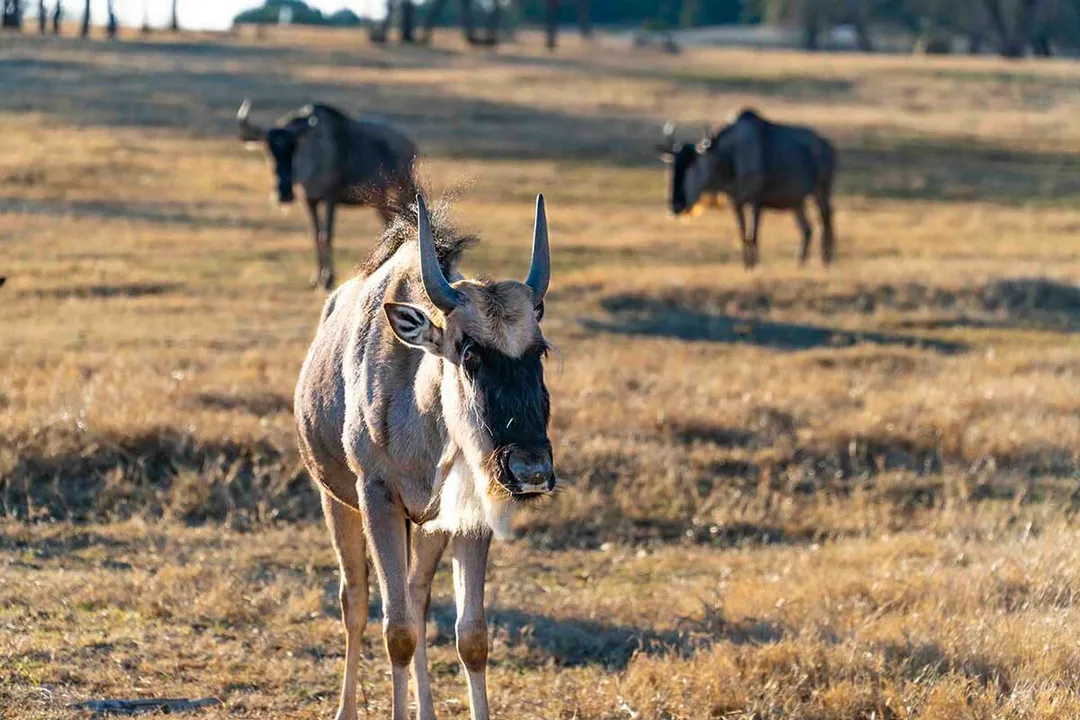
Distinguishing between the two is key to pinpointing their locations. The Blue Wildebeest is generally larger and characterized by its greyish-brown coat with dark vertical stripes, a heavy forequarters, and curved horns that sweep outwards before turning up. This is the species dominating the massive herds of Tanzania and Kenya.
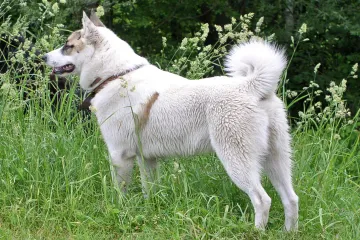
The Black Wildebeest, however, presents a different profile. As its name suggests, it is darker, sometimes nearly black, and possesses a long, horse-like white tail and horns that curve forward and then up sharply. While both species are grazers, their specific habitat preferences within their broader ranges differ, with the Black Wildebeest historically favoring drier, open grasslands. The presence of the Black Wildebeest outside of its native southern range is typically limited to managed reserves or private collections, such as those found in some North American centers, though this is a world away from their native habitat.
# East African Core
The epicenter of wildebeest activity, particularly for the Blue Wildebeest, is the Serengeti-Mara ecosystem that spans southern Kenya and northern Tanzania. This area is globally significant because it supports the largest terrestrial mammal migration on Earth. Within Tanzania, key areas like the Serengeti National Park are crucial, serving as essential calving grounds and part of the continuous migratory circuit. The sheer scale of the populations here means that during certain times of the year, wildebeest are the dominant herbivore across wide swathes of the savanna.
Moving north across the border, the Maasai Mara National Reserve in Kenya becomes the primary destination for the migrating herds. The timing of their arrival in the Mara is dependent on the rains, usually arriving between July and October, making this a predictable, though never guaranteed, location for visitors hoping to witness river crossings. This north-south pattern dictates where the animals will be found for much of the year.
When planning to view the migration, it is helpful to remember that the timing is fluid. While the movement is cyclical, a particularly dry year in the Serengeti might delay the northward push, meaning the herds could linger longer in the southern plains than usual. If a visitor arrives in June aiming for the Mara, but the rains have been late, they might find the bulk of the herds still south of the border, highlighting the need to check contemporary reports rather than relying solely on historical averages. This variability in arrival dates is a direct result of rainfall dictating grass quality, making the actual grass condition, not just the calendar month, the true locational guide.
# Southern Range Distribution
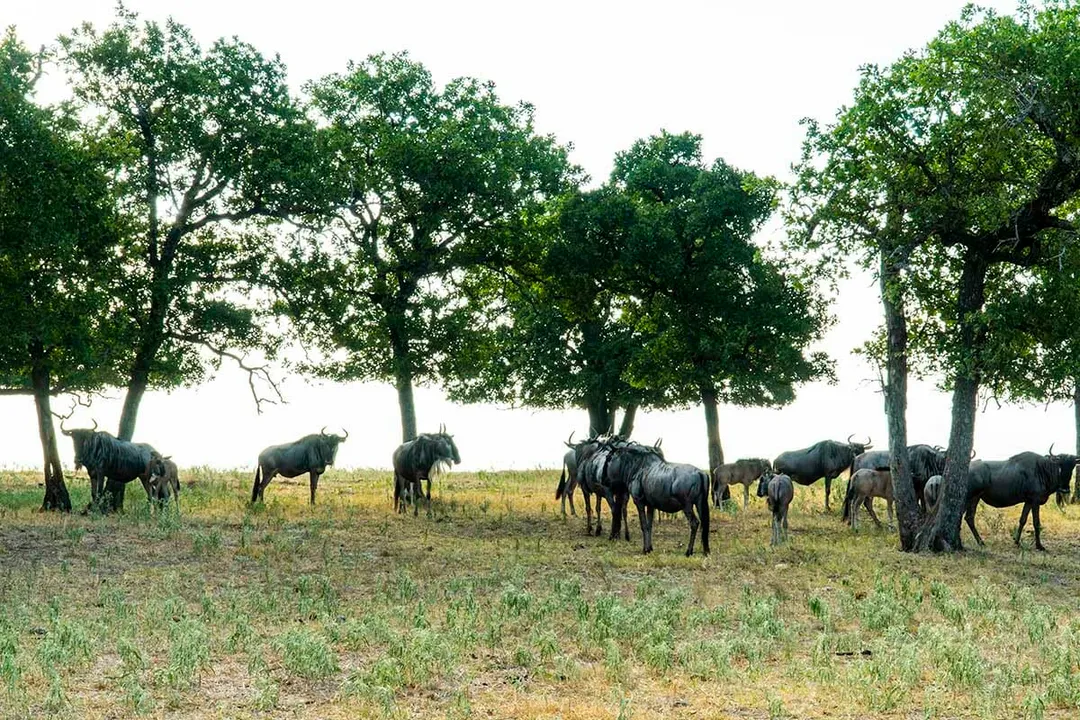
Beyond the massive East African migration spectacle, the distribution of wildebeest extends into Southern Africa, primarily featuring the Blue Wildebeest, though the Black Wildebeest is also present in protected areas within this region. Countries like Namibia, Botswana, and South Africa host significant, non-migratory populations, often within national parks or private conservancies.
For instance, in Southern Africa, locations such as Etosha National Park in Namibia or certain reserves in Botswana and South Africa offer reliable year-round viewing, though these are typically smaller, localized populations compared to the migratory aggregations. These resident herds establish home ranges based on local water and grazing availability, making their location more stable throughout the year, albeit in lower densities than seen during the migration.
The Black Wildebeest provides a contrast here. While historically widespread across the highveld of South Africa, conservation efforts have concentrated their populations. Today, they are largely found in specific reserves within South Africa, such as the Sterkfontein Dam Nature Reserve or similar protected areas where grasslands are managed for their needs. This localized nature, driven by historical hunting pressure and subsequent protection, means finding a Black Wildebeest requires targeting these specific South African preserves rather than scanning the horizon across a vast ecosystem.
# Managed Habitats
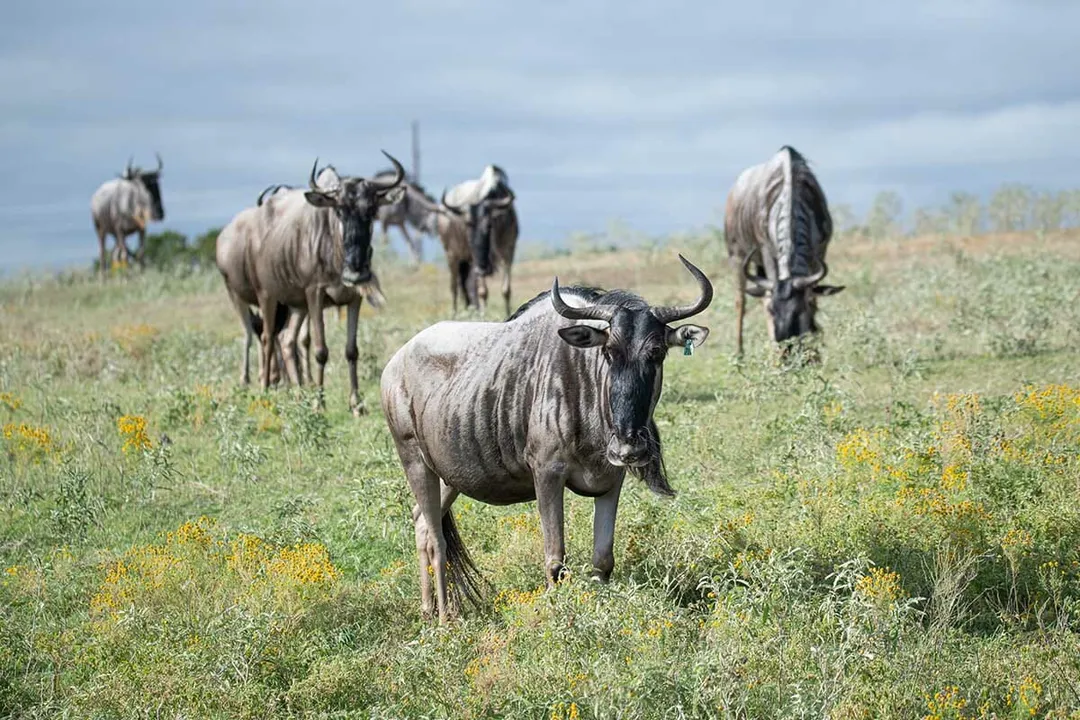
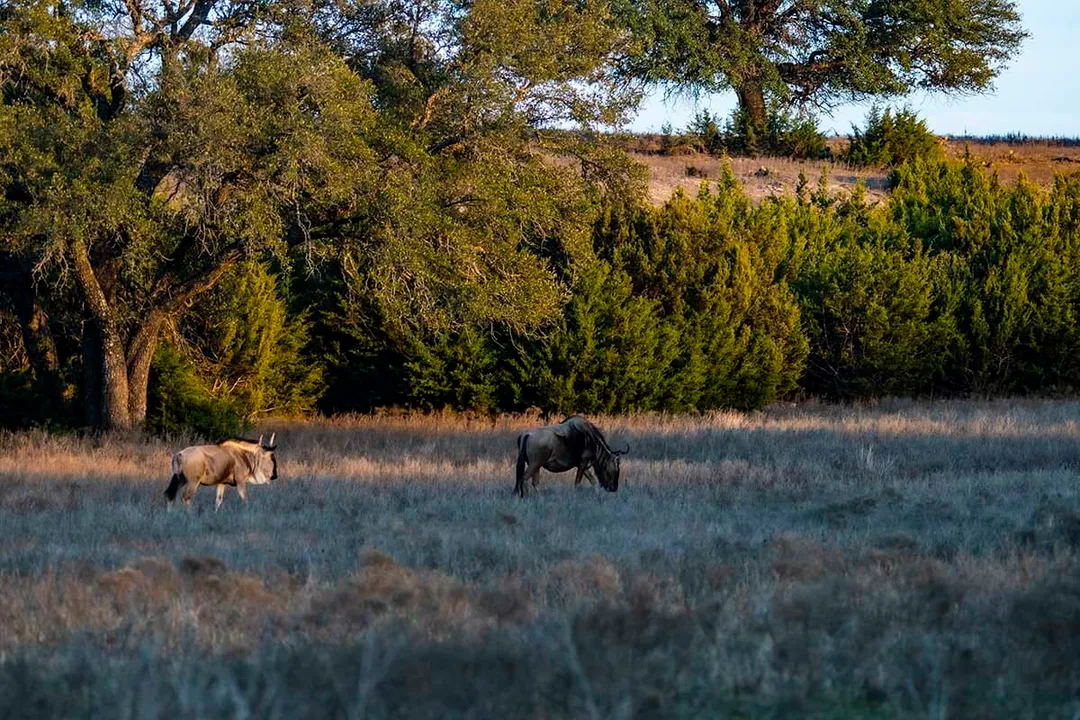
It is important to recognize that outside of their native African environments, wildebeest locations are far more intentional. Zoos and wildlife parks around the globe host small numbers for educational and conservation purposes. For example, facilities like the Fossil Rim Wildlife Center in Texas maintain populations of the Common Wildebeest (Blue Wildebeest) in a managed, semi-wild setting. While these locations offer guaranteed sightings, they obviously cannot replicate the ecological context of the great plains.
Conservation organizations actively work to maintain the health of the wild populations and the integrity of their movement corridors. For the Blue Wildebeest, safeguarding the migratory route itself—the pathways connecting the Serengeti to the Mara—is as critical as protecting the parks themselves. If corridors are blocked by fences, development, or other human interference, the migratory location effectively shrinks, impacting the health of the entire population.
# Understanding Herding Zones
The density of wildebeest in any given location varies dramatically based on season and local conditions. During the peak calving season, which typically occurs around February in the southern Serengeti plains, the density in that specific area becomes extraordinarily high, concentrating millions of animals in a relatively small space. This massing is an evolutionary strategy to overwhelm predators.
Conversely, during the drier months, the herds spread out as they move northward, searching for new pasture. A visitor tracking them in June might find them distributed across a wider area of western Tanzania, making the concentration lower, though the movement itself is more constant. This difference in density affects the viewing experience significantly; a concentrated calving ground offers unparalleled wildlife spectacle, whereas tracking scattered groups requires more patience and local knowledge of where the freshest grass has sprung up following a localized rain shower.
When considering a safari, understanding the general location of the species based on the calendar allows for better trip planning. While the migration gets the most attention, focusing on Southern African parks during the middle of the year offers a different, yet equally valid, wildebeest experience with resident herds. If the primary goal is the spectacle of the river crossing, planning a visit to the Mara between July and October provides the highest probability, assuming normal rainfall patterns. However, a crucial point for first-time visitors is this: due to the reliance on rainfall, aiming for the start of the known season (e.g., early July in the Mara) often yields better results than aiming for the peak (mid-August), as the movement is constantly pushing forward. Waiting too long for the "peak" risks missing the main event as the herd moves on.
# Habitat Requirements
The fundamental locations for both wildebeest species are characterized by open grasslands or savannas. They are obligate grazers, meaning grass forms the overwhelming majority of their diet, which necessitates residing in areas where grass biomass is substantial. This requirement for open space also influences their predator-avoidance behavior, as open ground allows them to spot threats from a distance. While they will venture into light woodland, dense forests are unsuitable for their social structure and feeding habits. For the Black Wildebeest in South Africa, this translates to a preference for the relatively treeless highveld grasslands.
Their dependence on water is also a locational factor. While they can go without drinking for periods, Blue Wildebeest are generally found within reasonable proximity to water sources, especially when moving with very young calves. This often concentrates them near rivers and waterholes during dry spells, which again creates prime viewing hotspots during those times of the year.
# Population Context
The sheer numbers involved in the East African migration mean that for the Blue Wildebeest, the "location" is less a fixed point and more a zone of movement spanning hundreds of miles. The total population of Blue Wildebeest is estimated in the millions, which significantly influences their IUCN status and management priorities compared to the smaller, more localized Black Wildebeest population. While both species face threats from habitat fragmentation and degradation, the scale of the challenge differs greatly. Protecting the vast, interconnected system in East Africa is a logistical undertaking focused on cross-border cooperation and corridor integrity, whereas protecting the Black Wildebeest is often about maintaining specific, high-quality grassland reserves within a single country.
| Species | Primary Location Type | Key Habitat Feature | Migratory Status |
|---|---|---|---|
| Blue Wildebeest | Serengeti-Mara Ecosystem (East Africa) | Open Savanna, Grasslands | Massive Annual Migration |
| Black Wildebeest | South African Highveld Reserves | Open Grasslands | Largely Resident/Localized |
| Both Species | Managed Reserves (Global) | Semi-wild enclosures | Non-migratory |
The conservation status often reflects the distribution success. The Blue Wildebeest remains relatively numerous, though heavily reliant on protected areas like the Serengeti. The Black Wildebeest, having suffered severe historical declines, is now a focus for reintroduction and localized protection, meaning their current location is a direct outcome of intensive management efforts.
The relationship between the two species, though geographically separated for the most part, presents an interesting contrast in conservation strategy. In environments where both coexist in managed settings, their spatial needs—the Black Wildebeest needing drier, higher ground, and the Blue Wildebeest tolerating broader savanna conditions—must be accommodated in reserve design.
Ultimately, pinpointing a wildebeest location means determining which species you wish to see and aligning that with the appropriate geographic region and season. The vast, dramatic movements define the East, while stable, managed havens define the South.
Related Questions
#Citations
Wildebeest - Wikipedia
Wildebeest - African Wildlife Foundation
Wildebeest Sightings - Migration Tracker Map - 2025 | 2026
Africa's Great Wildebeest Migration - everything you need to know
Wildebeest need zones? : r/theHunter - Reddit
Common Wildebeest - Fossil Rim Wildlife Center
Guide :: Vurhonga Savanna Animal Location Map - Updated Lions
Wildebeests: Facts, Behaviours, Threats, and Diet | IFAW
Wildebeest Facts | Southern Africa Wildlife Guide