Where are tamarins located?
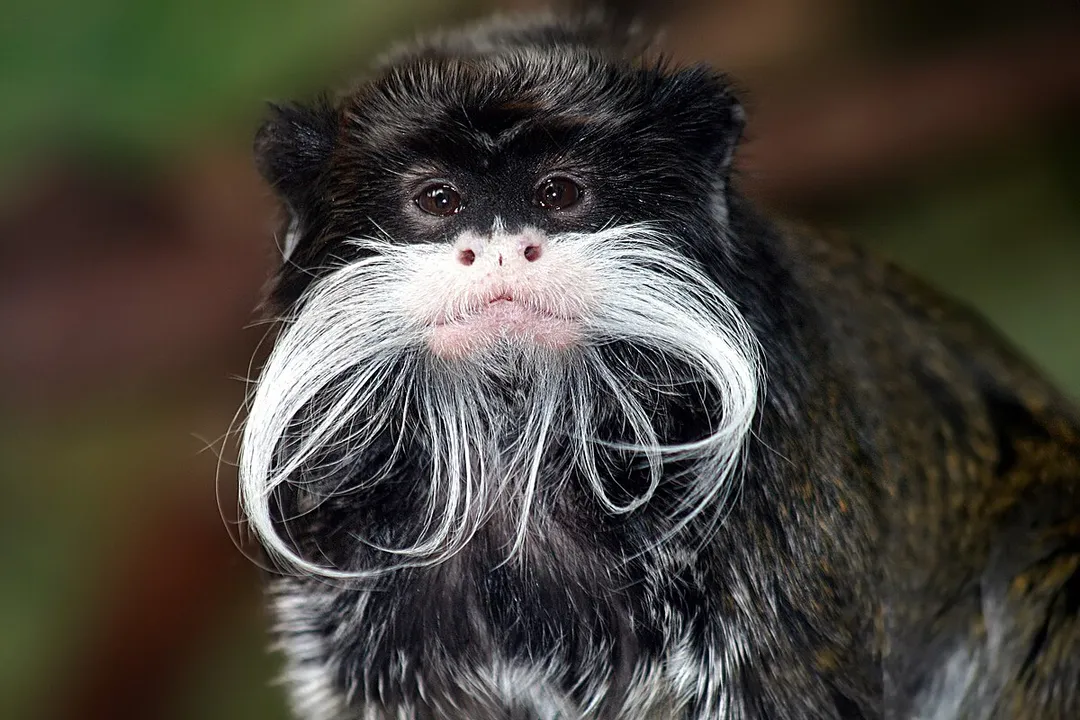
The world of tamarins is geographically concentrated in a vibrant band of the Americas, specifically where tropical rainforests offer the dense canopy these small primates call home. Generally speaking, tamarins are classified as New World monkeys whose natural distribution spans from southern Central America down through much of South America. This broad range encompasses regions like northwestern Colombia, the expansive Amazon basin, and the Guianas. However, to truly map out where these fascinating creatures reside, one must look closer at the specific domains of the different genera and species, as their locations are often much more narrowly defined by rivers, elevation, and forest type.
# Neotropical Home
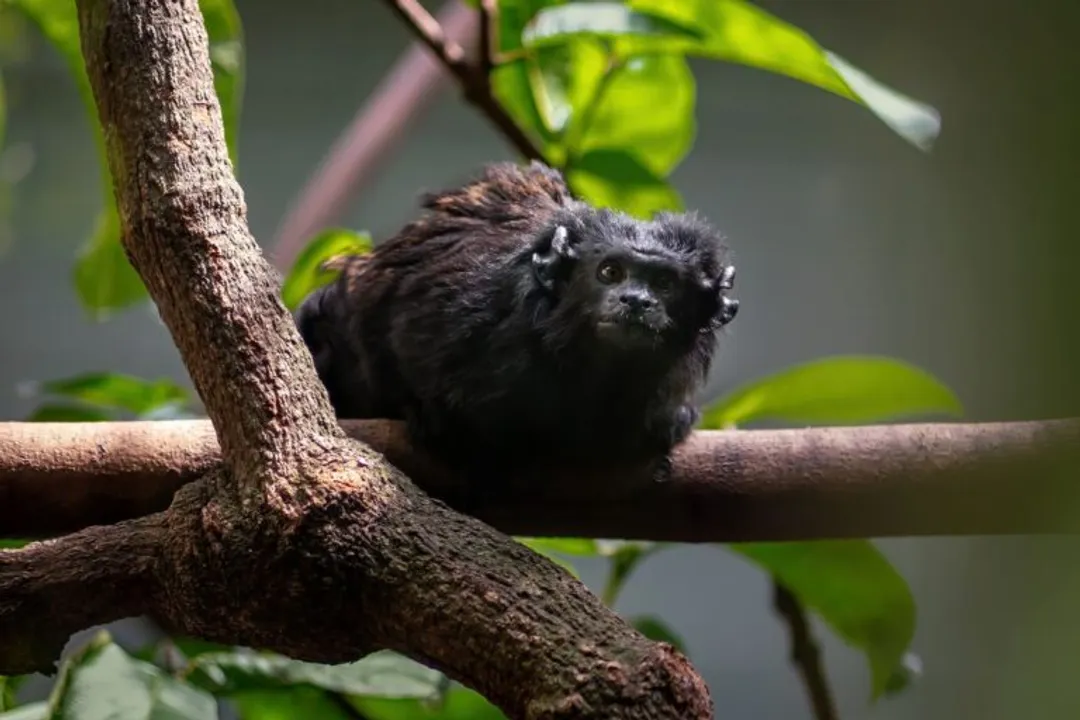
Tamarins belong to the family Callitrichidae, and the genus Saguinus is perhaps the best known group, containing many of the species that draw international attention. Their presence starts just north of the equator, extending southwards across the continent. For instance, the Geoffroy's Tamarin (Oedipomidas geoffroyi), also called the Panamanian red-crested tamarin, occupies the northernmost extent mentioned, residing between eastern Panama and northwestern Colombia. This placement highlights that not all tamarins are strictly Amazonian; some have adapted to the drier and wetter climates found along the Central American isthmus and into northern South America.
Deeper into the continent, the distribution quickly focuses on South America, where diverse species inhabit varied forest strata. For example, the Silvery-Brown Tamarin (Oedipomidas leucopus) is confined to Colombia, specifically roaming areas near the Cauca River and on the western side of the middle Magdalena River. This precise riverine boundary appears to be a common pattern throughout their range. It’s quite striking how often specific river systems—like the Amazon, Tocantins, and Xingu—act as hard borders, effectively isolating populations into distinct geographical pockets, allowing unique species traits to develop within those specific forest segments. This isolation, driven by major waterways, is a key feature of how the tamarin landscape has been carved out over evolutionary time.
# Brazil's Coast
A crucial distinction in tamarin geography is the specialized habitat required by the lion tamarins (genus Leontopithecus). Unlike many of their cousins who live deep within the Amazon basin, these striking, golden-maned primates are exclusively found in the Atlantic Forest of southeastern Brazil. This area, which stretches along the coast, is distinct from the vast Amazonian forests and has faced intense historical deforestation pressure due to development like coffee production and urbanization.
The most famous of this group, the Golden Lion Tamarin (Leontopithecus rosalia), historically ranged across the lowland coastal regions of Rio de Janeiro and Espírito Santo states. Today, conservation efforts heavily focus on protecting the Poço das Antas Biological Reserve in Rio de Janeiro State, which represents a critical swath of their native, humid, vine-filled canopy environment. Another relative, the Black-Faced Lion Tamarin (Leontopithecus caissara), is also endemic to Brazil’s Atlantic Rainforest but occupies a separate locale, with one main population residing on Superagui island off the northeast coast of Paraná state. Similarly, the Golden-Headed Lion Tamarin (Leontopithecus chrysomelas) is strictly endemic to the Atlantic Forest of coastal Brazil. This clear, localized grouping of the lion tamarins to the Atlantic Forest highlights a significant geographic split from the other tamarins primarily located further west and north in the Amazon basin.

# Amazonian Zones

The majority of tamarin diversity, particularly within the Saguinus and Tamarinus genera, is rooted in the Amazon basin and the connecting regions of Peru, Bolivia, and Colombia. The specific location often depends on which river borders their territory.
Take the Black-Handed Tamarin (Saguinus niger), for example. It is primarily found in the Brazilian state of Pará, with its home range strictly defined by rivers: the Amazon River to the north, the Tocantins River to the east, and the Xingu River to the west. This perfectly illustrates the riverine compartmentalization of the Amazonian fauna. A neighboring species, the Pied Tamarin (Saguinus bicolor), has one of the tightest ranges, living only in and around the Amazonian port city of Manaus in Brazil. This dependence on continuous old-growth forest near a major urban center places them under extreme localized threat.
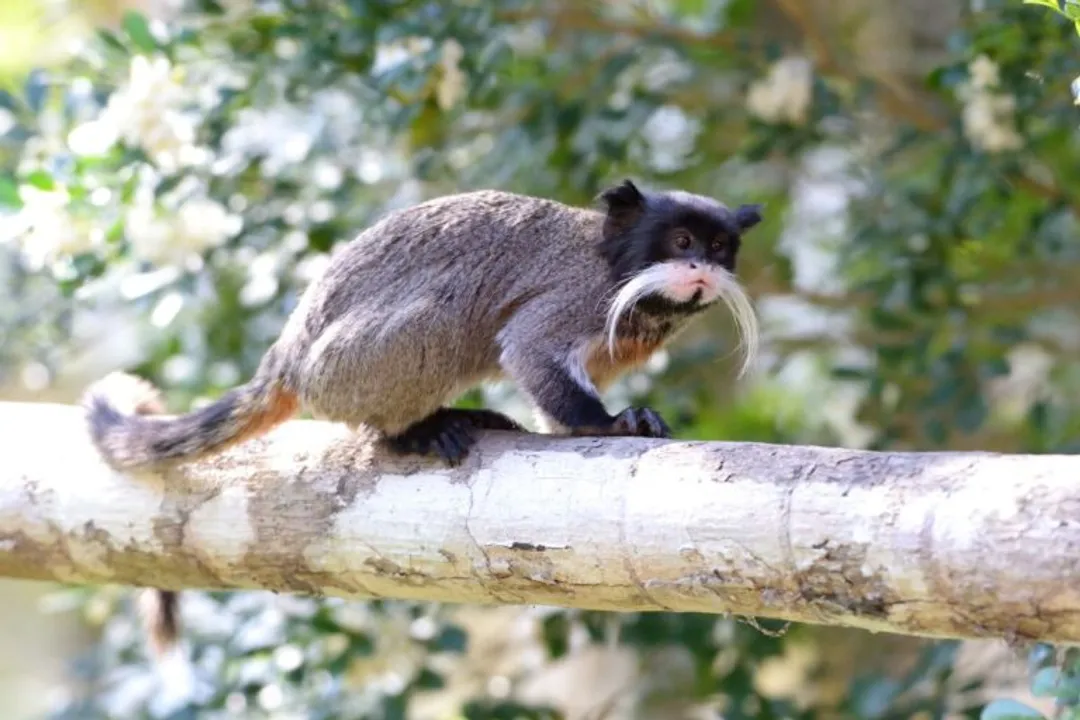
Other Amazonian dwellers show wider distributions across countries. The Moustached Tamarin (Saguinus mystax), for instance, ranges across western Brazil and eastern Peru. Further south and east within the basin, the Red-Chested Mustached Tamarin (Tamarinus labiatus) inhabits the Amazon rainforests of Brazil, Peru, and Bolivia, with some groups living north of the Amazon basin itself.
When examining the saddleback tamarins (Leontocebus), the overlap between countries becomes apparent, though forest strata often differentiate them. The Saddleback Tamarin (Leontocebus fuscicollis) has a very broad range, spanning Bolivia, Brazil, Colombia, Ecuador, and Peru. Meanwhile, the Black-Mantled Tamarin (Leontocebus nigricollis) is found across the northwestern Amazon rainforest in western Brazil, southeastern Colombia, northeastern Peru, and eastern Ecuador.
This pattern of multiple countries hosting a single tamarin genus, but with subtle shifts in elevation or river adjacency, suggests a complex evolutionary history shaped by the vast hydrological network of the Amazon. It is fascinating to note that while the lion tamarins are strictly confined to the humid Atlantic coast forest, the numerous other tamarin species have specialized to exploit the incredibly varied conditions—from lowland floodplains to drier terra firma forests—across the massive Amazonian biome.
# Forest Strata
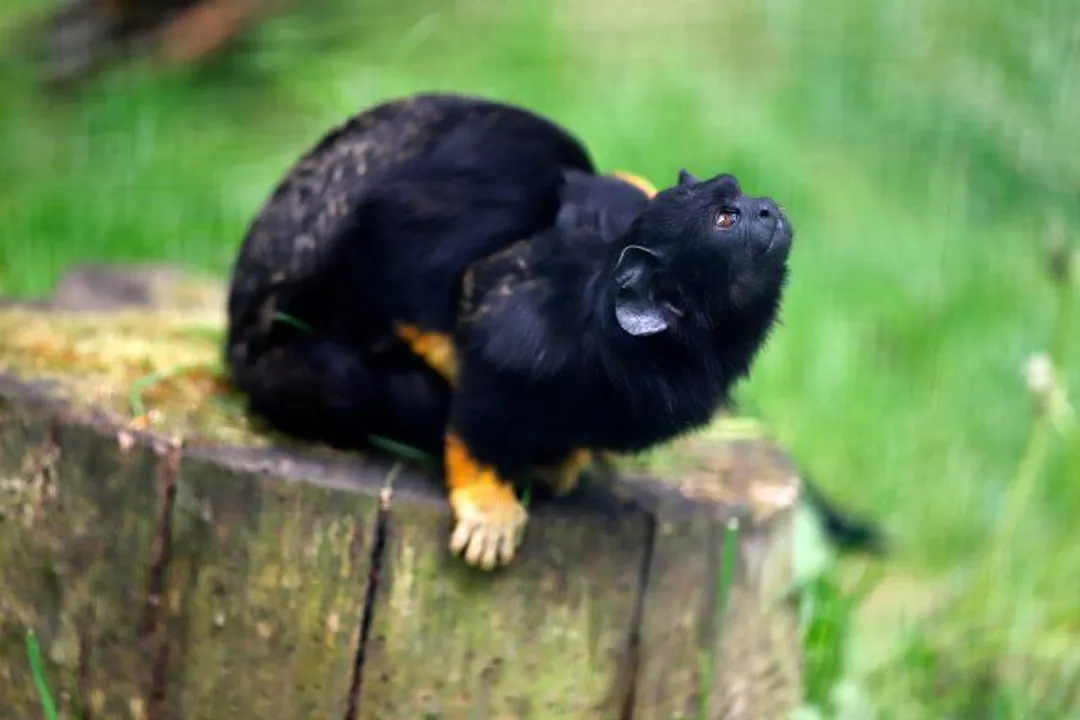
Beyond national borders and river courses, the micro-location within the forest itself dictates which tamarin lives where. Tamarins are generally diurnal and arboreal, spending their days running and jumping through the trees. While all tamarins are adapted for canopy life, there is evidence of vertical segregation. For instance, saddleback tamarins (Leontocebus) often live in the lower strata of the forest when they share territory with Saguinus species, which tend to occupy higher levels. This difference in elevation preference helps reduce direct competition for food and space, indicating that even in areas where ranges overlap, their exact vertical niche can separate them. This niche partitioning, relying on subtle differences in forest structure—such as how long their hands are to probe crevices versus how they forage on surfaces—is a key factor allowing so many related species to coexist geographically.
The Cotton-Top Tamarin (Saguinus oedipus), critically endangered and restricted to northwestern Colombia between the Magdalena and Artato rivers, clearly prefers a specific habitat type within that limited zone. Their need for this precise environment, which has been severely reduced by agriculture and urban expansion, underscores the fragility of their location-dependent existence.
In summary, while the overall distribution of tamarins is firmly rooted in the Neotropics—Central America down into the Amazonian and Atlantic coastal regions of South America—pinpointing any single tamarin requires knowledge of rivers, elevation, and specific forest types, differentiating the coastal dwellers of Brazil from the varied inhabitants of the Amazonian maze.
Related Questions
#Citations
Tamarin - Wikipedia
Golden lion tamarin - National Zoo
Tamarins | New England Primate Conservancy
Tamarins | Chattanooga Zoo
Golden Lion Tamarin - Our Animals - Henry Vilas Zoo
Tamarin - Indianapolis Zoo
Saving the golden lion tamarin - Zoo Atlanta
Golden lion tamarin habitat restoration, hope, and survival
Golden Lion Tamarin | Akron Zoo