What condition causes the density of the Blue Wildebeest herds to be extraordinarily high in the southern Serengeti plains around February?
Answer
This is the peak calving season, where millions concentrate in a relatively small space as an evolutionary strategy against predators.
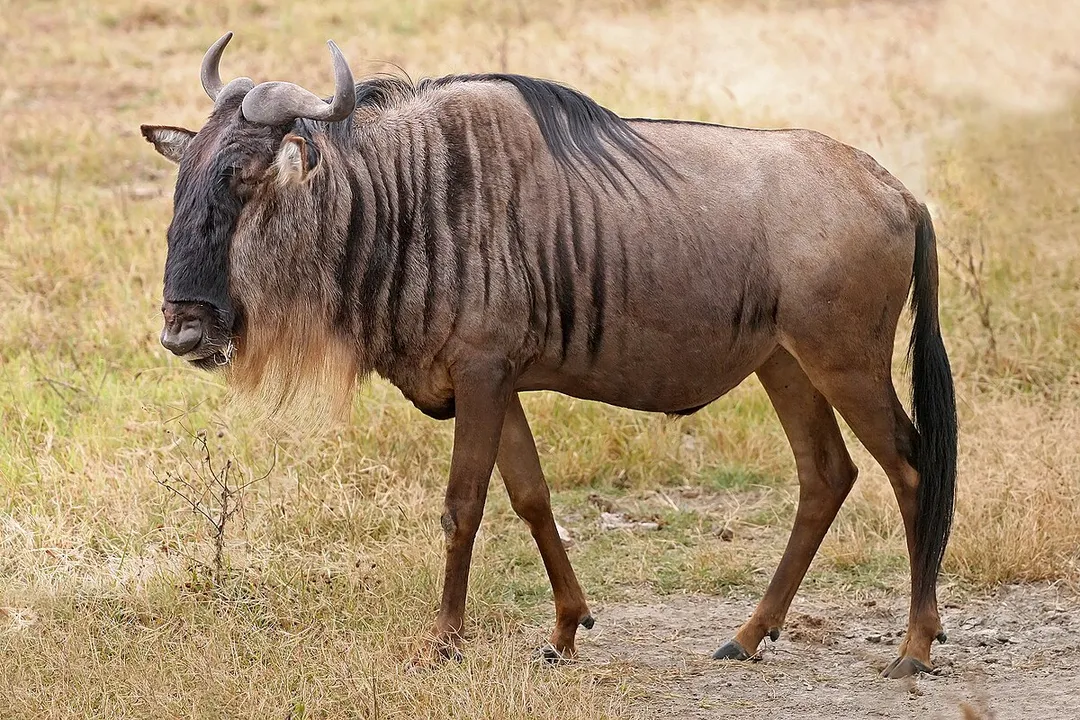
During the peak calving season, which is typically timed around February in the southern plains of the Serengeti, the density of the Blue Wildebeest population reaches an extreme level. Millions of animals aggregate in a limited geographical area. This massing behavior is described as an evolutionary strategy designed specifically to overwhelm predators, increasing the survival odds for individual calves by sheer numbers. When the herds move northward during drier months, they spread out, resulting in lower local concentration.
Related Questions
What is the typical arrival window for migrating Blue Wildebeest herds in the Maasai Mara National Reserve in Kenya?What physical characteristic distinguishes the Black Wildebeest (*Connochaetes gnu*) mentioned in the text?Which specific location in Tanzania is cited as crucial for Blue Wildebeest calving grounds within the Serengeti-Mara ecosystem?Why is relying solely on historical averages for timing a Blue Wildebeest river crossing in the Mara potentially misleading for visitors?Where are significant, non-migratory populations of Blue Wildebeest reliably found year-round outside of the main East African spectacle?What is the primary ecological necessity that dictates the fundamental grassland or savanna habitat preference for both wildebeest species?What management strategy is emphasized as critical for safeguarding the Blue Wildebeest population's long-term health in East Africa?What specific South African preserve is named as a primary location where Black Wildebeest populations are currently concentrated?What is the recommended strategy for a visitor hoping to witness the main Blue Wildebeest migration spectacle, according to the advice given about timing?What condition causes the density of the Blue Wildebeest herds to be extraordinarily high in the southern Serengeti plains around February?