What was the estimated maximum length for the predatory bony fish Xiphactinus?
Answer
Around 15 feet (4.6 meters)
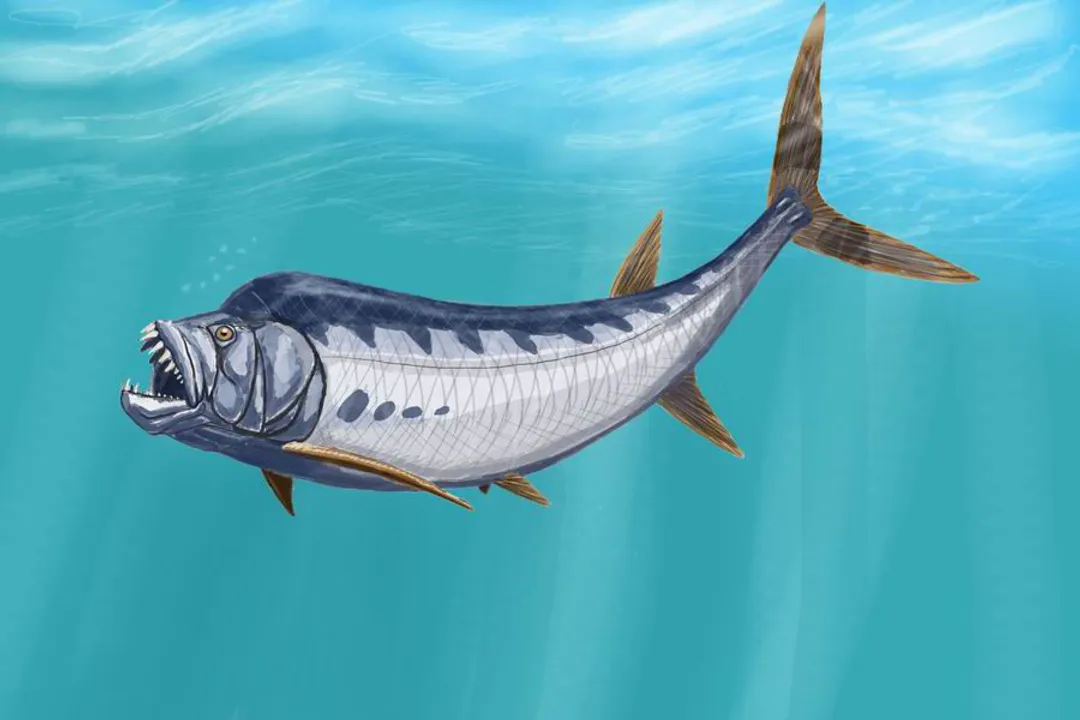
The sheer physical scale of Xiphactinus immediately distinguished it, with maximum length estimates generally settling around 15 feet, translating to about 4.6 meters. While some historical accounts suggested lengths slightly higher, approaching 16 feet, the 15-foot mark is frequently cited. This immense size established it as one of the largest predatory bony fishes of the Late Cretaceous period, allowing it to dominate the fauna sharing the ancient Western Interior Seaway. Visualizing this length places it significantly larger than many contemporary large fish species, underscoring its apex predator status in that ancient environment.
Related Questions
What was the estimated maximum length for the predatory bony fish Xiphactinus?What specialized tail fin structure did Xiphactinus possess, signaling high-speed swimming capability?What classification is given to the large, diamond-shaped, bony scales covering Xiphactinus?How are the large, prominent teeth found in the upper jaw of Xiphactinus described in relation to movement?Which physical characteristic of Xiphactinus demonstrates an adaptation for rapid, open-water pursuit?Which class of fishes, defined by its bony skeleton, did Xiphactinus belong to?Where did the gape of the Xiphactinus's enormous mouth extend relative to its eye socket?What weight estimation, in kilograms, is suggested for the massive Xiphactinus?In which ancient North American marine environment did Xiphactinus function as a dominant apex hunter?What evolutionary trade-off resulted from Xiphactinus possessing both heavy dermal armor and a lunate tail?