What visual sign confirms that natural enemies have been active in declining an aphid colony?
Answer
Observing mummified aphids, which appear as swollen, brassy, or grayish shells
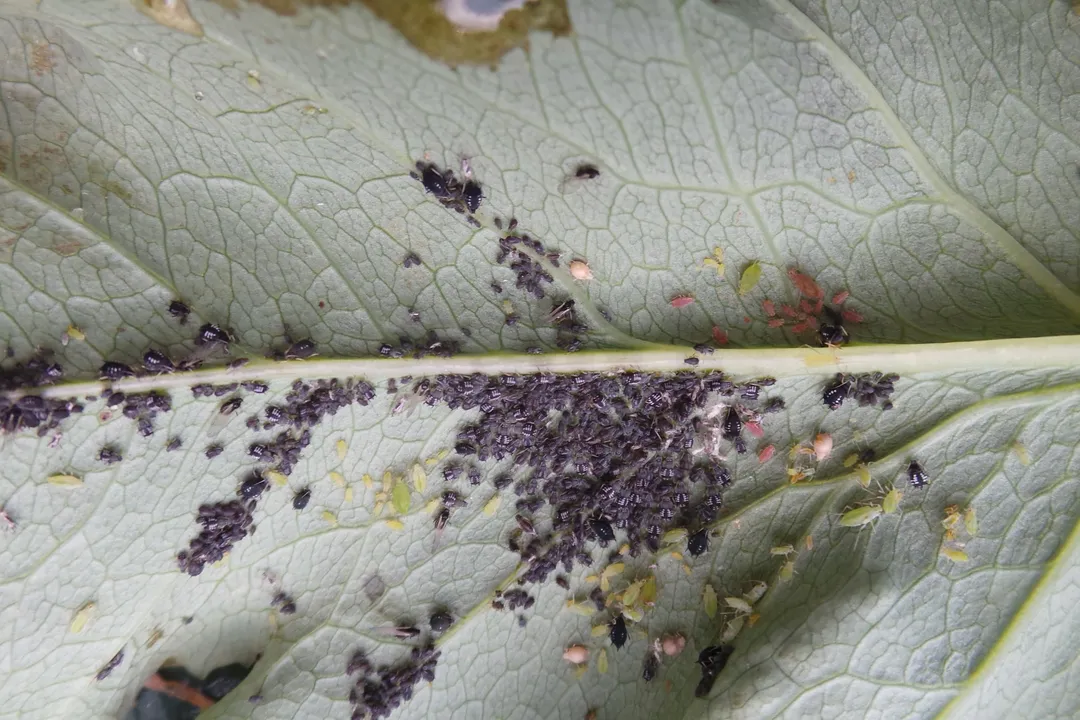
When assessing an aphid population, observing the aftermath of natural enemy activity provides crucial insight into the current infestation status. If natural enemies, such as parasitic wasps, have successfully controlled the colony, the physical evidence left behind is the presence of mummified aphids. These are the empty shells or husks of aphids that have been parasitized, causing them to swell up and change color to a characteristic brassy or grayish appearance. The presence of these mummies indicates that the active infestation level is likely already in decline because the natural control mechanisms have already exerted their influence.
Related Questions
Which two main plant groups host the Oleander Aphid (*Aphis nerii*) almost exclusively?What are the distinguishing physical features of the Oleander Aphid (*A. nerii*)?What agricultural crops are specifically targeted by the Yellow Aphid Complex?Where do Oleander Aphids aggregate heavily on the ornamental shrub *Nerium oleander*?Why does finding yellow aphids on milkweeds pose a management challenge for Monarch butterfly conservation efforts?How does the sticky, shiny excretion called honeydew assist in locating hidden yellow aphid clusters?When scouting for yellow aphids, which area of the plant requires the most immediate attention?What remains the critical differentiator separating the strictly tied Oleander Aphid (*A. nerii*) from generalist yellow aphids?What targeted management tactic is practical for dislodging Oleander Aphids on milkweed terminal buds without chemicals?What visual sign confirms that natural enemies have been active in declining an aphid colony?