How does the sticky, shiny excretion called honeydew assist in locating hidden yellow aphid clusters?
Answer
Honeydew is a sticky, shiny excretion that allows tracing back to the hidden cluster
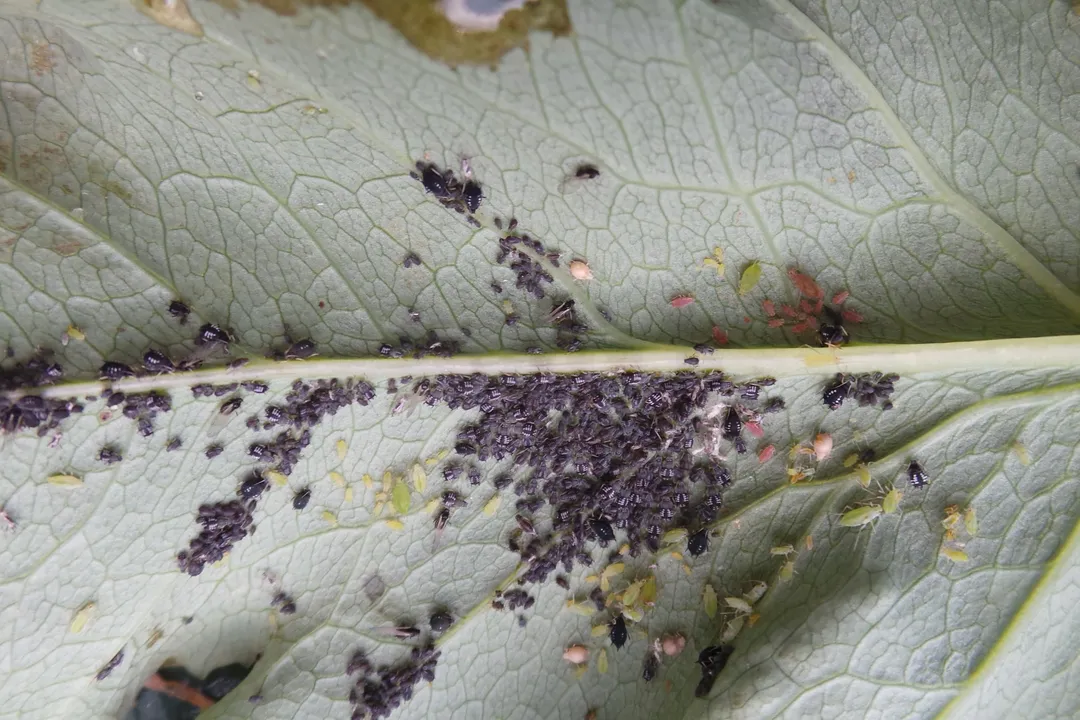
Honeydew is the sticky, shiny excretion left behind by feeding aphids as they process plant sap. Because aphids often hide on the undersides of leaves or deeply sheltered stems to avoid predation and harsh environmental conditions like direct sun and wind, they may not be immediately visible. However, the presence of this sticky residue on leaves below or nearby provides an indirect but reliable indication that aphids are actively feeding in the vicinity. By tracing this telltale shiny substance, an observer can often locate the camouflaged or hidden clusters of yellow insects responsible for the excretion.
Related Questions
Which two main plant groups host the Oleander Aphid (*Aphis nerii*) almost exclusively?What are the distinguishing physical features of the Oleander Aphid (*A. nerii*)?What agricultural crops are specifically targeted by the Yellow Aphid Complex?Where do Oleander Aphids aggregate heavily on the ornamental shrub *Nerium oleander*?Why does finding yellow aphids on milkweeds pose a management challenge for Monarch butterfly conservation efforts?How does the sticky, shiny excretion called honeydew assist in locating hidden yellow aphid clusters?When scouting for yellow aphids, which area of the plant requires the most immediate attention?What remains the critical differentiator separating the strictly tied Oleander Aphid (*A. nerii*) from generalist yellow aphids?What targeted management tactic is practical for dislodging Oleander Aphids on milkweed terminal buds without chemicals?What visual sign confirms that natural enemies have been active in declining an aphid colony?