Yellow Cobra Locations
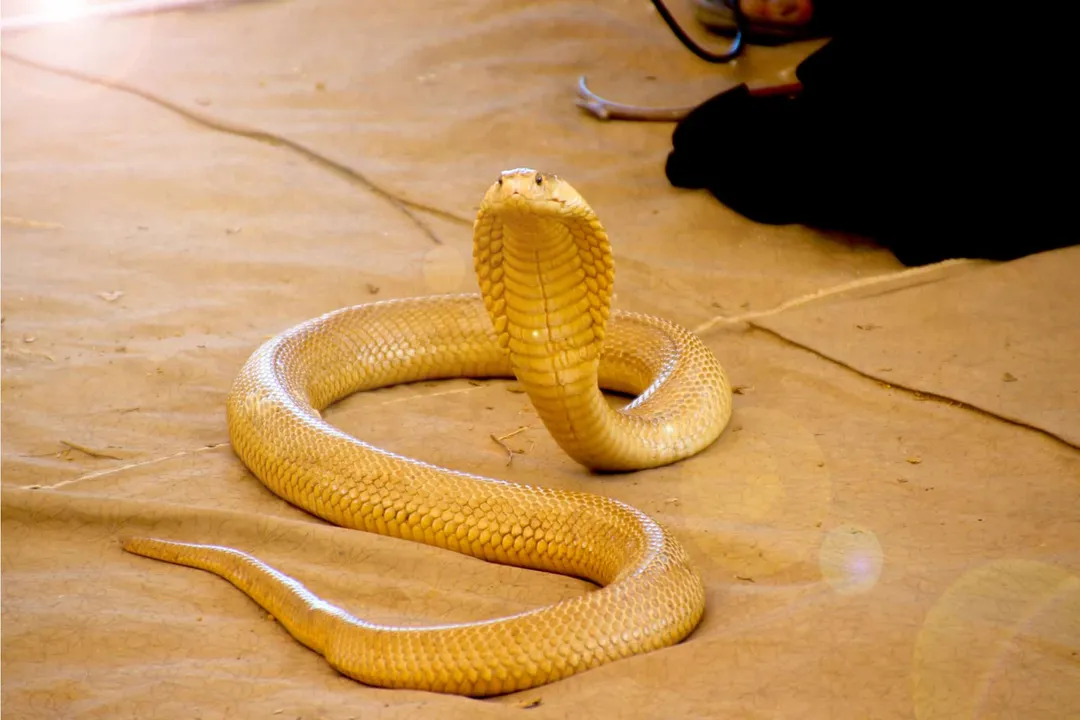
The Yellow Cobra, scientifically known as Naja nivea, is a creature whose name only tells part of the story regarding its appearance, and even less about the broad span of territory it occupies across Southern Africa. This highly venomous snake, sometimes referred to locally as the brown cobra or koperkapel (Afrikaans for copper cobra), is one of the most significant reptiles to understand in that region due to the potency of its neurotoxic venom, which experts equate in lethality to that of the fearsome Black Mamba. [1] Understanding where one might encounter this elusive yet dangerous serpent is key to respecting its territory.
# Range Extent
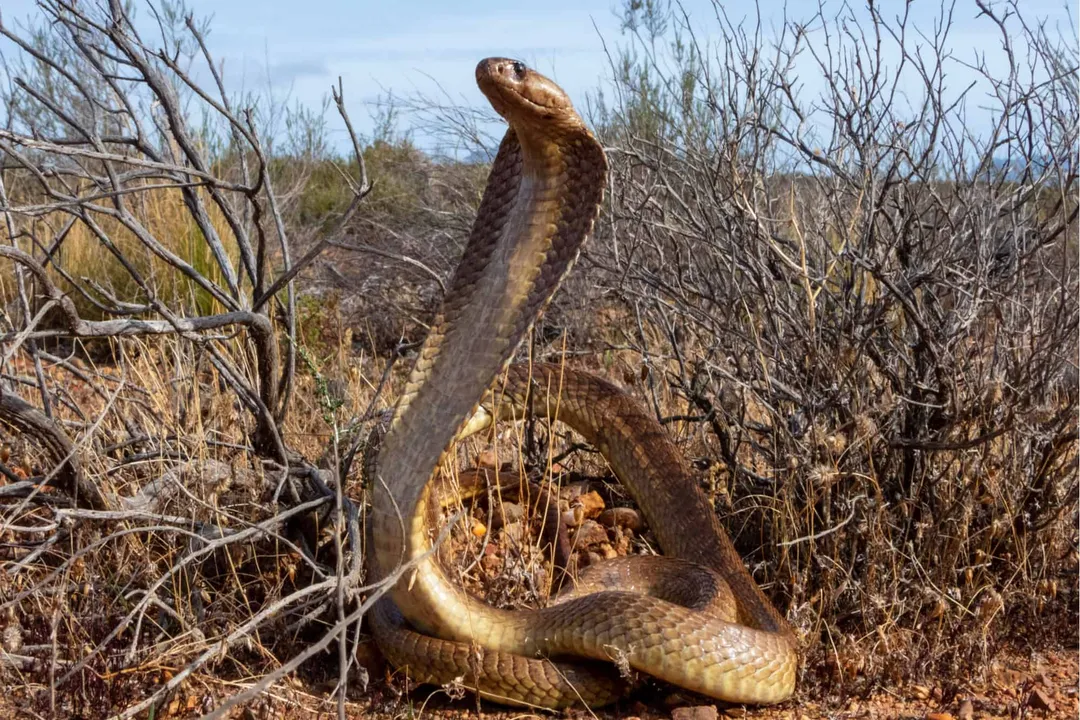
The distribution of the Yellow Cobra is primarily centered within the southern cone of the African continent. This species is not confined to a single country or biome but rather spans a significant portion of Southern Africa, demonstrating remarkable adaptability.
In South Africa, the snake is found widely across several key provinces. Specifically, its range covers the Western Cape, the Northern Cape, the Eastern Cape, the Free State province, and the North West Province. [1] Source consolidation reveals that this distribution extends inland from the Western Cape, running along the west coast up towards southern Namibia. Furthermore, it is noted to be present in the western sections of Gauteng. [1]
Beyond South Africa's borders, the Yellow Cobra maintains populations in neighboring territories. It is present in the southern half of Namibia, particularly in areas extending north of Windhoek. Its range also encompasses southwestern Botswana or, more specifically, central Botswana, and stretches into western Lesotho.
When mapping this distribution, the area covered is quite expansive, stretching from Cape Town in the south all the way up the west coast, crossing into the dry regions of Namibia and Botswana inland, and covering the central eastern provinces of South Africa. This wide geographic coverage means that many communities living and working across these diverse landscapes must be aware of its presence. [1]
# Diverse Habitats
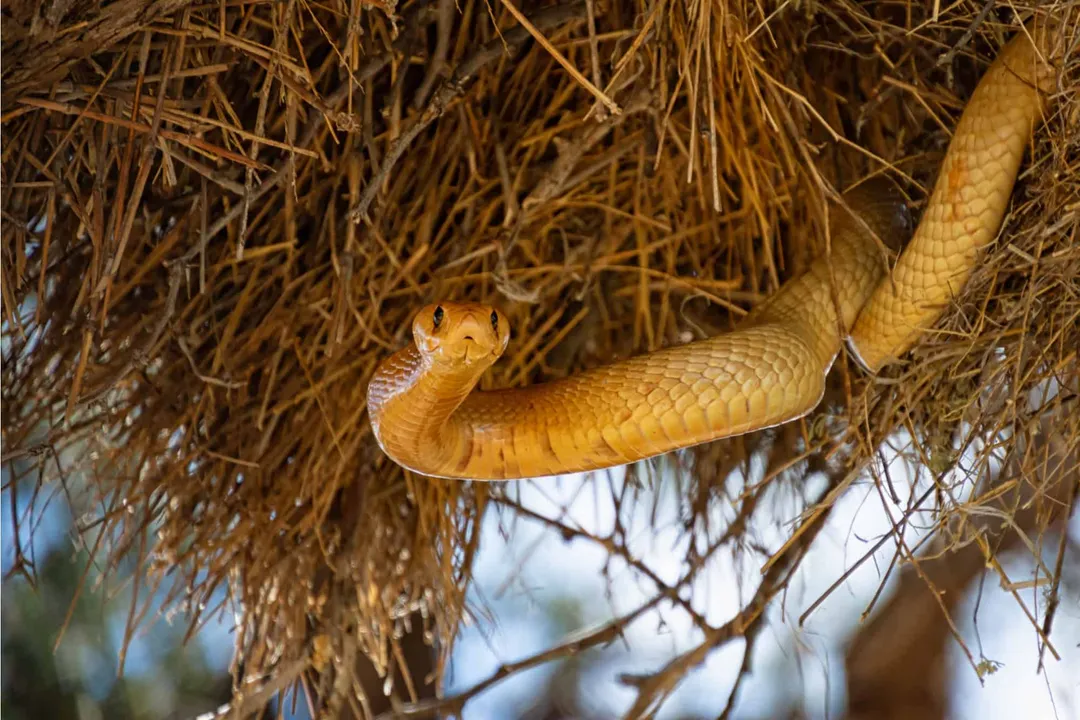
What makes pinpointing a "Yellow Cobra location" challenging is the snake's ability to thrive in vastly different environmental niches within its established geographic range. It is far from being restricted to one type of terrain.
In the Cape provinces, for instance, where the snake is a significant cause of human fatalities, it favors rocky hills. Conversely, in the Free State, preferred habitat includes high grasslands. This adaptability is a crucial factor in human encounters, as the snake can be found in areas that might seem entirely inappropriate for a specialized desert dweller.
The species is a true generalist, inhabiting:
- Arid Zones: It is sprinkled throughout desert and semi-desert regions, including the hot Kalahari and Namib deserts.
- Scrublands: Preferred areas include fynbos, karoo scrubland, and arid savanna.
- Bushveld: This habitat is also part of its repertoire.
This inherent flexibility in choosing surroundings—ranging from stony, dry uplands to grassland—suggests a high degree of ecological tolerance. A fascinating feature of this species' location preference is its comfort near human habitation. It is quite common to find them in areas where human activity overlaps with their prey sources, such as farms and even towns, provided there is sufficient cover and a reliable food supply. [1] They are known to take shelter in abandoned termite mounds, rodent burrows, or rock crevices. Encountering one in a less developed suburb or village is not unusual, as these areas can offer easy shelter from extreme heat and access to prey.
The very fact that a snake which accounts for several human fatalities annually, as reported by the African Snakebite Institute, possesses such a broad geographic and ecological range highlights a significant public safety consideration for residents and visitors across all these areas.
# Visual Deception and Identification
The name "Yellow Cobra" is an apt descriptor for some individuals, but it masks the species' true visual diversity. While many associate the snake with a brilliant yellow or golden hue, its actual appearance is highly variable across its distribution.
The general coloration reported includes:
- Yellow/Golden Brown: The source of the common name. [1]
- Black: Some individuals are entirely black. [1]
- Speckled/Mottled: Other specimens feature heavy speckling, appearing dark or light. [1]
This color polymorphism means that finding a "yellow" one is never guaranteed, and identification based on color alone is unreliable and potentially dangerous. Furthermore, juveniles often have distinct dark throats that fade as the snake matures, leading to potential initial misidentification with the non-cobra Rinkhals spitting cobra during its first year or two. A useful characteristic noted in some individuals, particularly in the Cape distribution, is a black tail tip. The key identifiers remain consistent across the color variations: a broad head indistinct from the neck, smooth scales, and the defensive display of spreading a wide hood.
# Adaptability and Risk Mapping
The Yellow Cobra’s successful colonization of such varied environments—from arid scrubland to semi-urban peripheries—is a testament to its adaptability, but it presents a unique mapping challenge for risk assessment. Unlike some specialized species, Naja nivea is not confined to one set of environmental pressures.
Consider the difference between the Western Cape and the Free State. In the Cape, the preferred terrain might be rocky, arid hillsides where human development is often interspersed among the stone outcrops. In the Free State, the habitat leans toward high grasslands. A person seeking to understand localized risk might intuitively focus only on the desert edges, yet the data shows these snakes integrate readily into developed areas across their entire known range. [1]
If you are in a region traditionally considered "desert" within the distribution, such as the Kalahari or Namib, the snake is likely seeking refuge in burrows or rock crevices. If you are in a more vegetated area, such as the bushveld or fynbos, they are still likely to use rodent burrows or established cover. [1] This means that in any location where this cobra exists, proximity to ground cover (brush piles, burrows) is a more reliable indicator of potential encounter than local climate or topography alone.
Furthermore, because the Yellow Cobra is diurnal (active during the day), most activity and potential encounters happen when humans are also active outdoors. While they might retreat underground to escape extreme midday heat, they are generally hunting during daylight hours. This temporal alignment of activity patterns across their entire range—from Cape Town to Botswana—makes their location context critical for outdoor safety awareness throughout the year.
The Yellow Cobra’s non-spitting nature can sometimes lead to underestimation by those familiar only with aggressive spitting species. Because they prefer to flee and only strike when cornered or threatened, avoidance is their first line of defense. However, a defensive bite is often the result of being trod upon or cornered, behaviors that are more likely to occur when humans are moving through their established, widespread habitats. [1]
# Comparison with Regional Relatives
To further contextualize the location of the Yellow Cobra (Naja nivea), it is useful to note its neighbors in Southern Africa. The African Snakebite Institute identifies seven true cobra species and one non-cobra, the Rinkhals, in this region.
The Yellow Cobra's distribution is distinct from others:
- The Forest Cobra (Naja subfulva) occurs further north and east, stretching up the east coast into Mozambique, Zimbabwe, and beyond.
- The Snouted Cobra (Naja annulifera) is primarily a bushveld species found further east and north, replaced in Namibia and northern Botswana by the similar Anchieta’s Cobra (Naja anchietae).
- The Mozambique Spitting Cobra (Naja mossambica) is common in the northeast of the range (KZN, eSwatini, Zimbabwe, eastern Botswana/Namibia) and is notorious for entering homes at night, a behavior not commonly attributed to the diurnal Naja nivea.
- The Zebra Cobra (Naja nigricincta nigricincta) and the Black Spitting Cobra (Naja nigricincta woodi) occupy more western and northern/north-western regions, respectively.
This comparison highlights that the Yellow Cobra dominates the western and southwestern parts of the Southern African distribution map. Its presence in a specific location often acts as a geographical marker, separating its range from that of its specialized relatives like the Forest Cobra or the eastern-based Mozambique Spitting Cobra.
Understanding the specific locations where the Yellow Cobra is prevalent—South Africa's Western, Northern, and Eastern Capes, Free State, North West, parts of Gauteng, southern Namibia, western Lesotho, and southwestern Botswana—is more than academic. It is a necessary component of regional safety, given that this snake delivers a highly potent, primarily neurotoxic venom, responsible for the most cobra-related fatalities in Southern Africa annually. It is an intensely venomous resident whose common name should not lead to underestimating its broad range across human-occupied and wild landscapes alike. [1]
Related Questions
#Citations
Yellow Cobra Animal Facts - Naja nivea
The cobras of southern Africa - African Snakebite Institute