What visual paradox exists regarding the woolly aphid's waxy defense mechanism?
Answer
Its high contrast against plant material makes the colony highly conspicuous to keen observers or predators.
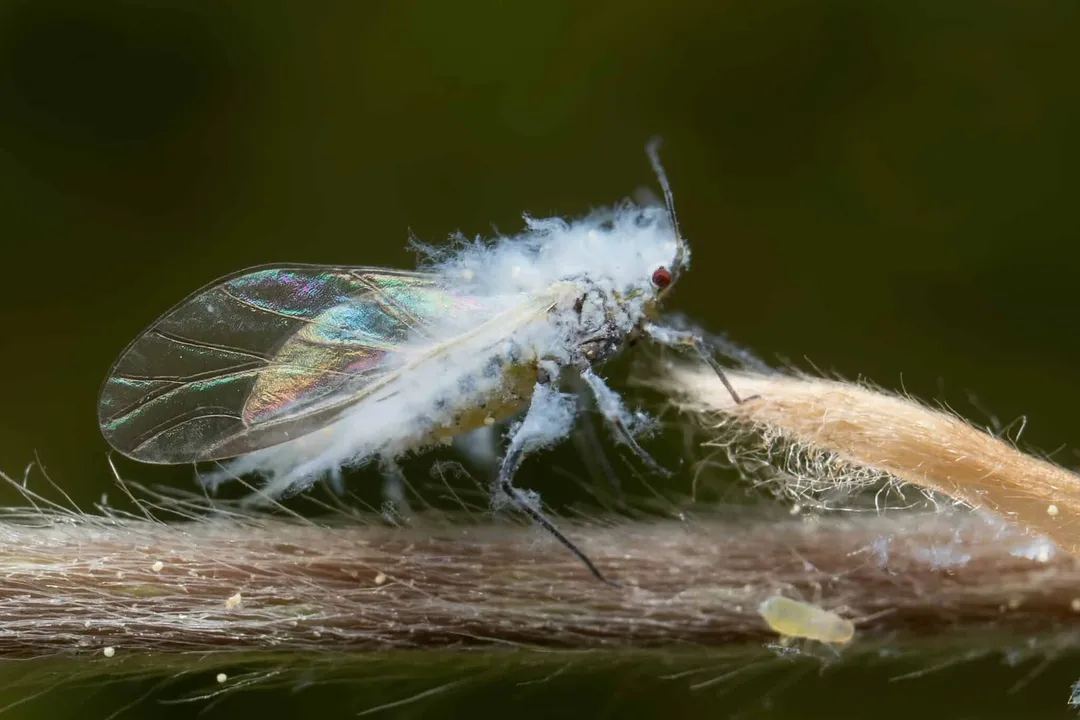
Although the waxy coating serves the critical defensive function of shielding the aphid from contact insecticides, it creates an interesting visual trade-off. The bright white, fibrous mass stands out sharply against the typical dark colors of plant bark or the green of leaves. This high degree of visual contrast means that while the wax protects them chemically, it simultaneously makes the colony highly noticeable to any entity relying on sight to find food, such as beneficial predatory insects or birds, thus offering a form of conspicuousness.
Related Questions
What subfamily do woolly aphids belong to, defined by their external wax layer?How does the waxy secretion affect common contact insecticides applied to woolly aphid colonies?What is the range of the actual body coloration of an individual woolly aphid beneath its covering?What metric measurement corresponds to the typical adult woolly aphid length of 1/16 of an inch?How does the texture of woolly aphid wax generally differ from the coating of mealybugs?What visual paradox exists regarding the woolly aphid's waxy defense mechanism?Where do woolly aphid colonies characteristically cluster on affected host plants?How do nymphs within the mass compare visually to adults concerning their external covering?What material constitutes the distinctive, cotton-like fluff that gives the woolly aphid its common name?What anatomical features of the woolly aphid are noted to be relatively long compared to some other aphid species?