How does the texture of woolly aphid wax generally differ from the coating of mealybugs?
Answer
The woolly aphid's wax tends to be longer and more thread-like, creating distinct filaments.
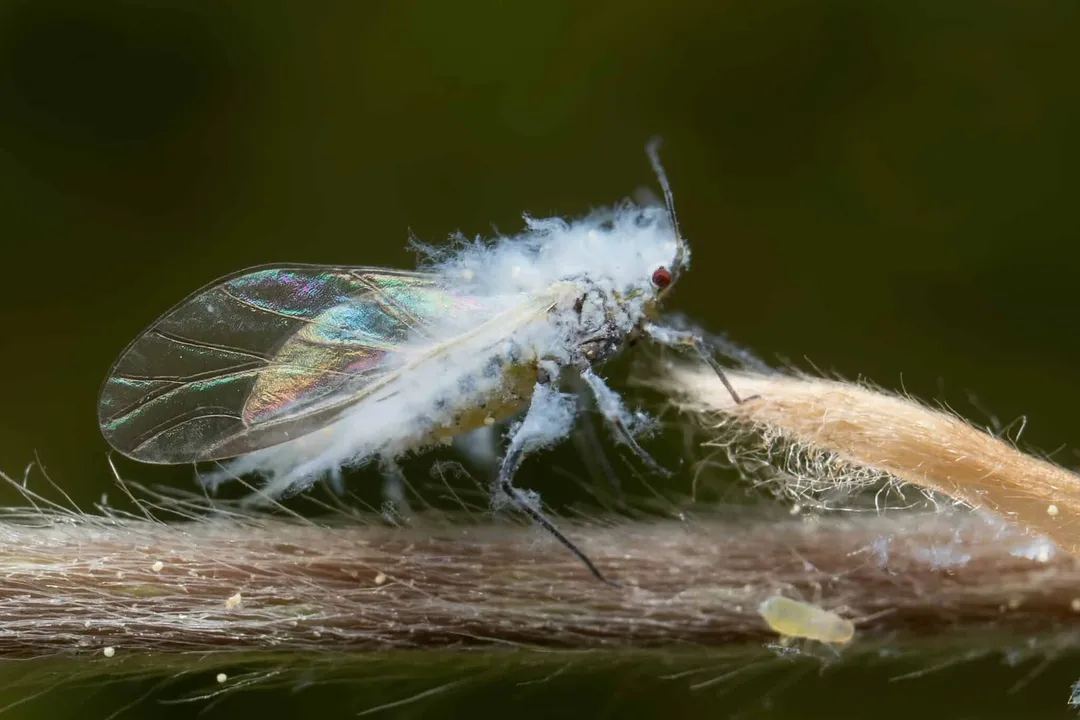
When distinguishing woolly aphids from other white, fuzzy pests like mealybugs, the structure of the secreted wax is key. Woolly aphids generate wax that forms long, distinct, thread-like filaments that often move slightly in the breeze, creating a fluffy or cottony texture. In contrast, mealybugs typically possess a coating that is described as flatter and more scale-like. This difference in filament length and texture is a primary physical cue that helps observers accurately identify the woolly aphid infestation versus other common sap-sucking insects.
Related Questions
What subfamily do woolly aphids belong to, defined by their external wax layer?How does the waxy secretion affect common contact insecticides applied to woolly aphid colonies?What is the range of the actual body coloration of an individual woolly aphid beneath its covering?What metric measurement corresponds to the typical adult woolly aphid length of 1/16 of an inch?How does the texture of woolly aphid wax generally differ from the coating of mealybugs?What visual paradox exists regarding the woolly aphid's waxy defense mechanism?Where do woolly aphid colonies characteristically cluster on affected host plants?How do nymphs within the mass compare visually to adults concerning their external covering?What material constitutes the distinctive, cotton-like fluff that gives the woolly aphid its common name?What anatomical features of the woolly aphid are noted to be relatively long compared to some other aphid species?