What two distinct components made up the thick exterior layer providing insulation for the Woolly Rhino?
Answer
Long, shaggy guard hairs overlying a dense undercoat.
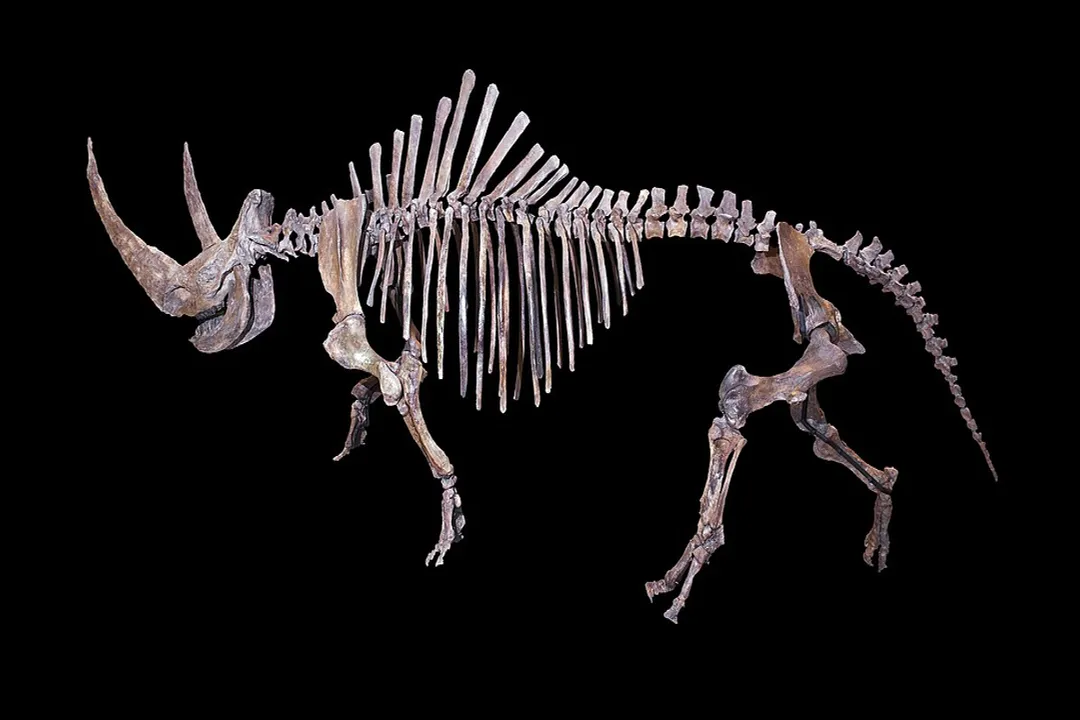
The defining feature of the Woolly Rhino was its incredibly dense covering of hair, which served as its primary defense against severe cold. This thick exterior insulation consisted of two main parts. The outer layer comprised long, shaggy guard hairs, which were often reddish-yellow or dark brown, and these were effective at shedding snow and rain. Beneath this conspicuous layer was a dense undercoat, which functioned to trap a vital layer of insulating air immediately next to the skin, enhancing thermal regulation significantly.
#Videos
The MANY Interpretations of the Woolly Rhino! (Coelodonta)
Related Questions
What specific function is hypothesized for the flattened front edge of the *Coelodonta antiquitatis* frontal horn?What dietary classification defines the Woolly Rhinoceros, *Coelodonta antiquitatis*?How did the insulating strategy of the Woolly Rhino compare to that of the Woolly Mammoth regarding fat layers?How did the overall bulk of the Woolly Rhino compare to the modern White Rhinoceros?What structural characteristic of the Woolly Rhino's legs aided navigation on uneven or slippery terrain?What shape characterized the molar crowns of the Woolly Rhinoceros, indicative of its abrasive diet?How did the premaxilla structure in *Coelodonta antiquitatis* differ from its modern relatives, and what linked this difference?What two distinct components made up the thick exterior layer providing insulation for the Woolly Rhino?How did the shape of the Woolly Rhino's primary frontal horn contrast functionally with those of many modern species?What was the estimated average weight range for an adult male Woolly Rhinoceros?