White Rhinoceros Physical Characteristics
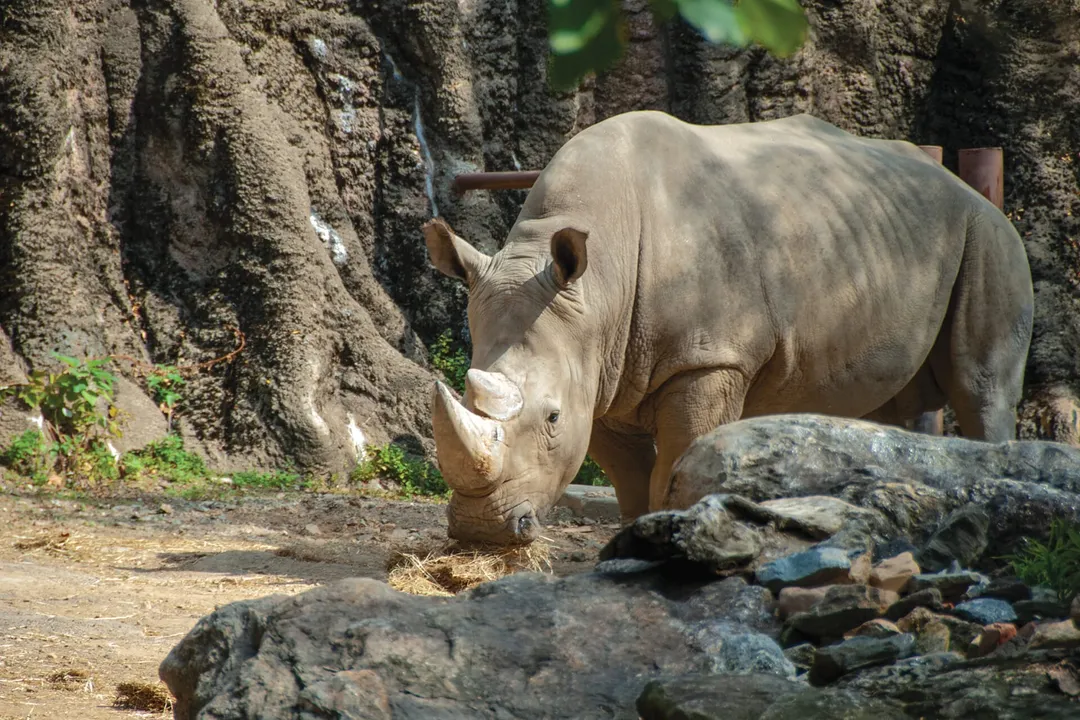
The white rhinoceros, scientifically designated as Ceratotherium simum, is a creature of immense scale and distinctive features, immediately recognizable as one of Africa's largest land mammals. While they share the African plains with elephants, which surpass them in mean body mass, white rhinos are the second-largest land mammal overall, though their weight can sometimes overlap with that of hippopotamuses.
# Size Mass
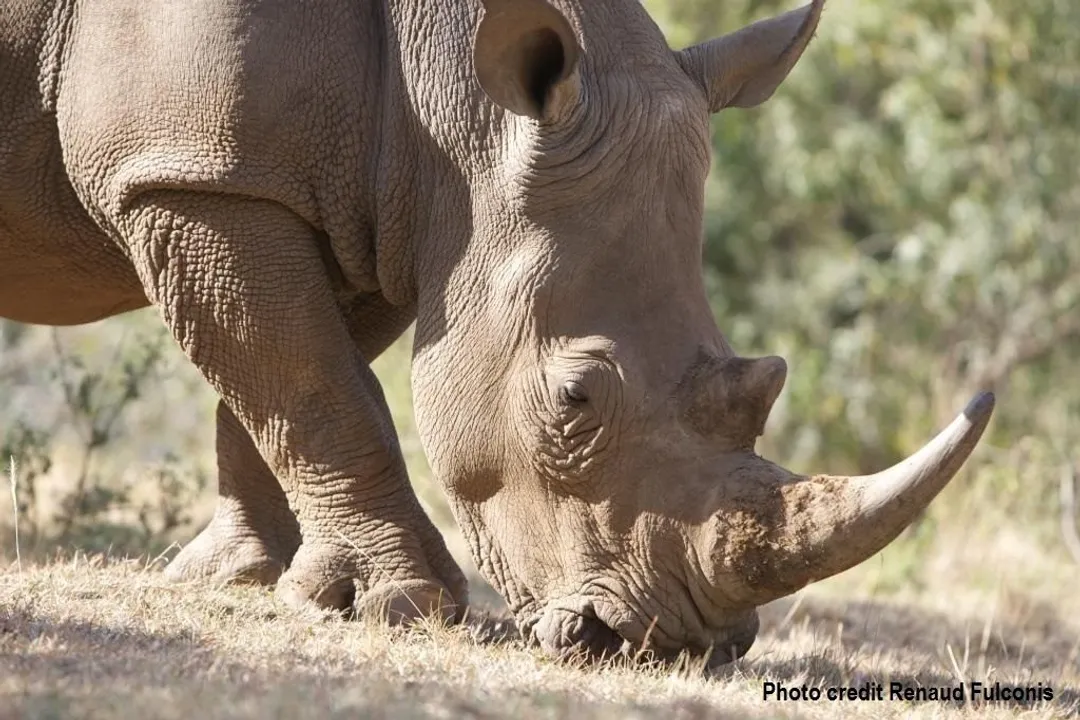
Adult white rhinos possess a commanding presence, characterized by a large, barrel-shaped body supported by sturdy, pillar-like legs. Males, known as bulls, are generally heavier than females (cows). An adult bull typically weighs between $2,000$ and $2,300$ kilograms on average, though recorded weights can approach $3,600$ kg. Females tend to average around $1,600$ to $1,700$ kilograms. In imperial measurements, this translates to roughly $4,000$ to $6,000$ pounds.
Their height is considerable, with shoulder measurements ranging from $1.5$ to $1.8$ meters, or about $5$ to $6$ feet tall. The head and body combined can extend between $3.35$ and $4.0$ meters in length. When considering the total length, the tail adds an additional $20$ to $27.5$ inches (about $50$ to $70$ cm). Newborn calves are substantial themselves, weighing between $40$ and $60$ kilograms at birth.
# Skin Covering
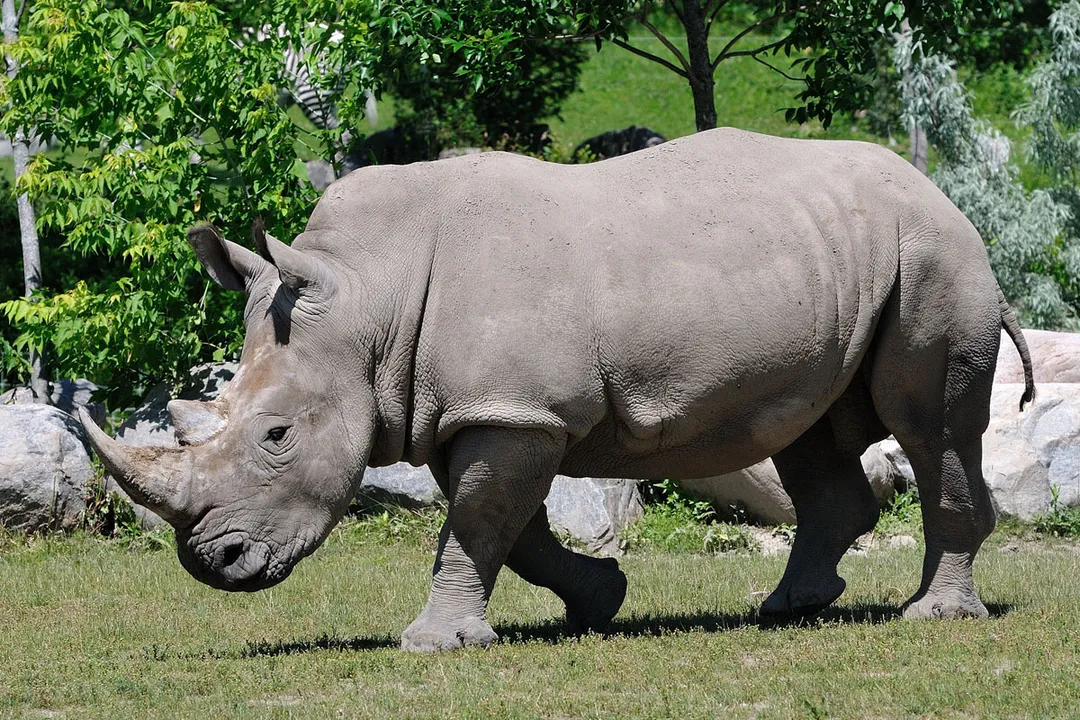
The coloration of the white rhino is a deceptive characteristic, as they are neither truly white nor distinctly different in shade from their black cousins; their skin color is generally described as slate gray or yellowish-brown. A key reason their appearance shifts so dramatically is their essential maintenance routine: wallowing. The skin itself is thick, tough, and can look armor-like, featuring plate-like folds, particularly around the neck and shoulders. The epidermis is thin, about $1$ mm, while the dermis beneath is significantly thicker at around $18$ mm on average. Hair is exceedingly sparse across the body, mostly limited to distinct fringes on the ears, short bristles on the tail tip, and eyelashes.

# Horn Structure
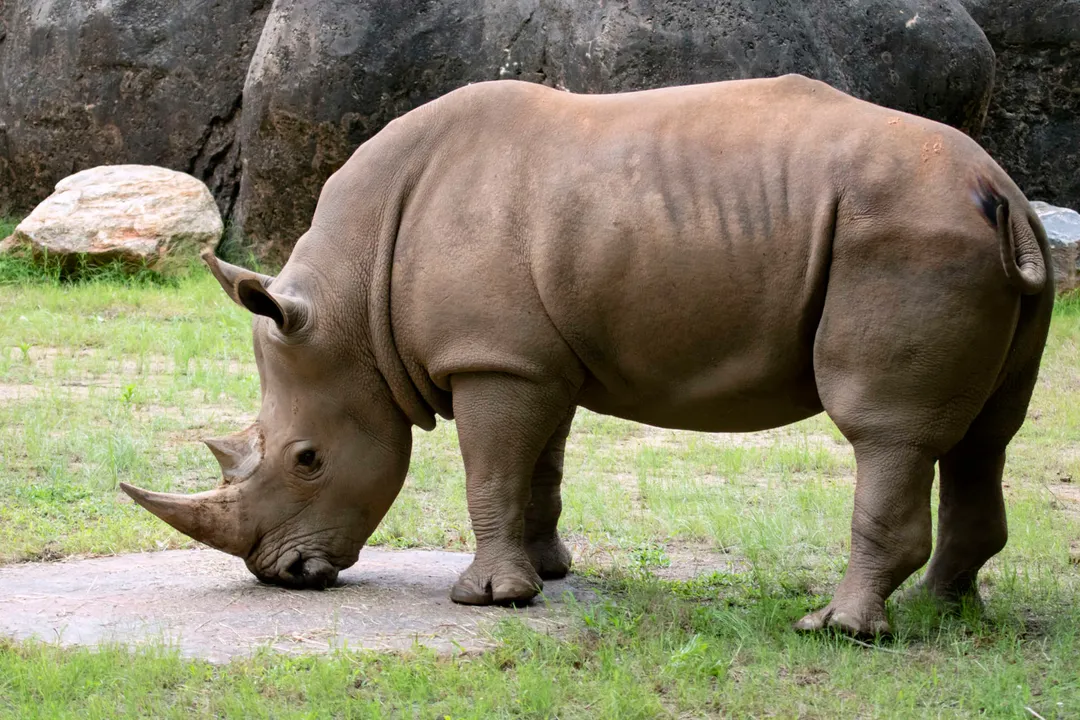
The most famous physical attributes of the white rhino are its two horns, situated one behind the other on the snout. These are not true horns in the sense that bovids possess (which have a bony core), nor are they antlers. Instead, they are solid masses composed entirely of densely compacted keratin fibers—the same protein that makes up human hair and fingernails. Because they grow from the skin, they are not attached to the skull itself, resting instead on bone pedicels.
The anterior (front) horn is significantly more prominent and longer than the posterior (rear) one. While the rear horn may reach up to about $22$ inches ($55$ cm) in length, the front horn shows greater variation and potential size. In some individuals, this main horn can measure $60$ cm ($24$ inches), but exceptional specimens, particularly among females, have been recorded with lengths up to $166$ cm ($65$ inches). These horns are continuously growing structures, capable of gaining up to three inches per year, and they will regrow if broken.
# Lip Adaptation
The white rhinoceros is uniquely identified by its mouth structure, which dictates its entire feeding strategy. It features a remarkably broad, square, and straight upper lip. This specialized adaptation is perfectly suited for grazing—cropping wide swaths of short grasses efficiently as the animal walks with its massive head lowered. This feeding habit has earned it the alternative name, the square-lipped rhinoceros. Interestingly, the common name "white" is believed to stem from a linguistic misinterpretation; early English settlers in South Africa likely mistook the Afrikaans word wijd (meaning "wide," referring to the mouth) for "white".
The ability to graze so close to the ground is assisted by a strip of cartilage inside the broad lips, which allows them to pluck grass only an inch or two tall. This means that in the wild, the white rhino is classified as one of the world's largest pure grazers.

# Senses Perception
Despite their imposing size, white rhinoceroses navigate the world with comparatively poor eyesight. To compensate for this visual deficit, the species has developed incredibly acute senses of hearing and smell. Their large, tubular ears are independently swiveling, enabling them to pinpoint the source of subtle sounds across a wide arc. However, the sense of smell is arguably their most vital tool for day-to-day life and survival. The olfactory passages within the muzzle are so developed that they are actually larger than the animal's entire brain. This heightened chemical perception plays a major role in securing territories and finding mates through scent-marking, far surpassing visual cues in importance. In considering their primary threat—humans—the extreme development of smell versus sight suggests an evolutionary focus on detecting ground-level disturbances and distant signals over identifying distant shapes in the open savanna.
# Feet Locomotion
The massive weight of the white rhino is supported by short, thick, pillar-like legs that end in broad, stumpy feet. Each foot has three large, well-defined toes, which spread slightly to help distribute the immense body weight evenly across the varied terrain of the savanna. While they appear cumbersome, these mega-herbivores are surprisingly agile and quick. They are capable of bursts of speed up to $40$ kilometers per hour (about $25$ mph). Their typical, sustained travel gait is often a high-stepping trot, which can be maintained for several kilometers at a pace near $24$ km/h. When escaping threats, white rhinos use a distinctive flight pattern where the hind feet strike continuously, followed by the forefeet.

# Hump Support System
A prominent muscular hump is situated on the back of the neck. This feature is intrinsically linked to the animal’s feeding specialization and massive head structure. The head is immense, and the neck, though powerful, is relatively short. The hump is necessary to house the robust ligaments required to support the sheer weight of that long skull and its heavy keratin structures during the many hours spent feeding with its head low to the ground. This physical arrangement acts less like simple fat storage and more like a specialized counterweight mechanism essential for maintaining their dedicated grazing posture for prolonged periods.
# Subspecies Contrast
The species Ceratotherium simum is divided into two subspecies, which exhibit dramatic differences in conservation status and minor physical variations. The Southern White Rhinoceros (C. s. simum) is the success story, with wild populations estimated around $17,464$ as of late 2023, primarily concentrated in South Africa. The Northern White Rhinoceros (C. s. cottoni) is critically endangered, currently existing as only two non-reproductive females in managed care.
While detailed, quantitative measurements comparing the two subspecies are often lacking in general descriptions, it is noted that northern white rhinos are relatively smaller in overall body length and weight compared to their southern relatives. A clear physical differentiator cited is body hair: the southern subspecies is noted as having fewer body hairs than the northern subspecies. Given the dramatic population split, these subtle morphological differences are vital markers for researchers attempting to conserve the remaining northern genetics through assisted reproductive technologies.
Related Questions
#Citations
White Rhino | Species
White rhinoceros
White Rhino
White Rhinoceros
Ceratotherium simum (white rhinoceros) | INFORMATION
Southern White Rhinoceros
White rhinoceros - Animals
White Rhino
Southern White Rhinoceros