How does the colonization pattern of the quagga mussel differ from the substrate-dependent zebra mussel?
Answer
Quagga mussels can live unattached on soft bottoms
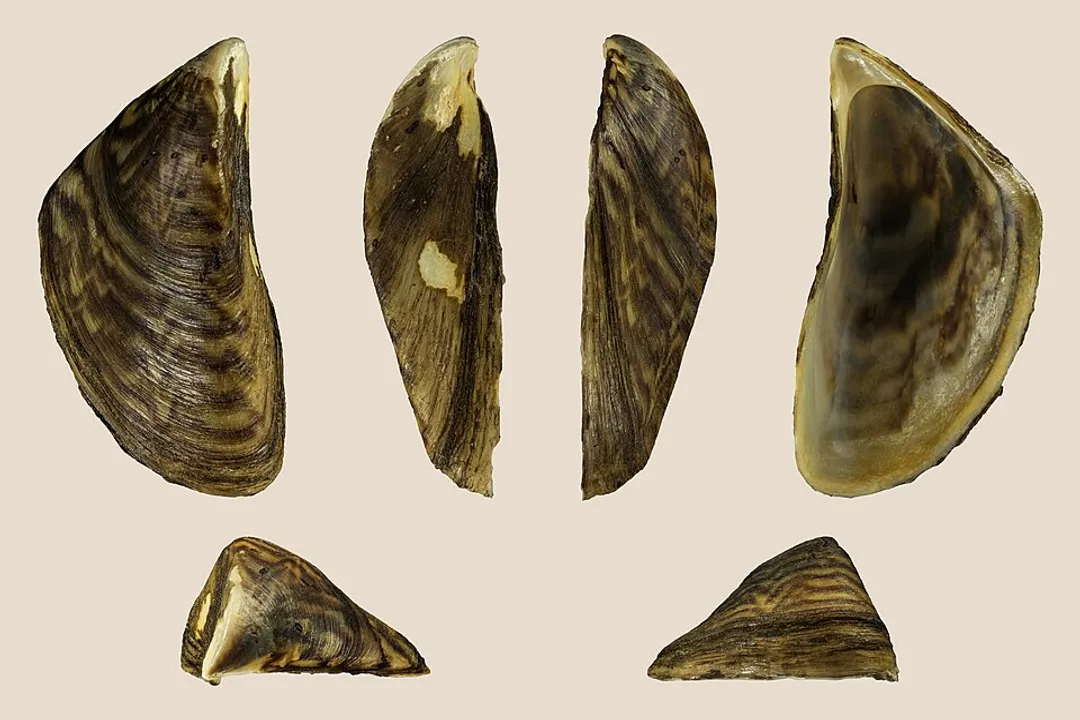
A key distinction between the two invasive species lies in their preferred microhabitats when both are present. The zebra mussel is strictly substrate-dependent, needing hard surfaces. In contrast, the quagga mussel (*Dreissena rostriformis bugensis*) is physically flatter and exhibits a greater ability to colonize softer sediments, sometimes residing unattached directly on the lake bottom. This difference in substrate preference means quaggas can lead to denser concentrations of biomass in the benthic zone, often deeper than where zebra mussels typically aggregate.
Related Questions
What is the natural habitat for the zebra mussel, *Dreissena polymorpha*?How did *Dreissena polymorpha* likely arrive in the Great Lakes basin?What term denotes the microscopic larvae spread downstream through river currents?Which New York waterway is noted for intense monitoring and community science initiatives regarding zebra mussels?What is identified as the number one vector for spreading zebra mussels between geographically separate lakes?What type of substrate do zebra mussels strongly prefer for attachment in a lake environment?How does the colonization pattern of the quagga mussel differ from the substrate-dependent zebra mussel?After establishing in the Great Lakes, what became a major secondary corridor for zebra mussel expansion?What quantitative risk assessment strategy is considered more effective than static mapping for areas like Lake George?Why is distinguishing between zebra mussels and quagga mussels critical for remediation strategies?