What structural difference exists between a white tiger and an orange tiger of the same subspecies?
Answer
There is no structural difference; they are physically identical
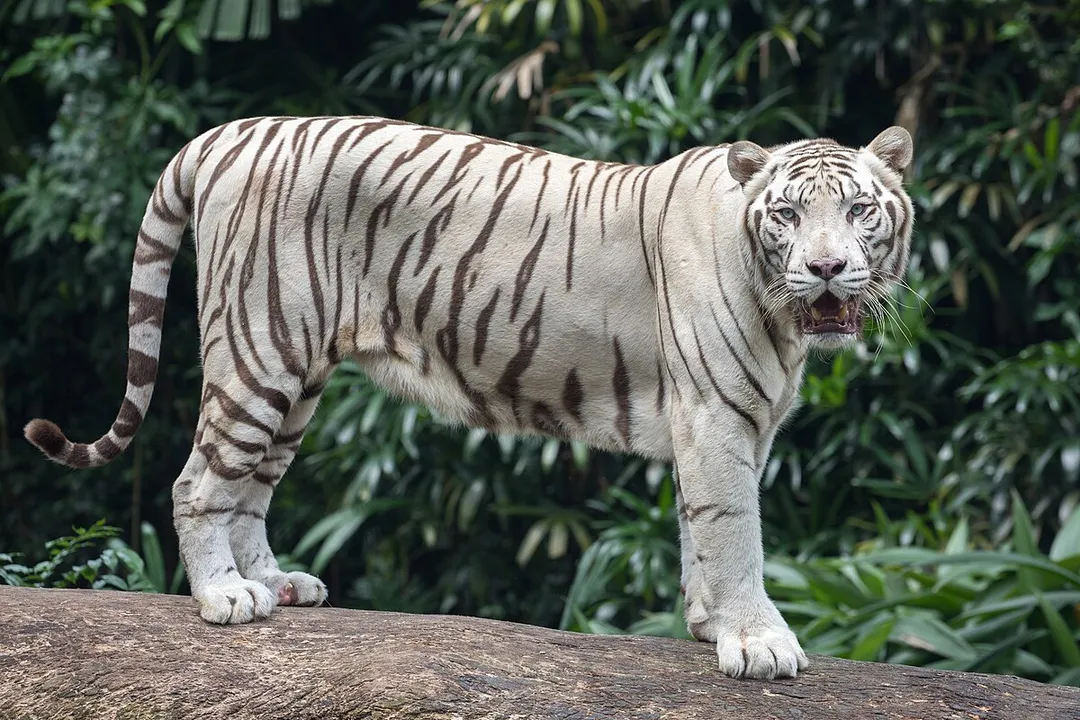
The recessive gene that dictates the white coat color is purely aesthetic and does not impact the physical build or robustness of the animal. A white tiger is structurally identical to an orange tiger of the same subspecies, most commonly the Bengal tiger (*Panthera tigris tigris*). The gene does not confer any changes to overall size, bone density, muscle mass, or skeletal configuration. Both types of tigers share the same biological requirements and physical capabilities, meaning any perceived superiority or inferiority is related solely to camouflage and survival, not inherent physical strength or mass.
Related Questions
What pigment production does the single, rare recessive gene limit in the white tiger coat?What is the standard eye color almost invariably associated with the white pelage of a white tiger?What genetic condition must both orange parents possess to have a chance of producing a white cub?What significant physical dimension, measured from head to tail, can an adult male white tiger reach?How do the pink noses and pads of white tigers differ pigment-wise from those of a true albino?Which geographical regions constituted the historical wild range where white tigers were occasionally sighted?What term describes the incredibly faint or washed-out stripe markings sometimes visible on a white tiger's coat?What structural difference exists between a white tiger and an orange tiger of the same subspecies?What is the consequence of focusing captive breeding efforts almost exclusively on the white coat trait?Why is the white coat generally considered a serious disadvantage for white tigers in their natural habitat?