White Bass Physical Characteristics
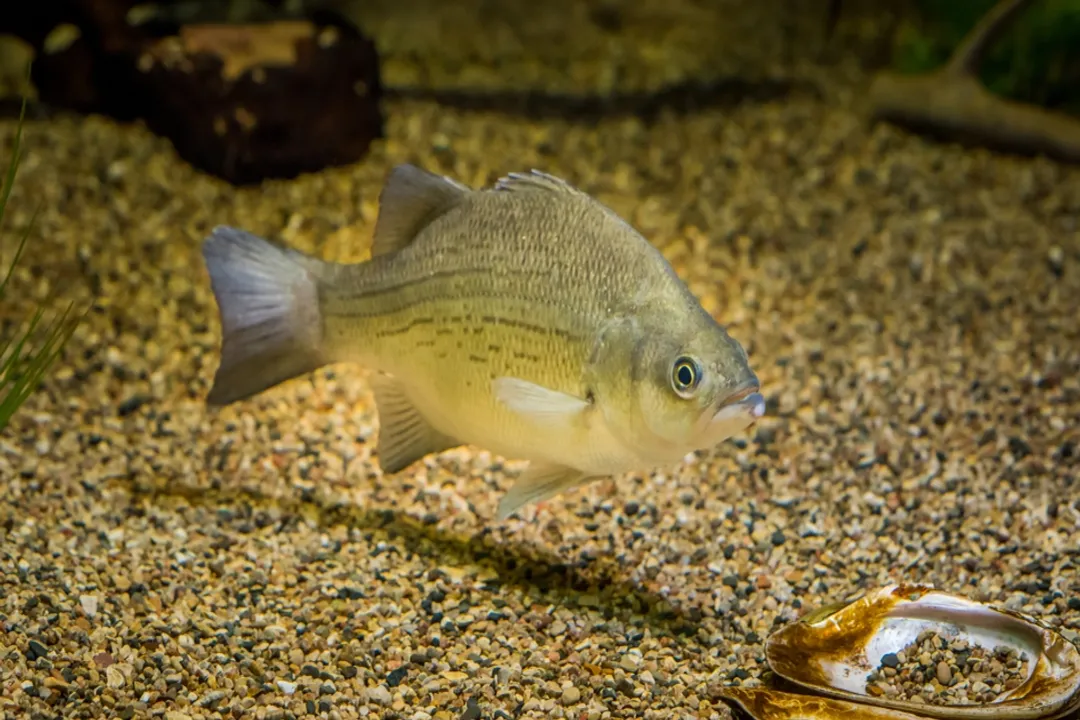
The appearance of the White Bass (Morone chrysops) is immediately striking to anglers and naturalists alike, presenting a classic, streamlined profile common to its temperate bass relatives. [2][7] Often mistaken for its hybrid cousins, understanding the specific physical markers of the true White Bass is key to proper identification and appreciating this popular game fish. [4][9] These fish are generally recognized for their deep, compressed bodies, which gives them a somewhat shallow or tall appearance relative to their length, especially when viewed from the front. [2][7]
# Body Profile
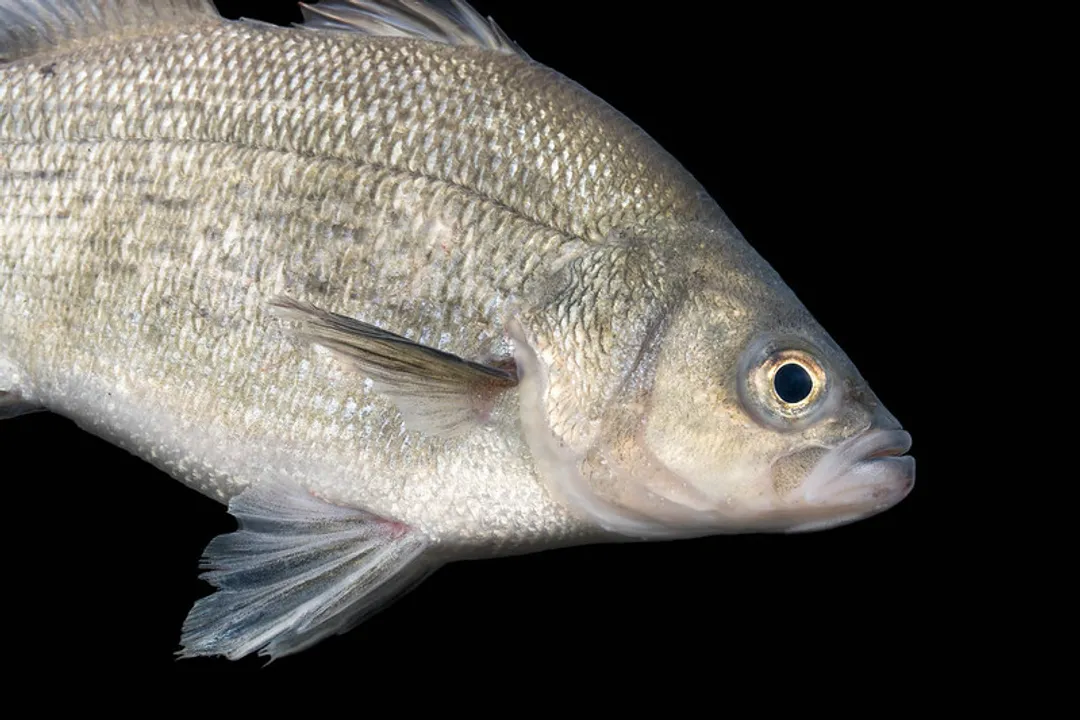
The general body shape of the White Bass is characterized as being deep and laterally compressed, meaning it is noticeably flattened from side to side. [2][7] This streamlined form aids in quick bursts of speed, essential for their schooling and predatory habits in open water. [6] Mature adults typically reach lengths between 10 and 15 inches, though specimens exceeding 17 inches have certainly been documented. [1][3] In terms of weight, a common harvestable size might range from one to two pounds, though trophy catches can surpass six pounds. [3][5] Their back is arched slightly, contributing to the depth of the body profile. [7] The fish possesses a relatively small head compared to some other bass species, with a terminal mouth that is somewhat smaller than that of the closely related Striped Bass. [2][7]
# Coloration Detail
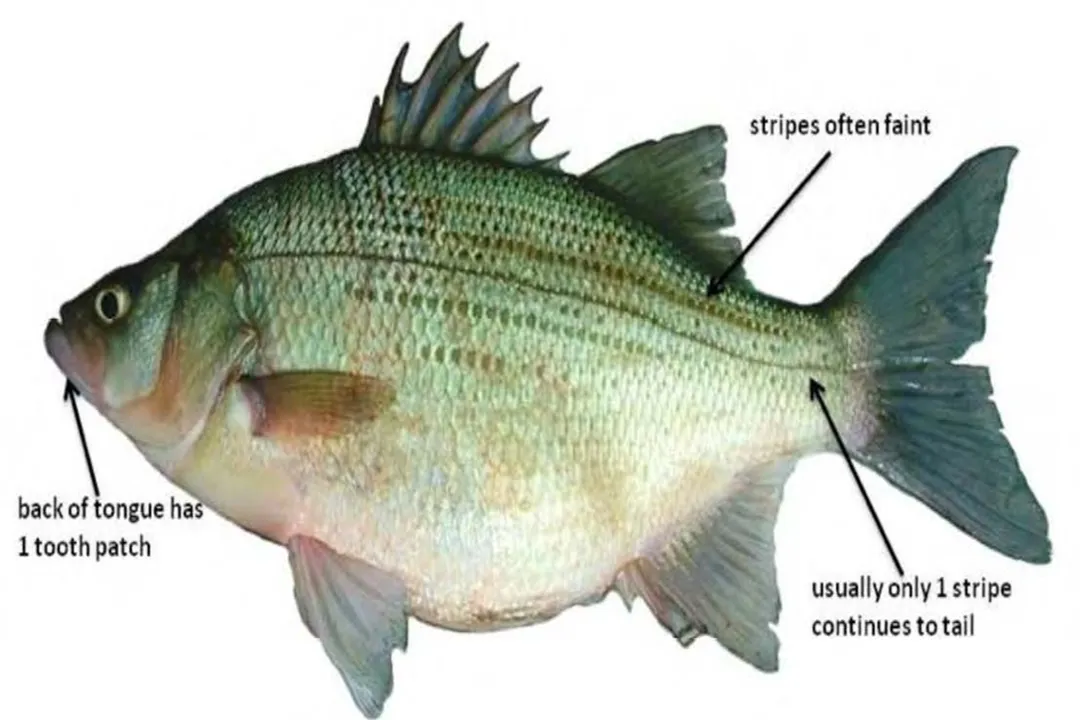
The coloration of the White Bass is one of its most defining features, contributing to its name and offering camouflage within its preferred water columns. [4] The dorsal area, or back, is typically a dark, dusky olive-green or silvery-gray color. [2][3] This dark shading transitions sharply to the sides, which are bright, silvery white, giving the fish its common name. [7][8] Ventrally, the belly is clean white. [2][3]
The most crucial identifying marks are the horizontal lines running along the flanks. The White Bass exhibits several dark, continuous, horizontal stripes running from the gill cover to the base of the tail (caudal fin). [2][7] These stripes are typically dusky or blackish. [3] A point of comparison often noted by fisheries biologists is that the lateral lines of the White Bass are not as deep or prominently dark as those found on the Striped Bass. [7] Furthermore, while the upper stripes are usually distinct, the lower stripes often appear broken or incomplete, which can be a subtle but important feature when differentiating them from other Morone species like the White Perch or Striped Bass hybrids. [7]
A key differentiation note for experienced observers: the lower lateral line on the White Bass typically does not extend forward past the vertical line drawn through the origin of the dorsal fin, distinguishing it from the White Perch. [2] When inhabiting clear, deep, or turbid waters, the intensity of this silvery sheen can vary significantly; fish from very clear waters might be more deeply colored overall, while those from turbid environments often appear paler or more silver. [4]

# Fin Structure
The fin structure of the White Bass is typical of the Morone genus, possessing two separate dorsal fins. [2][7] The first dorsal fin is spiny, providing defense, while the second dorsal fin is soft-rayed. [2] The anal fin, located on the underside near the tail, is also spiny and is characterized by three spines. [7]
The caudal fin, or tail fin, is distinctly forked, an adaptation that aids in rapid acceleration when pursuing prey. [2][6] The pectoral fins, situated just behind the gills, and the pelvic fins, situated ventrally, are relatively small, aiding in maneuvering rather than primary propulsion. The rays within the fins are generally translucent to whitish. [7]
# Head Features
Examining the head provides further physical confirmation. The White Bass has a moderately large eye relative to its head size. [2] The mouth, as mentioned, is terminal (at the very front of the snout) and the upper jaw extends back to about the middle of the eye. [7] The lower jaw is slightly protruding or equal to the upper jaw. [7]
One of the most consistent, albeit subtle, features for identification involves the gill cover, or operculum. The posterior edge of the operculum on the White Bass is smooth, lacking the serrations or strong teeth found on some other related species. [2] The tongue may possess small, weak teeth, but they are generally not prominent features compared to the mouth structure of a largemouth bass. [7]
For anglers seeking to distinguish between a true White Bass and the popular hybrid known as the Wiper (White Bass x Striped Bass), the key difference often lies in the stripes' consistency and the presence of tooth patches on the tongue. [4][9] While Wiper hybrids usually exhibit broken or staggered lateral lines and often have teeth on the roof of their mouth, the true White Bass maintains those continuous, though sometimes pale, horizontal stripes. [7][9]

# Size Variation and Growth Insight
The growth rate of the White Bass is often quite rapid in its first few years, particularly in systems rich with forage like Gizzard Shad. [5][8] However, their size can be heavily influenced by environmental factors, including water temperature, food availability, and population density. [5] In crowded, nutrient-poor conditions, it is not uncommon to see populations dominated by smaller, stunted fish, sometimes referred to as "sunfish size" by local anglers, even when they are biologically mature adults. [5]
Considering the average size data across several states, one can observe regional differences in trophy potential. For example, while many regions report a desirable catch size around 10-12 inches, areas with optimal conditions—like certain large reservoirs in the South or Midwest—consistently produce fish pushing the 3-to-5-pound mark, suggesting that access to abundant, large prey like shad is the primary driver for achieving maximum Morone chrysops dimensions. [1][3][8] It is interesting to note that while a 17-inch fish is rare, it represents a significant age class, often indicating the fish has survived several years of heavy fishing pressure or environmental fluctuation. [1]
# Distinguishing from Relatives
The Morone genus contains several species that share a similar body plan, making careful observation critical for accurate identification. [7]
| Feature | White Bass (M. chrysops) | Striped Bass (M. saxatilis) | Wiper (Hybrid) |
|---|---|---|---|
| Stripes | Multiple, continuous, dark, often fading below the lateral line. [7][9] | Prominent, unbroken, deep black lines extending to the tail. [7] | Stripes are often broken, staggered, or uneven. [4][9] |
| Body Depth | Deeply compressed, tall profile. [2][7] | More elongated, torpedo-shaped. [7] | Intermediate, often exhibiting a body shape between the parents. [9] |
| Tongue Teeth | Absent or very weak patches. [7] | Possesses two distinct, rough patches of teeth on the tongue. [7] | Usually possesses the distinct tongue teeth patches from the Striped Bass parent. [7][9] |
Understanding these nuances is not just an academic exercise; in many states, regulations regarding size limits, catch limits, and even season closures differ between pure White Bass and hybrid Striped Bass. [9] For instance, if an angler is targeting White Bass specifically, knowing that a 15-inch fish is highly likely to be a hybrid (as true White Bass rarely exceed 17 inches) could save them from a regulatory mistake. [1][7]

# Integrated Analysis of Appearance and Environment
The silvery sheen of the White Bass is more than just aesthetics; it is a functional adaptation tied directly to their preferred ecological niche. White Bass are schooling fish that thrive in large, open bodies of water, frequently moving through the water column in search of baitfish. [6][8] Their bright, silvery sides allow them to blend into the bright, light-reflecting surface waters when viewed from below, a form of countershading that aids in both predator avoidance and ambushing prey. [4]
When White Bass school during pre-spawn or fall feeding frenzies, the synchronized flash of hundreds of silver flanks moving through the water can be an awe-inspiring sight, often mistaken for baitfish schools themselves by inexperienced observers. [8] When they retreat to deeper, darker thermoclines during summer stratification, their colors tend to mute, taking on a slightly darker, bronzed appearance compared to the brilliant silver seen in the spring months. [4] This adaptability in hue, controlled by chromatophores in the skin, demonstrates an active physiological response to ambient light conditions, allowing them to maintain visual superiority in various lake zones. [6]
This visual adaptation also offers an actionable tip for successful angling. During bright midday sun, White Bass often hold deeper where the light is diffused, making their dark olive backs blend with the lake bottom when viewed from above. Conversely, on heavily overcast days or during low-light periods like dawn and dusk, they will move into shallower waters where their silvery sides reflect the dim light, making them more visible to surface-feeding predators (like humans) and increasing their own feeding efficiency on the surface-oriented baitfish. Therefore, anglers targeting White Bass should adjust their depth presentation not only based on water temperature but also by monitoring the daily light penetration and cloud cover. [8]
# Scale and Mouth Characteristics
The scales of the White Bass are cycloid—smooth-edged—which is typical for many pelagic, or open-water, schooling fish. [2] These scales are relatively small in proportion to the overall body size. [7] While the fish do not possess the large, coarse scales of a common carp or the rough texture of a catfish, the pattern of these scales perfectly overlays the dark, horizontal striping mentioned earlier, reinforcing the visual pattern.
The mouth structure is essential for feeding. White Bass are primarily piscivorous (fish-eating), preying heavily on smaller fish like minnows and shad. [6][8] Their relatively large mouth gape allows them to engulf substantial forage items. Unlike the Largemouth Bass, the upper jaw margin of the White Bass does not extend past the back edge of the eye. [7] The gill rakers, small bony projections inside the gills used to filter food from the water, are relatively short and sparse compared to planktivorous fish, confirming their diet relies on discrete, larger prey items rather than suspended particles. [6]
Another subtle identifying marker, useful when handling fish that are not actively schooling or exhibiting clear patterns, relates to the body itself. White Bass often exhibit a somewhat less robust girth than a Striped Bass or a large Wiper of similar length, leaning more towards the 'tall and thin' profile described earlier. [2][7] When an angler lands a fish that feels unusually light for its length, a closer look at the lateral line pattern is warranted to confirm it is not a faster-growing, heavier hybrid. [9] Recognizing these subtle differences in overall body mass relative to length can often provide a quick preliminary check before inspecting the head and stripe details.
In summary, the White Bass is a creature defined by its brilliant, silvery body punctuated by dark, continuous horizontal stripes, a deep, laterally compressed build, and a mouth perfectly structured for pursuing baitfish in open water environments. [2][3][7] These physical traits, refined through evolution, make it a distinctive and challenging sport fish across its range. [1][4]
Related Questions
#Citations
White Bass (Morone chrysops) | U.S. Fish & Wildlife Service
White bass - Wikipedia
White Bass | Mississippi Department of Wildlife, Fisheries, and Parks
White Bass | The Most Complete Species Guide - BassForecast
White Bass Species Overview | BioNet - Iowa DNR
Morone chrysops (Bass) | INFORMATION | Animal Diversity Web
white bass - Illinois Department of Natural Resources
White Bass - Lake Scientist
White Bass Angler Guide: Top Tips & Area Highlights | ODWC