White Catfish Physical Characteristics
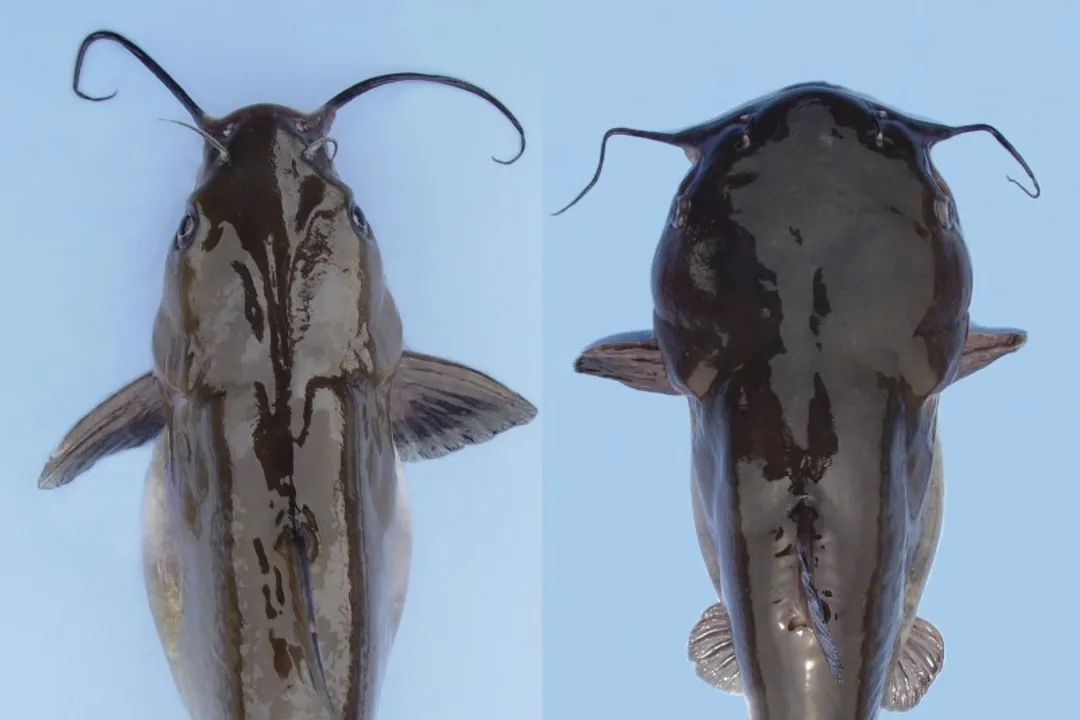
The White Catfish, scientifically classified as Ameiurus catus, [3] is frequently recognized, and sometimes confused, due to its place within the bullhead catfish family, Ictaluridae. [1][2] While it shares the "chubby" body structure common to bullheads, this species possesses several distinct physical markers that set it apart from its relatives and other common catfish, such as the Channel Catfish. [1][5] Anglers and biologists often note that the White Catfish is considered the smallest among the generally large North American catfish species. [2]
# Size Limits
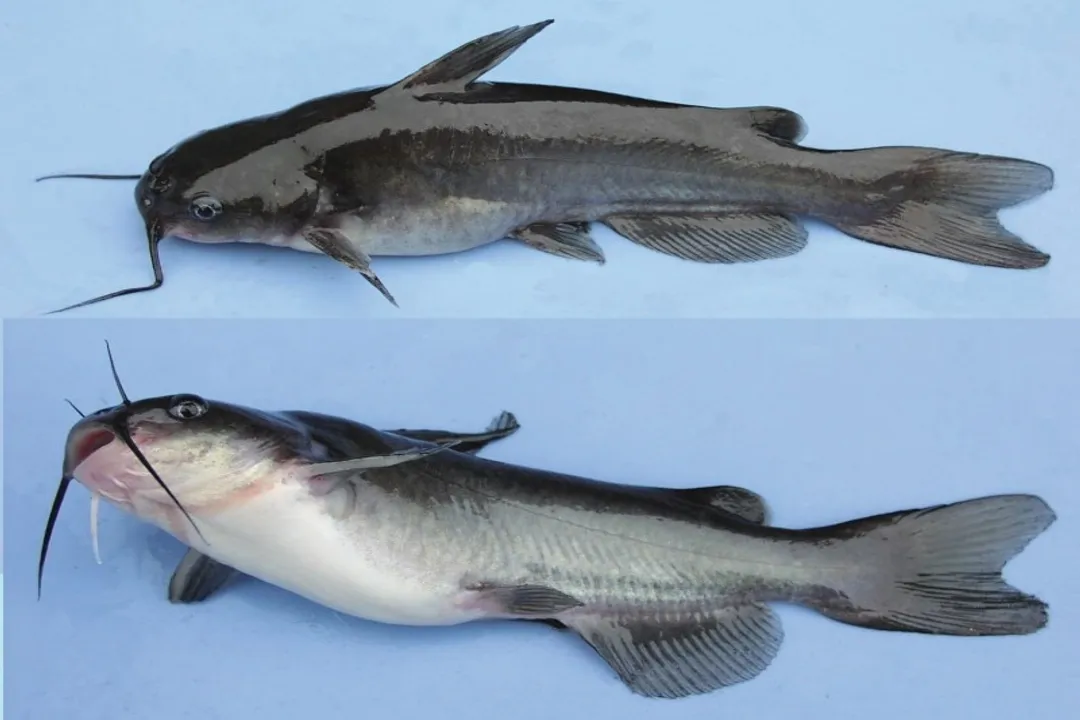
Regarding general dimensions, the White Catfish typically presents as a moderately sized fish. Most sources indicate that adults commonly reach lengths between 10 and 18 inches, [1] often averaging around 13 inches. [2] In terms of mass, they usually fall between 0.5 and 3 pounds, [1] with a maximum reported weight approaching about 8 pounds. [1] However, these numbers reflect common experience; some reports note sizes up to 24 inches [1] or a maximum of 6 pounds. [4] A world record specimen has been documented weighing 18.9 pounds, suggesting that while rare, larger individuals do exist. [5]
It is an interesting point for those tracking trophy fish that the very largest White Catfish can become challenging to positively identify, even for experienced biologists, which leads to speculation that some exceptionally large specimens reported by anglers may have been misidentified Channel Catfish. [5] This variability in maximum size data underscores the importance of relying on non-size-related physical traits for accurate identification.
# Body Coloration
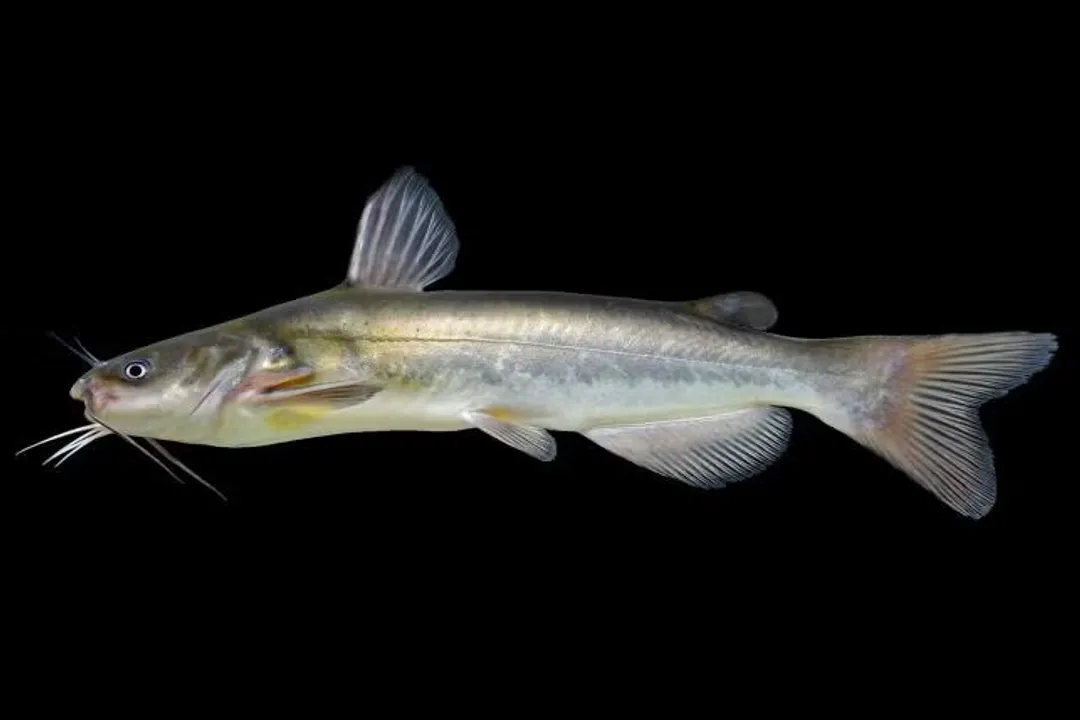
The overall pigmentation of the White Catfish is a key identifier, though it is not always constant. The dorsal area, encompassing the back and upper sides, is generally described as blue-gray to blue-black. [1][2] This darker upper half transitions sharply to a strikingly pale silver-white or simply white on the lower sides and the belly. [1][2][4] This contrasting demarcation between the dark back and white underside can be quite well-defined.
While the body is smooth and often exhibits a lustrous sheen, [1] the sides may sometimes appear mottled. [1] Crucially, the body lacks discrete black spots. [1] It should be noted that coloration can darken considerably when the fish is in murky water, and this effect is particularly pronounced in males during the breeding season. [1] Furthermore, some descriptions mention that the outer edges of the eyes in adults may display a notable blue tint. [5]
# Fin Structure
The White Catfish possesses several critical features related to its fins that help classify it within the Ameiurus genus while distinguishing it from other catfish types. Like its bullhead cousins, it is scaleless [2][3] and features an adipose fin—that fleshy lobe situated on the back between the dorsal fin and the tail—which is widely separate from the tail fin itself. [1] Additionally, both the dorsal and pectoral fins are equipped with a single spine, which is sometimes serrated. [2][3]
The most telling characteristic among the fins is the tail fin, or caudal fin. Unlike the rounded or truncate tails found on other bullheads like the Yellow Bullhead (A. natalis), [3] the White Catfish has a tail that is moderately forked. [1][2] This feature causes confusion with the Channel Catfish, but the lobes of the White Catfish tail are not as sharply pointed. [1] The depth of the fork is intermediate—it is more than merely notched but decidedly not deeply forked like that of Blue or Flathead Catfish. [1][3]
Another important, though less flashy, feature is the anal fin. The White Catfish has a relatively short anal fin base. [3] When measuring the length of the anal fin base in relation to the standard body length (snout tip to tail base), the base length goes into the standard length more than four times. This fin typically contains between 22 and 24 soft rays, [1] a count that serves as a more reliable ID marker than size or color alone, particularly in large, dark specimens. [5]
# Head Features
The physical structure of the head is another area where the White Catfish deviates from the larger catfish species. It is characterized by a noticeably broad head [2] and a large mouth. [2][5] In profile, the head is described as blunt, contrasting with the wedged-shaped heads seen in Channel and Blue Catfish. Further detailing the mouth structure, the upper jaw projects beyond the lower jaw, meaning the lower jaw is substantially shorter than the upper jaw.
If you are examining a specimen where the color is misleading, two subtle, structural characteristics are highly valuable for confirmation. First, the White Catfish has shorter barbels at the corners of the mouth compared to the Channel Catfish; specifically, the maxillary barbels are only about twice as long as the barbels near the nostrils. [5] Second, and perhaps most definitive for an expert, individuals of A. catus are noted to always possess a gap or depression in the "body ridge" that runs along the back from the head toward where the dorsal fin originates. Observing this specific contour detail can eliminate misidentification with other species lacking this break in the dorsal profile.
# Barbel Distinction
The whiskers, or barbels, around the mouth offer one of the clearest field marks for the White Catfish. The species possesses eight barbels in total: four on the chin, two nasal, and two maxillary. [3] The defining characteristic that gives the fish its common name is the white color of the chin barbels. [2] While all barbels are generally similar in color to the adjacent body parts, [1] the chin barbels remain distinctly light. [2][3] This contrasts sharply with the Black Bullhead, whose chin barbels are dusky or black, and the Brown Bullhead, which also features dusky or black chin barbels. Although the Yellow Bullhead also has uniformly white chin barbels, its tail is typically straight, differentiating it immediately from the forked-tail White Catfish. [3] Having the chin barbels match the pale ventral coloration helps anglers quickly isolate this species from dusky-barbeled congeners. [1]
# Species Comparison
Differentiating the White Catfish from its look-alikes requires careful attention to these combined traits, as coloration can be variable and size deceptive. [1][5] When comparing it to the Channel Catfish (Ictalurus punctatus), the tail fork is deeper on the latter, and Channel Catfish often display dark spots on a lighter body, which the White Catfish lacks. [1][3]
The comparison table below summarizes the key differentiators within the bullhead group (Ameiurus) based on the tail and barbels, which are often the most immediate features examined after body color: [3]
| Feature | White Catfish (A. catus) | Yellow Bullhead (A. natalis) | Black Bullhead (A. melas) |
|---|---|---|---|
| Tail Fin Margin | Moderately Forked [1][3] | Rounded or Truncate [3] | Slightly Notched |
| Chin Barbels | White [1][2] | Uniformly White [3] | Dusky or Black |
| Anal Fin Rays | 22–24 [1] | Usually 24–27 | Usually 17–21 |
The White Catfish's native range runs along the Atlantic Coast from New York south to Florida, [2][4] making it native to systems like the Chesapeake Bay watershed. [4] Its relative tolerance for brackish water—it is found in waters with salinity up to 5 parts per thousand—means it often thrives in estuaries where other freshwater catfish species might be less prevalent. [2][4][5] This physiological trait, combined with its physical characteristics, allows it to occupy niches that might otherwise be available to native species, a factor that has sometimes led to ecological concerns in introduced areas like California. [4] Understanding these physical characteristics is the first step in appreciating the unique ecological position this moderately forked-tail species holds within North American fresh and brackish waters. [1][2]
Related Questions
#Citations
White Catfish Ameiurus catus - Chesapeake Bay Program
White Catfish - CT.gov
White bullhead - Wikipedia
White Catfish - Missouri Department of Conservation
White Catfish - Maryland Fish Facts
White Catfish | Outdoor Alabama
White Catfish - American Catfishing Association