Whiting Physical Characteristics
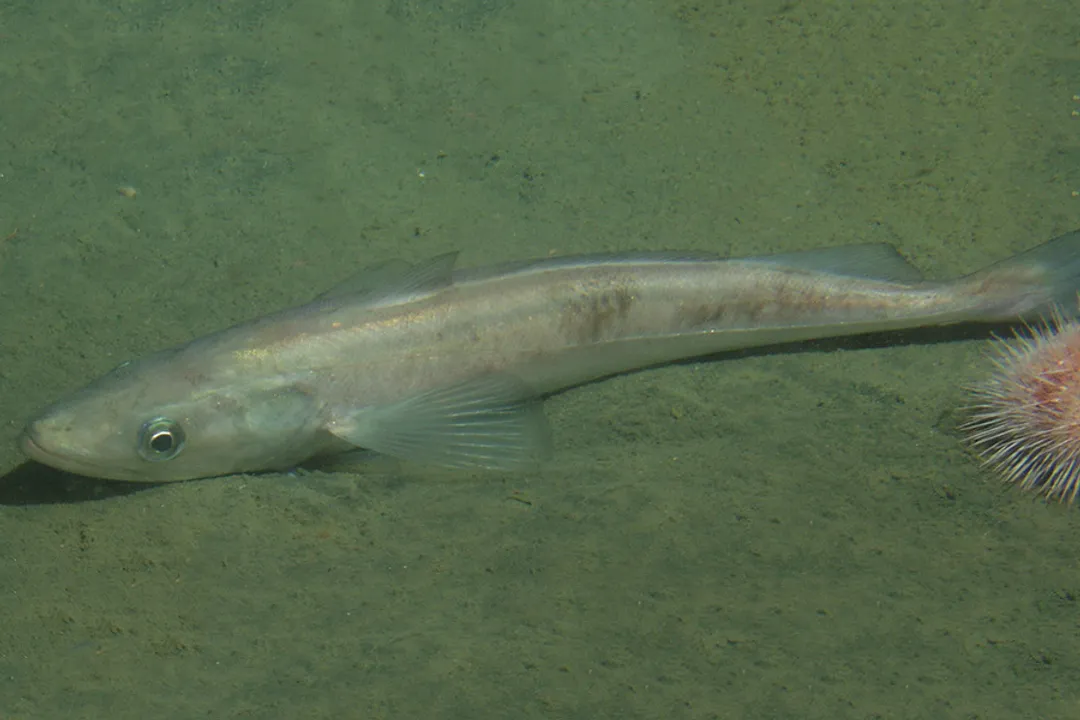
The appearance of whiting, a name often applied to several different fish across the globe, can be best understood by focusing on the characteristics common to the true members of the genus Merlangius, such as the European Whiting (Merlangius merlangus). [1][7] These fish possess a distinct profile recognized by anglers and scientists alike. Generally, they present an elongated, somewhat slender body shape. [1][7] The overall coloration is typically described as a silvery-grey or silvery-white hue, which helps them blend into the water column when viewed from different angles. [7] Their small scales feel smooth to the touch. [7]
# Fin Structure
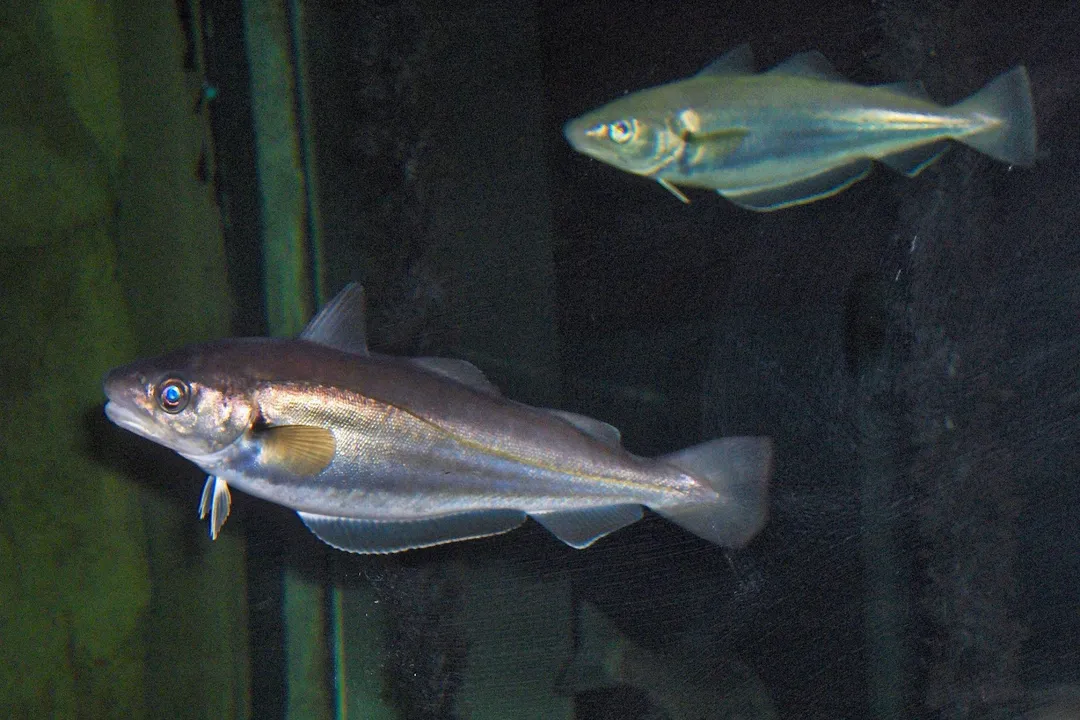
Perhaps the most reliable defining feature for true whiting, placing them within the cod family (Gadidae), is their specific fin arrangement. [1][7] A whiting will always display three separate dorsal fins situated along its back. [1][7] Complementing this setup are two anal fins positioned underneath the body. [1][7] The caudal fin, or tail fin, is usually only slightly forked. [7] When observing these fins, the first dorsal fin is often relatively short compared to the subsequent two. [7] This configuration is quite standard for many members of the cod order, but combined with other features, it solidifies identification. [1]
# Head Details
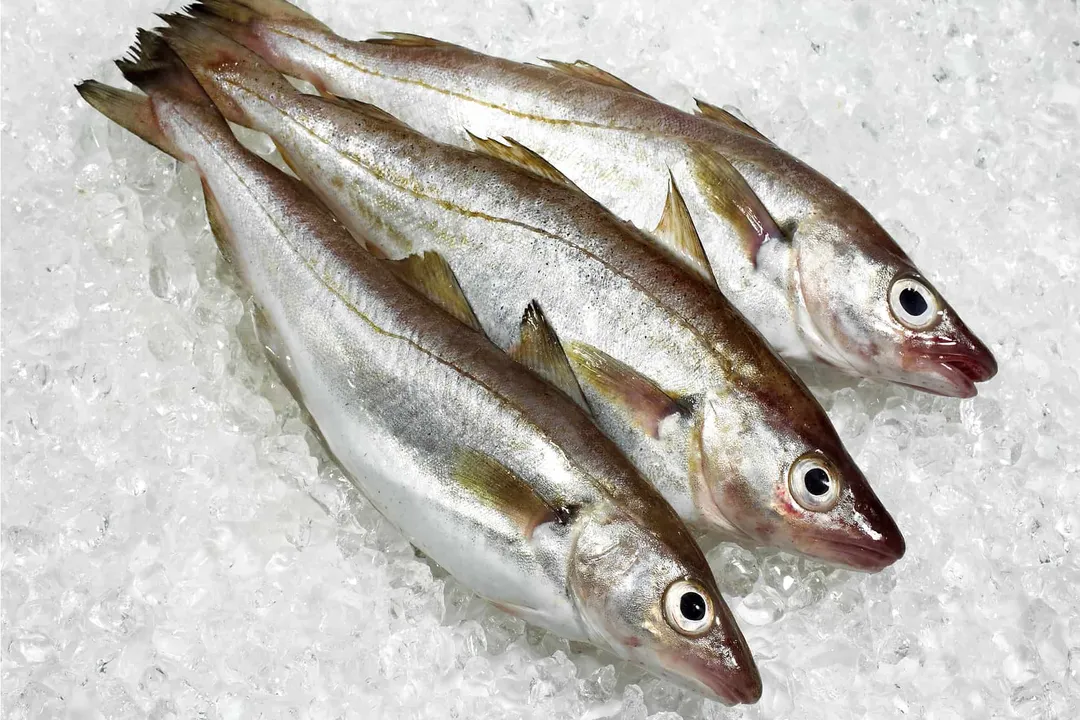
The head structure of a whiting offers several key markers. They possess a relatively large mouth, and the lower jaw often protrudes slightly, suggesting a feeding habit that targets prey slightly ahead or below them. [1] The snout area is another crucial area for identification. For the European species, the snout is typically pointed. [7] However, the presence of a prominent black spot located immediately behind the eye is a frequently cited diagnostic feature for M. merlangus. [1][7] This dark marking serves as a useful, quick identifier when handling a fresh specimen. [7]
The silvery nature of their flanks, combined with the countershading provided by a whiter belly, suggests an adaptation for life in open or mid-water environments where visibility is key. This physical presentation allows them to minimize detection by both predators looking up and prey looking down while they are actively feeding in the water column. [7]

# Species Comparison
The common name "whiting" carries significant ambiguity across different regions and fisheries, which is essential to understand when discussing physical characteristics, as the species can belong to entirely different biological families. [4][6][9] A key analytical step when encountering a fish called whiting is to immediately check its geography and family background, as the appearance can diverge sharply.
For instance, the Pacific Whiting, often referred to as Pacific Hake (Merlangius productus), is indeed in the same family as the European species, maintaining a similar overall structure. [4] It is slender and silvery, though it is noted for having a longer snout than some other related hakes. [4]
Contrast this with species that share the common name but belong to different families. The Texas Saltwater Fishing Magazine often refers to the King Whiting, which is technically Menticirrhus littoralis, sometimes called Sand Whiting or Southern Kingfish. [6] Physically, this species differs markedly from Merlangius. Instead of a pointed snout, it has a slightly conical or rounded snout. [6] Its coloration tends toward silvery-white or greyish-brown. [6] This difference in head shape alone is enough to distinguish it from the true whiting species. [6]
Similarly, the Tasmanian School Whiting (Sillago flindersi) belongs to the Sillaginidae family, not Gadidae. [9] While it shares the elongated body shape and can exhibit silvery or bronze tones, its structure fits within its distinct family grouping. [9]
To better illustrate these key structural differences that often cause misidentification in casual settings, a breakdown of these commonly named 'whiting' types is helpful:
| Feature | European Whiting (M. merlangus) | Pacific Whiting (Hake) | Texas/Sand Whiting (Menticirrhus) |
|---|---|---|---|
| Family | Gadidae | Gadidae | Sciaenidae (implied by context/snout) |
| Snout Shape | Pointed | Long | Conical/Rounded |
| Distinguishing Mark | Black spot behind eye | Slender body, long snout | Generally lacks European spotting |
| Body Profile | Elongated | Slender | Varies, but snout is key differentiator |
This divergence highlights that while all true Merlangius share a family resemblance defined by fin counts and the black spot, the common application of the name "whiting" can describe fish with fundamentally different skull and jaw morphology. [1][6]
# Size and Growth
The potential size of whiting can be impressive, though not always reflected in typical catches. Sources indicate that some whiting species can reach lengths approaching one meter. [1] However, in many fisheries, especially those targeting European Whiting, the average size caught is considerably smaller. [7] The Pacific Whiting, for example, is a commercially significant species where size and biomass are closely monitored. [4] The rapid assessment of size and maturity is often tied to population management efforts aimed at sustainable yield. [4][5]
# Distinguishing Features in the Field
For an angler or field biologist trying to quickly identify a catch, a few physical characteristics stand out as critical checkpoints, moving beyond the basic fin count:
- The Spot: Is the black spot present directly behind the gill cover/eye area? If yes, it strongly suggests M. merlangus or a close relative within Gadidae, provided the three dorsal fins are present. [1][7]
- The Jawline: Does the lower jaw protrude significantly, or is the snout distinctly rounded like a small hammerhead (though not as pronounced)? If the snout is rounded, it shifts suspicion away from Merlangius toward the Menticirrhus group. [6]
- Scale Texture: While subtle, the scales of European Whiting are smooth, as is common for many pelagic cod relatives. [7]
Understanding these physical traits allows for a more precise appreciation of the fish being observed. For instance, the relative lack of heavy musculature implied by the slender build, combined with the countershading, points toward a lifestyle where speed and camouflage are prioritized over sheer brute force compared to bottom-dwelling relatives. [7] The fishing industry, particularly in areas like the North West IFCA region, relies on accurately identifying species for regulatory compliance, where size limits and management areas are species-specific. [5] The subtle differences in physical structure—the shape of the snout, the intensity of coloration, or the exact positioning of the fins—become the basis for management decisions regarding quotas and gear restrictions. [5]
# Ecological Implications of Form
The physical characteristics observed in whiting are deeply intertwined with their ecological role. The streamlined, torpedo-like body shape found in Merlangius species facilitates efficient movement through the water column, necessary for chasing mobile prey such as small fish and crustaceans. [1][7] The fact that they are generally silvery helps them hunt in well-lit zones where light penetration is high. [7] In contrast, fish like the Sand Whiting, adapted to life near the bottom or in turbid inshore waters, often have less brilliant silvery sides and a more robust structure suited for foraging in sand or mud. [6]
It is worth noting that while the European Whiting is well-documented, fisheries management for species like the Pacific Whiting involves intensive scientific surveys to monitor biomass based on length frequency data, directly linking physical size measurements to stock health assessments. [4] This dependency on physical metrics underscores how fundamental characteristics like maximum recorded length dictate conservation strategy. [4] A population showing a steady increase in average length might indicate successful management interventions, whereas a population dominated by very small specimens could signal recruitment stress. [4] The physical form, therefore, is not just descriptive but diagnostic of population status.
In summary, while a casual glance might label any silvery, long-bodied fish in European or North American waters as "whiting," a closer look at the fin counts, the presence of the diagnostic black spot behind the eye, and, most critically, the structure of the snout and jaw, reveals the distinct physical signatures that separate true Merlangius members from their namesake cousins in other families. [1][6][7] These subtle variations in morphology are the primary tools used by scientists and fishers to differentiate between the species. [4][5][9]
Related Questions
#Citations
Merlangius
Whiting (Merlangius merlangus) - MarLIN
Whiting Fish Facts - Merlangius merlangus
Pacific Whiting
Whiting - Fish
Whiting
Whiting | Fish Species Guide
Whiting | Life in Water Wiki | Fandom
Southern School Whiting | Fishing Tasmania
Whiting