How do summer generations of P. rapae exhibit seasonal dimorphism?
Answer
They emerge with larger wings and noticeably darker pigmentation.
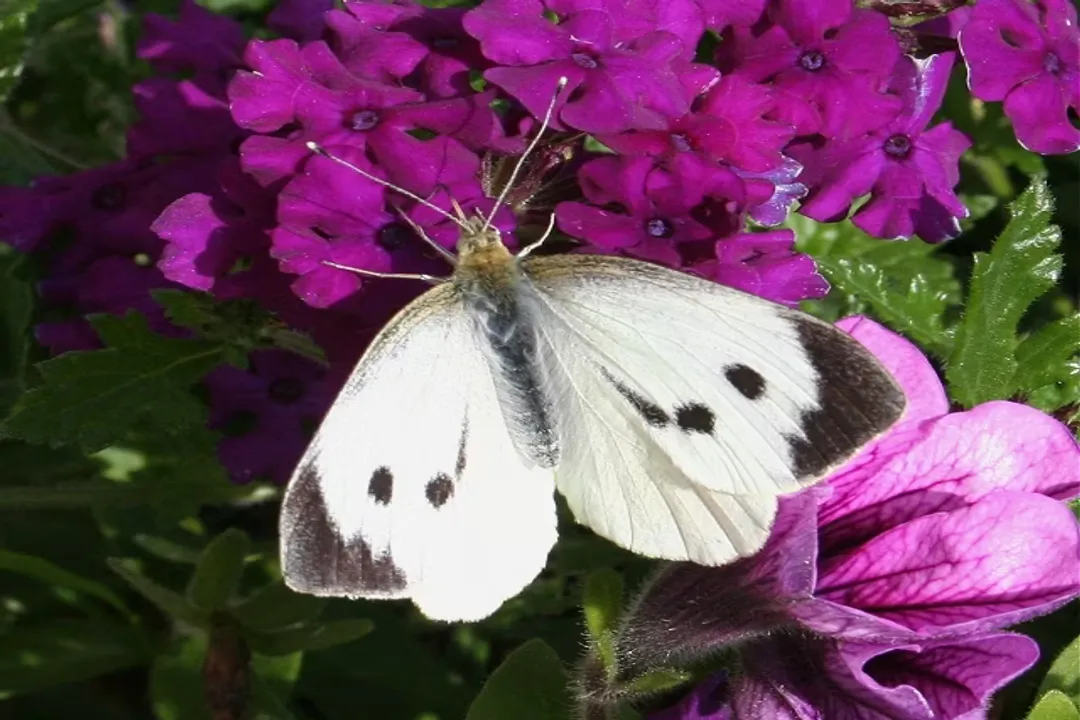
The European cabbage butterfly, P. rapae, displays seasonal dimorphism influenced by emergence time. The initial generation emerging in the spring, which has overwintered in the pupal stage (diapause), tends to be smaller and show less black coloring on the wing tips. Conversely, the generations that emerge during the summer months develop differently, resulting in larger wings and pigmentation that is noticeably darker than the spring counterparts. This variation in pigmentation intensity is a helpful identification clue, especially when differentiating them from native butterflies that may lack this characteristic.
Related Questions
What underside pattern identifies the Green-veined White (P. napi)?How do summer generations of P. rapae exhibit seasonal dimorphism?How does the black wing tip marking extension differentiate Large White from Small White?What specific shape characterizes the forewing tip marking on the Great White (P. brassicae) female?What is unique about the clustering behavior of Great White caterpillars?How do adult white butterflies typically hold their wings when resting?What is the primary color description for P. rapae caterpillars?What specific hue variation can the Western White Butterfly (Pontia occidentalis) display?What underside pattern points toward the Orange-tip butterfly?What color and structural features are noted on Great White pupae?Where are the black dots located on the male Pieris rapae vs. male Great White upperside?