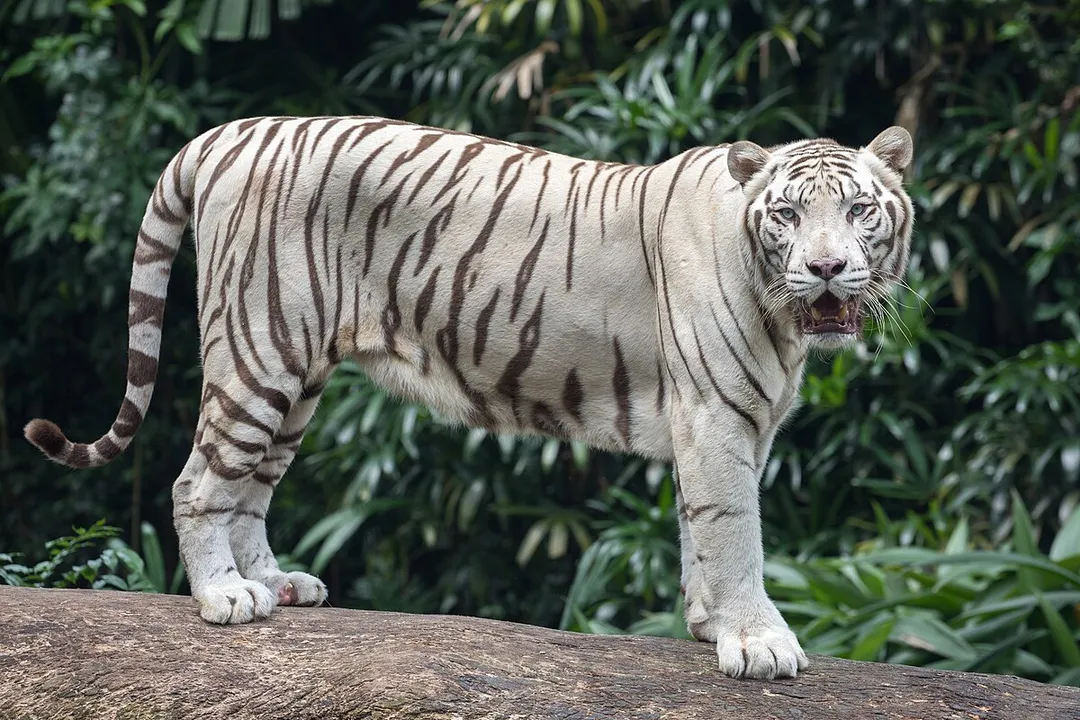
What pigment production does the single, rare recessive gene limit in the white tiger coat?
The production of red and yellow pigments (pheomelanin)
The characteristic white coloration in tigers results from a specific genetic anomaly governed by a single, rare recessive gene. This gene does not eliminate all coloration; rather, it specifically curtails the production of pheomelanin, which is responsible for red and yellow hues. However, the production of eumelanin, the black pigment responsible for the stripes, is generally allowed to continue. This mechanism explains why white tigers retain visible stripes, even if they are dark brown or black, while their background fur lacks the typical orange pigmentation. True albinism, by contrast, involves the complete absence of all melanin production, which leads to distinctly different physical features, such as pink eyes, which are not characteristic of the white tiger.