White Butterfly Physical Characteristics
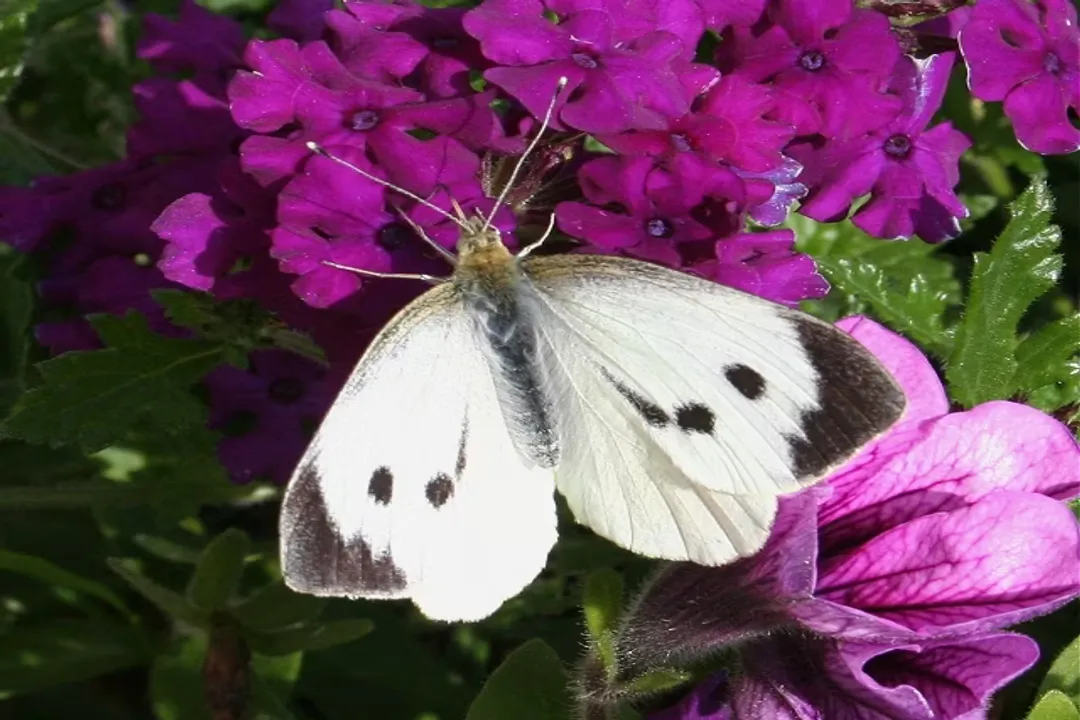
The sight of a bright white butterfly fluttering in a garden or meadow is common, yet accurately naming the species can be surprisingly tricky. These insects, generally belonging to the subfamily Pierinae within the family Pieridae, share a fundamental pale appearance, but subtle physical characteristics separate the many types found worldwide. While the family includes about 1,100 species globally, much of the observable data revolves around a few well-known representatives, such as the widely distributed Pieris rapae.
# Basic Structure
Adult white butterflies typically possess wings colored white, occasionally with creamy or slightly yellowish tinges. A defining trait for many is the presence of dark marginal markings, usually black or dark grey, concentrated near the wing tips. The overall size is moderate; for instance, the general range for white butterflies noted by some sources spans from about 37 mm up to 63 mm in wingspan. However, it is wise to remember that size alone is an unreliable identification tool, as variations occur within species, much like variations in human height. Their bodies, like all Lepidoptera, consist of a head, thorax, and abdomen, and both the wings and bodies are covered in fine, delicate scales. In terms of resting posture, butterflies typically hold their wings vertically over their backs, contrasting with many moths which hold them tent-like or wrapped around the body.
# Cabbage White Marks
The European cabbage butterfly, Pieris rapae, often known simply as the small white or cabbage white in North America and New Zealand, provides a prime example of the subtle variations to observe. The upperside of this species is creamy white, accented by black tips on the forewings. A significant feature used for distinguishing sexes is the spotting on the forewings. Female P. rapae usually display two black spots located in the center of the forewings, whereas males also possess two black dots, but these are often only visible on the underside when viewed from above. The male's upper wing surface generally shows only one centrally located black dot.
The wingspan for P. rapae adults is relatively small, averaging between 32 mm and 47 mm. Interestingly, the physical characteristics of P. rapae are responsive to the time of year they emerge, exhibiting seasonal dimorphism. The initial generation in the spring, which often overwinters in the pupal stage (diapause), tends to be smaller and display less black coloring on the wing tips. Conversely, the summer generations emerge with larger wings and noticeably darker pigmentation. This seasonal shift in pigmentation intensity is a helpful clue, as native butterflies often lack this characteristic.

# Underside Clues
While the upper side gives initial clues, certainty in identifying common white species often requires observing the underside of the hindwing. If the butterfly is perched with its wings closed over its back, this feature becomes visible and can differentiate between several similar species.
One pattern is Plain, meaning the underside is a creamy-white color with no obvious markings; this suggests the butterfly is either a Large White (P. brassicae) or a Small White (P. rapae). If the underside shows Streaked patterns, where greeny-grey lines follow the wing veins radiating out from the base, the species is likely the Green-veined White (P. napi). A third pattern is Blotchy, presenting a greeny-grey camouflage pattern across the entire wing, which points toward the Orange-tip butterfly.
For those instances where the underside is plain (Large White vs. Small White), the observer must then refer back to the upper forewing tips. The Large White exhibits extensive black marks at the wing tips, with the dark color continuing a significant distance along the outer edge of the wing. In contrast, the Small White shows less-extensive grey or black marks at the tips, with the coloration only extending slightly down the outer edge. This difference in the extent of the black apical marking between the two species is a fine but crucial differentiator.
# Species Comparison in Detail
Moving beyond the P. rapae complex allows us to see how physical characteristics vary even among white butterflies in the same genus or family. When comparing the Small White (P. rapae) to the Great White (P. brassicae, sometimes called the Large White), the size difference is more definitive than spotting patterns alone might suggest for other species groups. The Great White adult has a larger wingspan, with females reaching about 63 mm and males around 58 mm, compared to the P. rapae wingspan topping out near 47 mm.
The Great White female also differs clearly: its forewing possesses two black dots and a distinct black smear, features shared with the female P. rapae, but the Great White’s black tip marking is a distinct boomerang shape extending roughly the same distance down both sides of the outer wing edge. The male Great White has two black dots on the upperside, but these are on the underside, meaning the upper wing appears unmarked by dots, unlike the male P. rapae's single upper spot. The Great White's underside is generally a pale yellow, dusted with grey.
The Western White Butterfly (Pontia occidentalis), found in western North America, maintains the overall white theme but introduces a specific hue variation. It is primarily white but can display light yellow or pale greenish markings on its wings, which can vary in intensity between individuals. Its wingspan is slightly smaller than the Great White, ranging from 35 mm to 50 mm.
To illustrate the importance of observing multiple features, consider this summary of the three species discussed:
| Feature | Small White (P. rapae) | Great White (P. brassicae) | Western White (P. occidentalis) |
|---|---|---|---|
| Upper Forewing Tip Mark | Less-extensive black/grey, slightly along edge | Black boomerang shape, extending equally down both sides | Characteristic black markings |
| Female Forewing Spots | Two central black dots, one black smear | Two black dots and a black smear | Not specified clearly, but generally shares white base |
| General Size (Wingspan) | Small to medium (up to ~47 mm) | Larger (up to ~63 mm female) | Medium (35–50 mm) |
| Underside Appearance | Yellowish with black speckles | Pale yellow dusted with grey | May have light yellow or pale greenish markings |
This comparative approach reveals that identification relies on synthesizing several physical markers rather than locking onto a single trait, as even common features like spots vary by sex and age. For instance, observing the wing tip pattern extension—a subtle contrast between "a long way along the outer edge" for the Large White and "slightly along the outer edge" for the Small White—is more telling than simply noting the presence of a black tip.
# Larval and Pupa Appearance
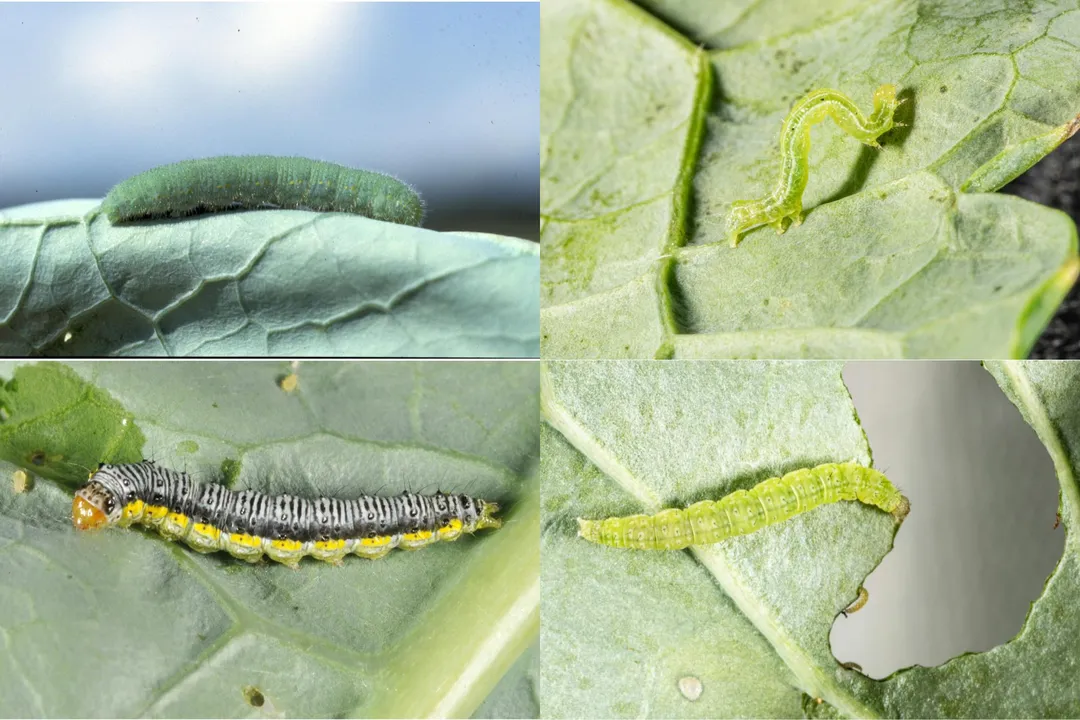
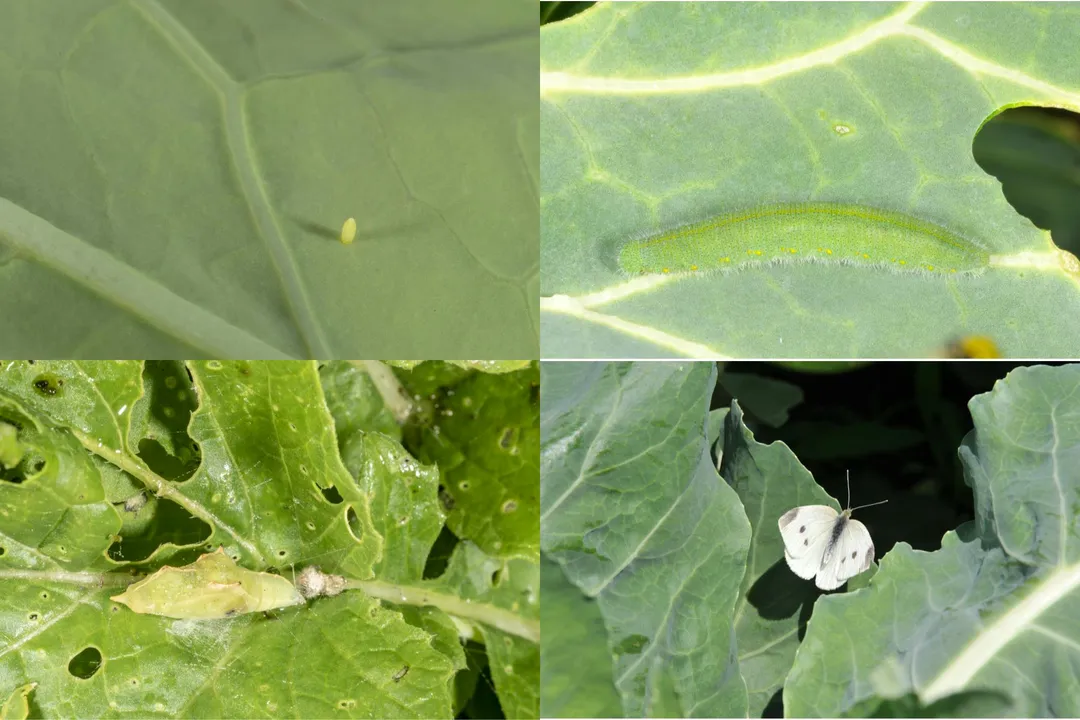
While the adult stage is what most people focus on, the preceding stages also possess distinct physical characteristics that aid in confirming species identity, especially in agricultural contexts where differentiation matters.
The caterpillars, or larvae, of the P. rapae are described as bluish-green with tiny black spots, a black ring encircling the spiracles, and a distinct yellow middorsal line and lateral yellow dashes. As they grow, they can reach about 30 mm in length. Contrast this with the Great White caterpillar, which, upon maturity, becomes speckled black and greyish-green, featuring three yellow lines along its body, and grows significantly larger, up to 50 mm long. Furthermore, Great White caterpillars are noted to be found in clusters until near maturity, while P. rapae larvae are typically found singly. The Western White caterpillar, by comparison, is green with a series of yellow stripes and fine bristles.
The pupal stage also presents differences. P. rapae pupae are variable—brown, mottled-grey, or yellowish—and possess a large head cone. Great White pupae, however, are specifically described as pale green or greyish-white, dotted distinctly with yellow and black, and feature ridges with blunt spikes.
Observing these morphological details across the life cycle confirms that what constitutes a "white butterfly" is a broad category. The subtle variations in marking intensity, size relative to siblings (seasonal effect), and even the shape and color of the protective chrysalis are all physical characteristics that define the species beyond a simple, uniform whiteness. For the casual observer, recognizing that the most dependable characteristic is often the pattern on the underside of the hindwing is key to moving past guesswork.
Related Questions
#Citations
White butterfly | Migration, Life Cycle & Habitat
White butterflies
Pieris rapae
How To Identify White Butterflies
Insect Spotlight: Cabbage White Butterfly (Pieris rapae)
Pieris rapae | INFORMATION
White Butterfly Insect Facts - Pieris rapae
Description: Great white butterfly
Western White Buttterfly