White Shark Physical Characteristics
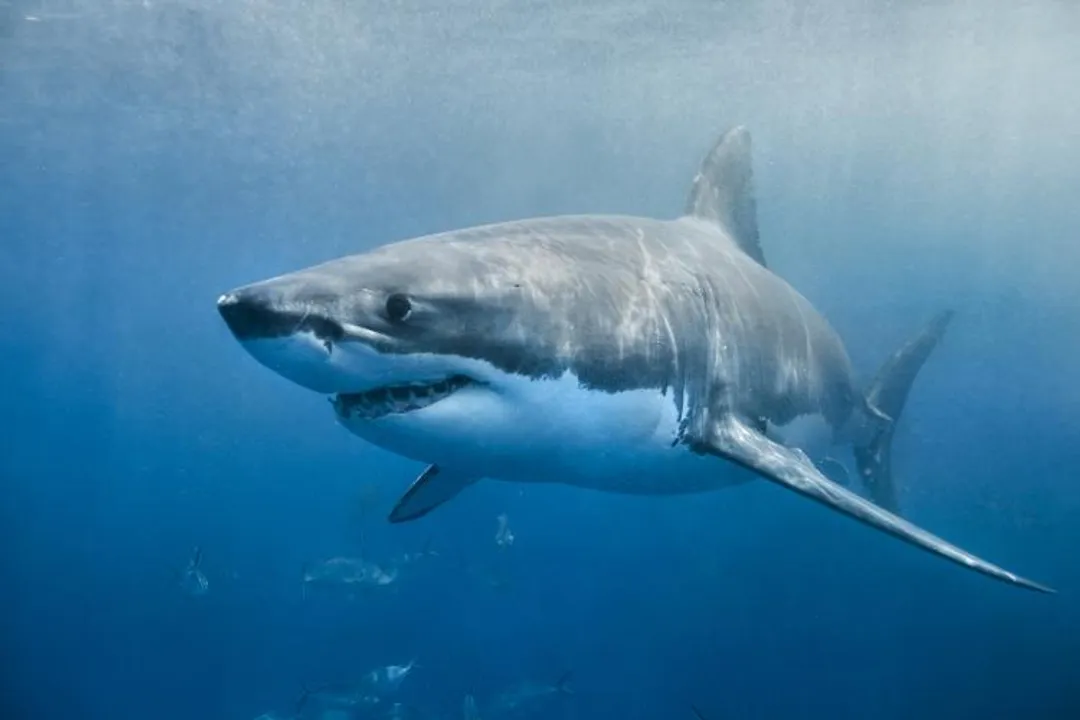
The white shark, scientifically known as Carcharodon carcharias, presents one of nature’s most perfectly engineered apex predators, a creature whose physical attributes are finely tuned for survival in the world’s temperate and subtropical oceans. [2][3][5][10] To truly appreciate this animal, one must look past the myths and examine the sheer mechanics of its design, from its massive size to the microscopic sensory organs peppered across its snout.
# Size Differences
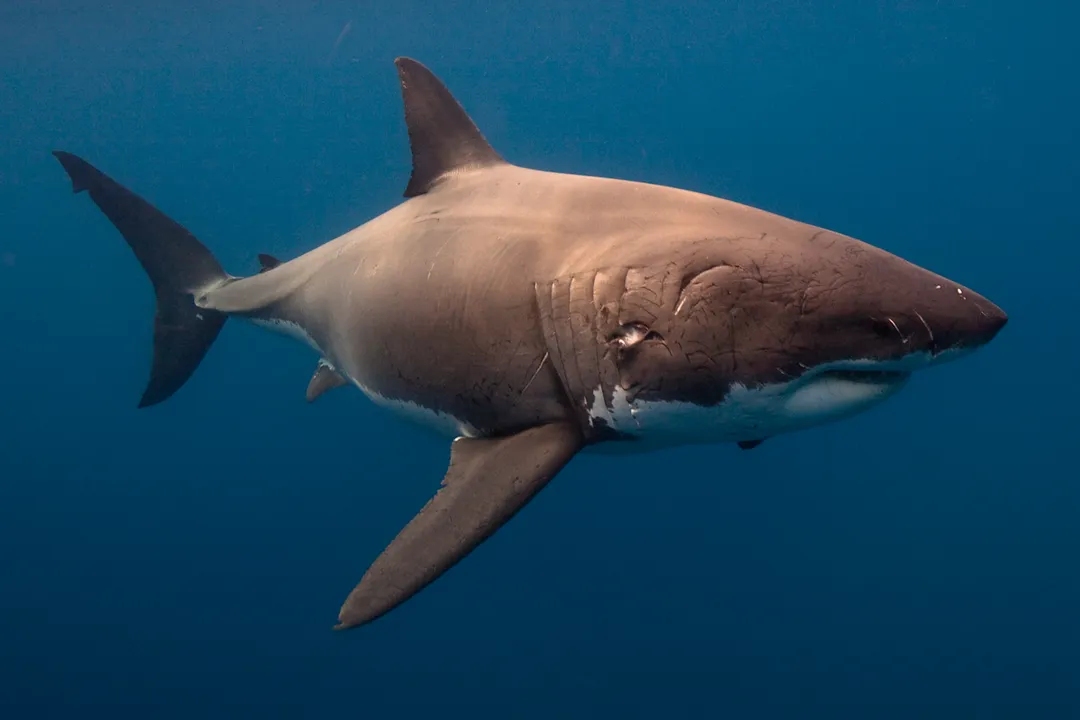
The sheer scale of the great white shark is often exaggerated in popular culture, but even the documented maximums are astounding. [9] These sharks are among the largest predatory fish on Earth. [4] While exact maximum sizes are difficult to confirm reliably in the wild, estimates suggest they frequently exceed 15 feet in length. [9] Some reliable records indicate mature females can reach lengths over 20 feet, or about 6 meters. [2][9] Males, on the other hand, are generally smaller than the females. [1][5]
It is fascinating to consider the implication of this pronounced sexual dimorphism. If females consistently achieve greater maximum sizes than males, it suggests a potentially higher caloric requirement throughout their lifespan or perhaps a slower maturation rate, meaning the largest, most powerful individuals encountered in feeding grounds are statistically more likely to be female. [1][2][4][5][9]
This impressive length correlates directly with significant mass. A fully grown specimen can weigh upwards of 4,000 pounds, sometimes exceeding that significantly. [2][4][9] To put that mass into context, a fully grown adult white shark often outweighs several mid-sized sedans combined.
Here is a brief comparison based on general size reporting:
| Characteristic | Male Average/Max | Female Average/Max |
|---|---|---|
| Length | Smaller than females | Can exceed 20 feet (6 m) [2][9] |
| Weight | Less than 4,000 lbs | Can exceed 4,000 lbs [2][4][9] |
# Body Form
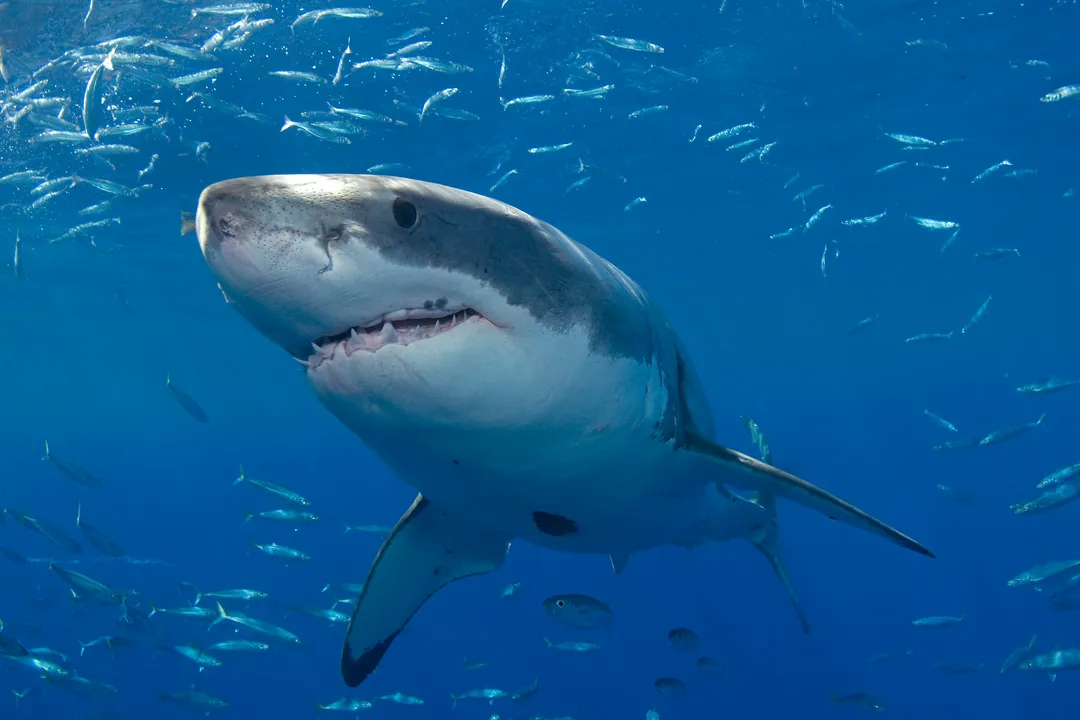
The overall silhouette of the white shark is instantly recognizable: a torpedo or spindle shape. [3][4] This streamlined design minimizes drag, allowing for bursts of speed necessary to overtake fast-moving prey like seals and sea lions. [3]
Propulsion comes primarily from the powerful caudal fin, or tail fin. [3] Unlike many bony fish, the white shark's tail is slightly asymmetrical, with the upper lobe typically being larger than the lower lobe, driving the shark forward through powerful side-to-side sweeps. [3] The pectoral fins, located behind the gills, act much like airplane wings, providing lift and stability to keep the shark oriented correctly in the water column. [4]
Another key structural feature is the presence of five gill slits on each side of the head, behind the eyes. [3][4] These openings are essential for respiration, as white sharks must keep moving to force oxygenated water over their gills—a process known as ram ventilation. [4]

# Coloration and Camouflage
Perhaps the most defining visual characteristic of the great white is its distinctive coloration, a classic example of countershading in marine biology. [1][3][5][10] The dorsal (upper) side of the shark is typically dark—shades ranging from dark grey to bronze or brownish-black. [1][5][9] Conversely, the ventral (underside) surface is starkly white. [3][5][10]
This dual-tone patterning is not merely aesthetic; it is a superb, passive form of camouflage that breaks up the shark’s outline in the water. [1][5][10] When a potential prey animal looks down from the surface, the dark back blends in with the darker, deeper ocean water below. Conversely, when a seal or sea lion looks up from below, the white belly matches the brighter, sunlit surface water. [1][5][10] Understanding the conditions under which this camouflage is most effective—typically in well-lit, near-surface waters—gives context to where we expect to observe the shark's hunting behaviors.
# Dentition System
The weaponry of the white shark is legendary, centered on its massive, triangular, and heavily serrated teeth. [1][2][3][4][5] These teeth are designed for gripping, tearing, and shearing flesh, not necessarily for chewing, as sharks swallow large chunks of food whole. [2][4]
A common misconception involves the idea that a shark loses its teeth constantly and is toothless for a period; in reality, they possess multiple rows of teeth, functioning like a conveyor belt. [2][4] When a tooth in the primary, outermost row is lost or broken during an attack, a replacement tooth from the row immediately behind it rotates forward to take its place. [2][4] This continuous replacement means the shark always has a sharp, functional set of cutting tools ready. The teeth themselves are not rooted in the jawbone but are embedded in the gums, which aids in this rapid turnover process. [2]

# Sensory Perception
While the sheer physical size and teeth capture the imagination, the sophisticated sensory apparatus allowing the white shark to operate effectively in often murky water is what truly makes it a superior hunter. [2][3]
# Electromagnetic Detection
One of the most unique adaptations is the Ampullae of Lorenzini. [2][3] These are specialized jelly-filled pores or canals located primarily around the snout and head region. [2] These organs detect minute electrical fields generated by the muscle contractions of other living creatures. [2][3] Even a fish hiding under the sand or an injured animal emitting weak bioelectric signals can be pinpointed by the shark, providing a crucial advantage, especially when visibility is low. [2]
# Vision and Olfaction
White sharks possess large, dark eyes, which are adapted for seeing in varying light conditions. [2][4] They also have a protective inner eyelid, called a nictitating membrane, which can be drawn across the eye just before impact to shield it from injury during an attack or while maneuvering through abrasive debris. [2][4]
Equally important is the sense of smell. Sharks have a highly developed olfactory system capable of detecting extremely small concentrations of substances, such as blood, in the water. [2] While vision and electrical sensing might initiate an approach, olfaction often plays a significant role in locating potential food sources from a distance. [2]
# Cartilaginous Structure
Unlike humans and most terrestrial vertebrates, the white shark lacks a true bony skeleton. [3] Its entire skeletal structure is composed of cartilage, the same material found in human ears and noses. [3] This cartilaginous structure is lighter than bone, which contributes to the shark's overall buoyancy and reduces the energy required for movement. [3] This feature is characteristic of all sharks, providing flexibility and strength without the density of true bone. [3] This lighter frame, combined with the energy efficiency of its hydrodynamic shape, supports its role as an active, open-ocean predator. [3][4]
Related Questions
#Citations
White Shark | NOAA Fisheries
Great white shark - Wikipedia
White shark | Size, Diet, Habitat, Teeth, Attacks, & Facts | Britannica
Great White Shark - Oregon Sea Grant
White Shark – Discover Fishes - Florida Museum of Natural History
White Shark The White shark (Carcharodon carcharias), also known ...
All About Great White Sharks - Oceans Research
Great White Shark | Online Learning Center - Aquarium of the Pacific
Great white sharks, facts and information | National Geographic
White Shark - Save Our Seas Foundation