White Tiger Physical Characteristics
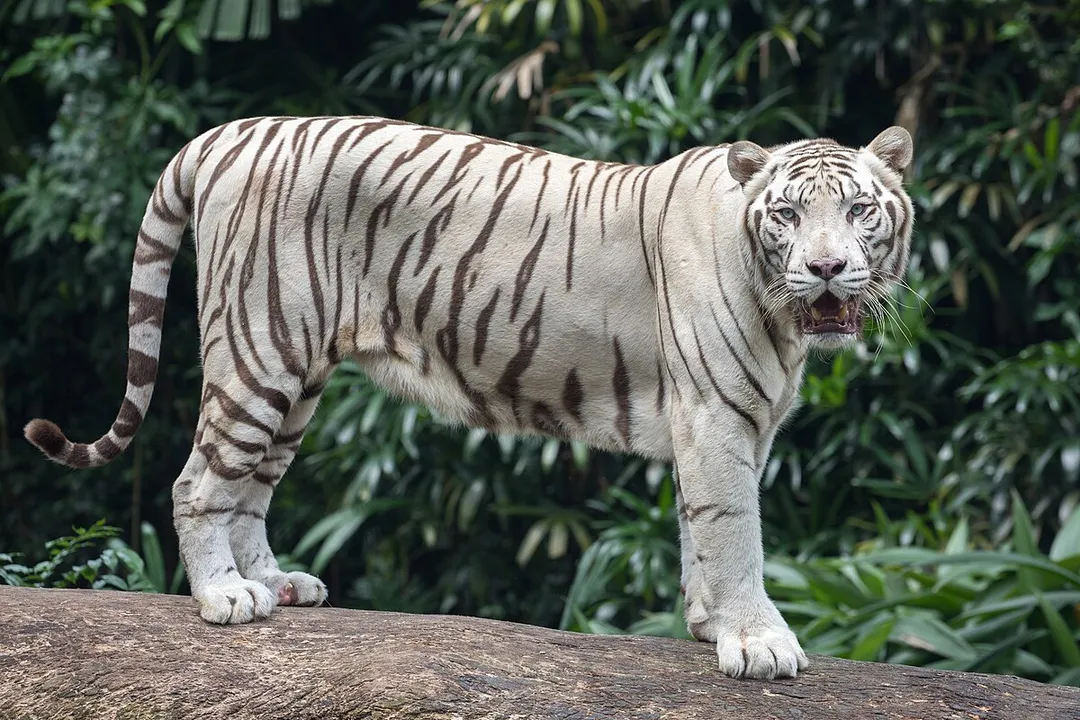
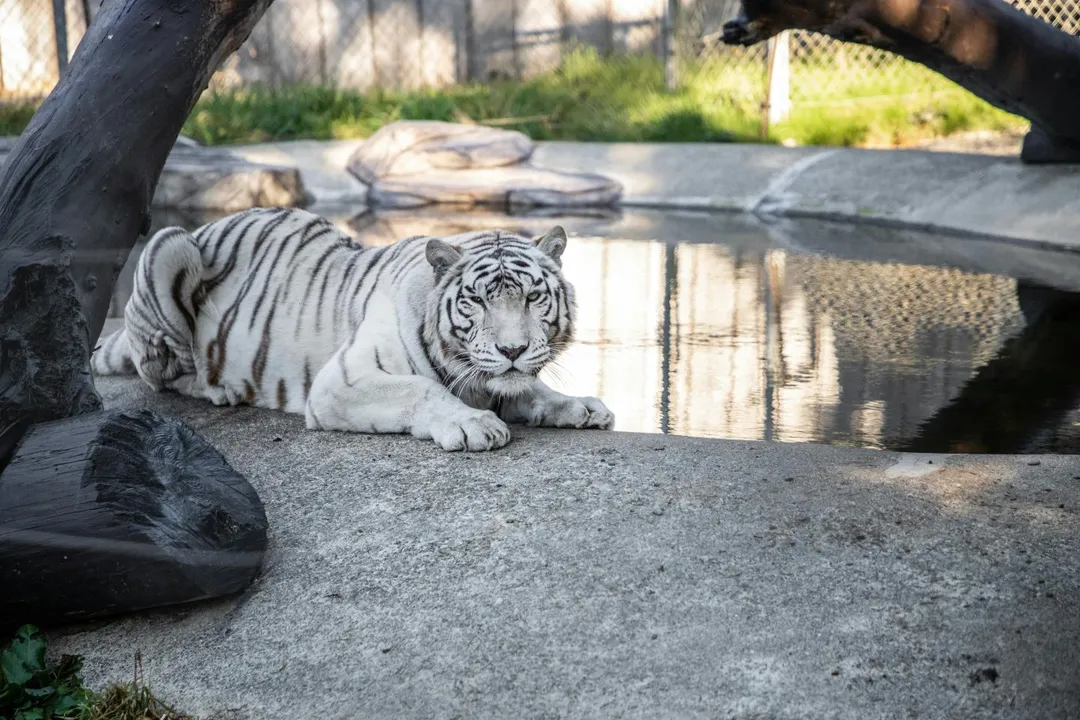
The appearance of the white tiger is immediately captivating, setting it apart from the more common orange Bengal tiger that dominates our collective imagination of big cats. This striking coat, often the primary focus when discussing these animals, is not the result of hybridization or a unique subspecies, but rather a specific genetic variation within the Bengal tiger population. [2][4][7]
# Coat Color
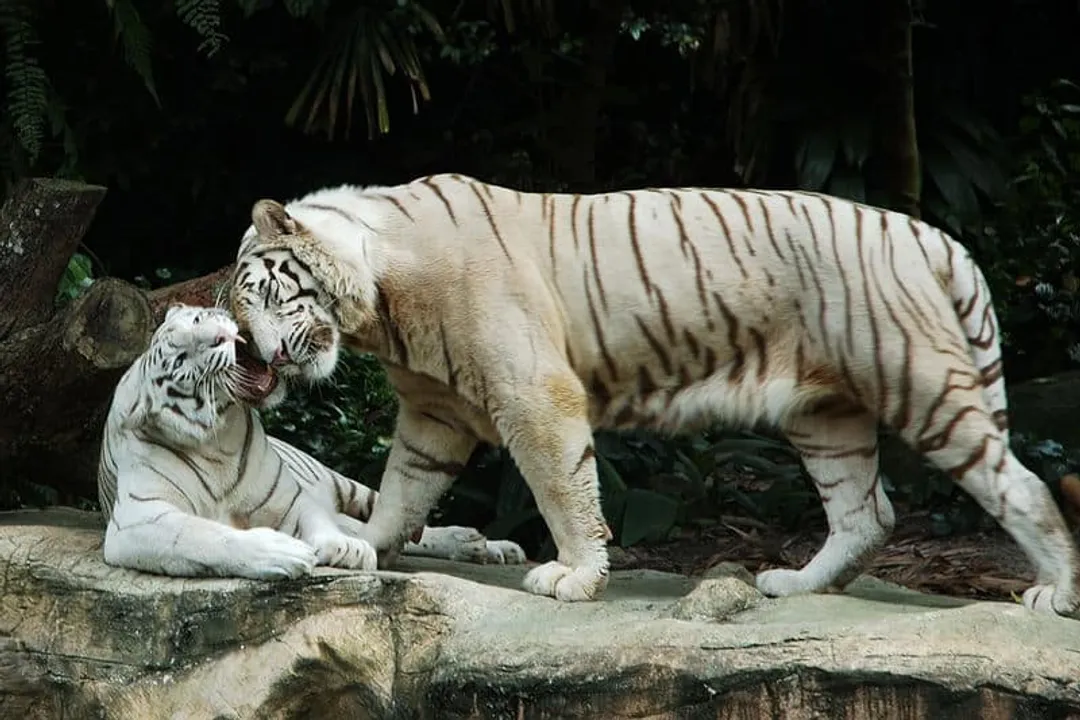
The most noticeable physical characteristic, naturally, is the pigmentation of the fur itself. A white tiger possesses a coat that ranges from creamy white to nearly pure white. [2][4] Crucially, these animals are not albinos. [2][4] Albinism involves a complete lack of melanin, resulting in white fur and pink eyes, which is not the case here. [4]
Instead, the white coat stems from a single, rare recessive gene that limits the production of red and yellow pigments (pheomelanin) while allowing black pigment (eumelanin) to remain. [2][4][7] This means that while the background fur color is drastically lightened, the stripes are still present. [3][7] These stripes are typically black, but depending on the specific genetic expression inherited, they can also appear as dark brown or chocolate coloring. [2][4][10] Furthermore, some white tigers exhibit what is often described as "ghost striping," where the markings are incredibly faint or washed out against the pale background. [2][7]
For those accustomed to seeing only the famous white specimens, it is important to remember that the white coat is a visual anomaly in the wild. When observing captive populations, one might notice that the stripe patterns themselves vary greatly, much like their orange counterparts; no two tigers, regardless of base color, share an identical stripe pattern. [5]
# Pigment Details
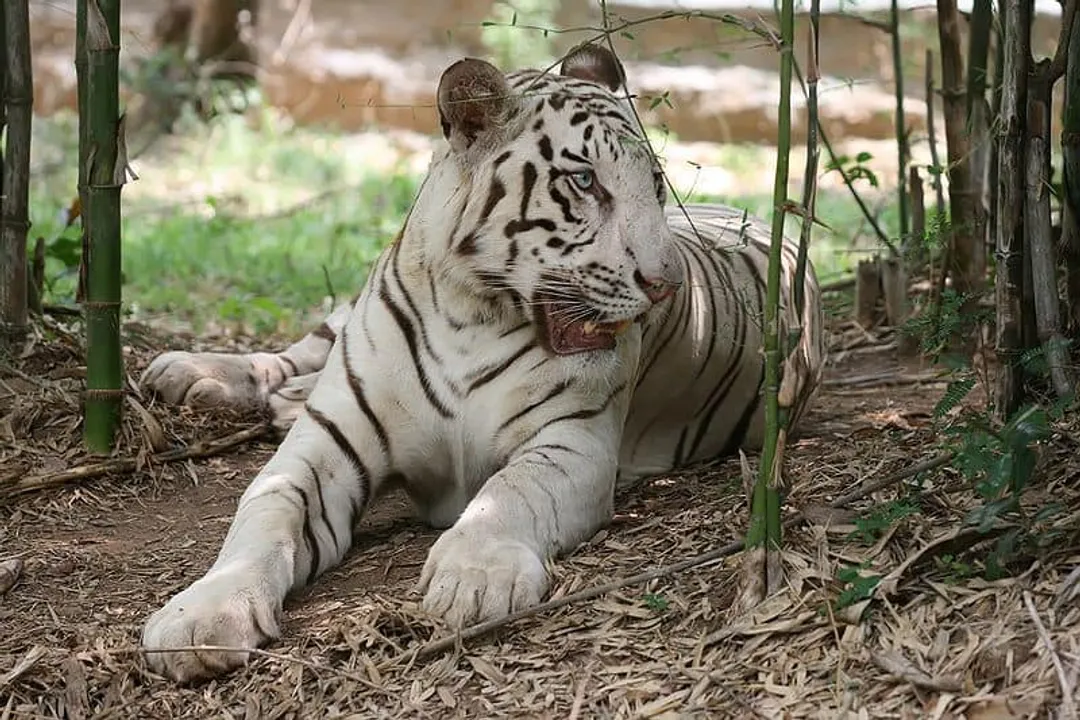
The difference between a white tiger and an albino extends beyond the fur to other key areas of pigmentation. True albinos lack pigment entirely, but white tigers retain enough melanin to color other features. [4]
One of the most consistent features associated with the white coat is the eye color. White tigers almost invariably have blue eyes. [2][4][7] While green or gold eyes can occasionally appear in rare instances, blue is the standard accompaniment to the white pelage. [10]
Another telltale sign differentiating them from true albinos is the color of their skin and nose. White tigers possess pink noses and pads, but these areas often have some darker pigmentation present, unlike the completely unpigmented features of an albino. [2][7] In some individuals, the overall coat might even take on a slightly reddish or cream tint, rather than stark white, depending on the exact mutation expression. [10]

# Body Dimensions
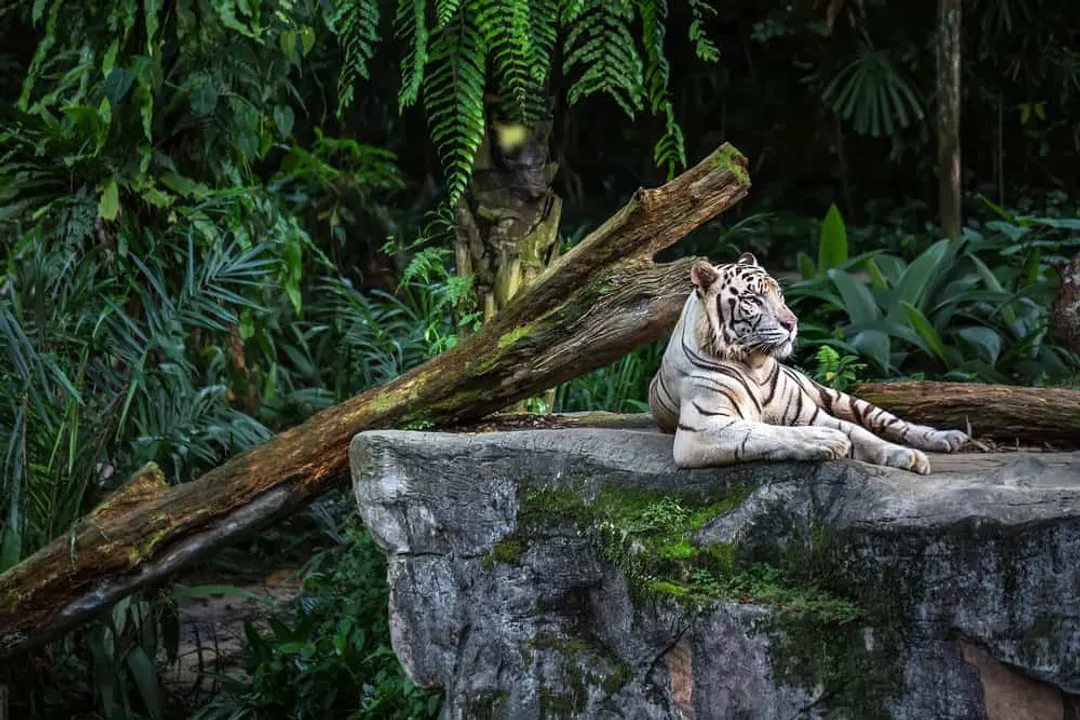
Physically, a white tiger is structurally identical to an orange tiger of the same subspecies, most commonly the Bengal tiger (Panthera tigris tigris). [2][4] The recessive gene responsible for the coloration does not affect overall size, muscle mass, or skeletal structure. [7]
They are formidable, powerful predators. Males are generally larger and heavier than females. [5] An adult male white tiger can reach lengths of up to 10 feet from head to tail, and stand around 3 to 3.5 feet tall at the shoulder. [5] Weights can vary significantly, but males typically weigh between 400 and 500 pounds, sometimes exceeding that, while females are usually smaller, often falling in the 220 to 370-pound range. [5]
It is important to realize that the physical characteristics tied to their coloration—the white coat and blue eyes—offer no inherent advantage in the wild; in fact, they likely present a serious disadvantage for stalking prey in the dense, varied green and brown environments tigers naturally inhabit. [1][6]
# Genetic Basis
The entire phenomenon rests on a single, rare, recessive gene. [2][7] For a cub to inherit the white coat, both parents must carry this specific recessive gene, even if they themselves are orange tigers. [2][4] This genetic mechanism makes the probability of producing a white cub low unless both parents are white or heterozygous carriers. [4]
The prevalence of white tigers today is almost entirely concentrated within captive breeding programs. [1][6] This situation is a direct result of intensive human intervention. When the first white tigers were found in the wild, they were quickly captured, and subsequent breeding efforts prioritized the stunning visual trait. [1]
Considering the small founder population from which most captive white tigers descend, it becomes evident that this focus on a single, aesthetically pleasing trait has inadvertently created a very narrow gene pool. [6] While we can clearly map the physical appearance based on Mendelian genetics, the long-term health implications of relying on such limited ancestry—potentially concentrating other undesirable, recessive conditions—is a complex issue for conservationists working with these captive populations. [1] This reliance on a few individuals for color means that nearly all white tigers alive today are related, emphasizing that their existence is now more a matter of captive management than natural selection.
# Wild Presence
Historically, white tigers were occasionally seen in the wild, primarily in the historical range of the Bengal tiger, which spanned parts of India, Bangladesh, Nepal, and Bhutan. [2][4] However, documented sightings in the wild have become exceedingly rare over the last several decades. [1][6]
The consensus among major conservation organizations is that white tigers are functionally extinct in the wild. [1][6] The very traits that make them famous—their lack of typical camouflage—would make survival to adulthood difficult in a natural setting where stealth is paramount for hunting and avoiding threats. [1] A tiger that stands out against the dappled sunlight of a jungle understory is less likely to successfully ambush prey, potentially leading to starvation or increased vulnerability during its developmental years. [6]
While the physical characteristics—the blue eyes, the white fur, the dark stripes—are undeniably magnificent, they represent a genetic variance rather than a superior adaptation. The physical reality is that the signature look is tied directly to a captive existence maintained by careful, often inbred, management, ensuring that this spectacular, yet naturally disadvantaged, coloration continues to be seen. [6][9] This distinction between a unique physical trait and a viable survival characteristic is perhaps the most important physical context to understand about the white tiger.
Related Questions
#Citations
White Tigers: Facts, Threats, & Conservation | IFAW
White tiger - Wikipedia
White Tigers - Cat Tales Wildlife Center
White tiger | Description & Facts | Britannica
White Tiger - Rancho Texas
Wild Cats 101: White Tigers Explained - Panthera.org
White Tiger Animal Facts - Panthera tigris tigris - A-Z Animals
White Tigers: Understanding the Reality - WildCat Ridge Sanctuary
All About Tigers - Physical Characteristics | United Parks & Resorts
Characteristics - White Tigers