How do the pink noses and pads of white tigers differ pigment-wise from those of a true albino?
Answer
White tigers often retain some darker pigmentation on these areas
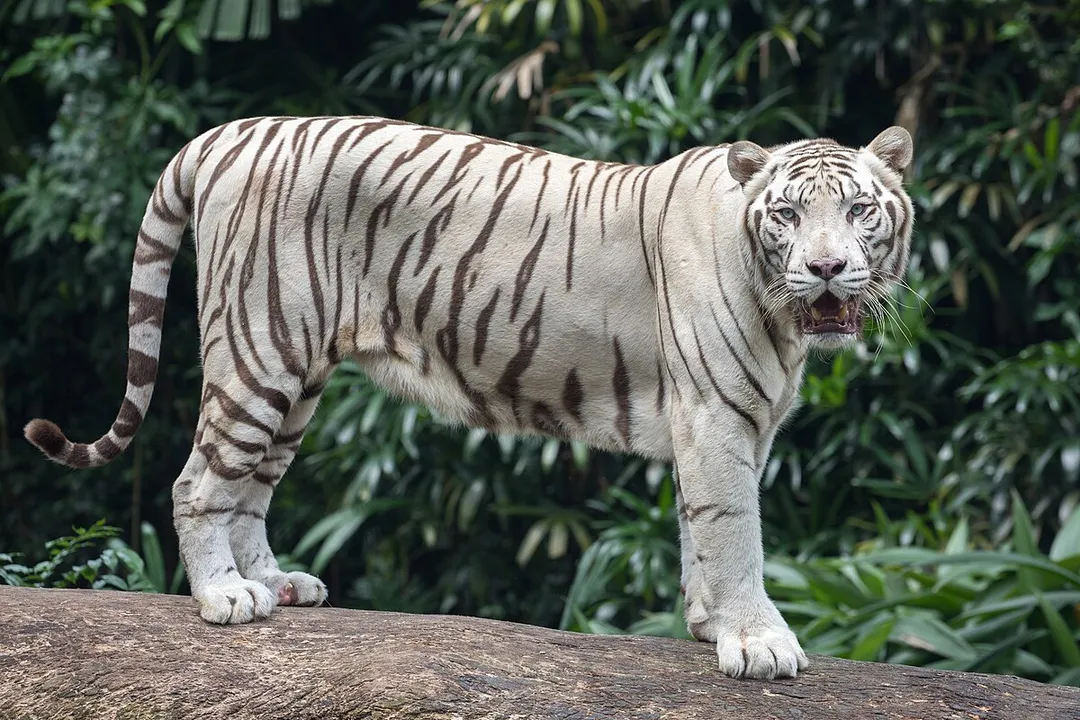
The distinction between a white tiger and a true albino extends clearly to features like the nose leather and paw pads. While both may appear pale or pinkish, true albinos exhibit a complete and total lack of melanin in all tissues, resulting in entirely unpigmented features. In contrast, white tigers retain enough residual melanin, influenced by the limited expression of the recessive gene, that their pink noses and pads frequently display flecks or patches of darker pigmentation. This retained partial pigmentation is another key indicator that the condition is a specific form of leucism or color variation, not a complete absence of pigment characteristic of albinism.
Related Questions
What pigment production does the single, rare recessive gene limit in the white tiger coat?What is the standard eye color almost invariably associated with the white pelage of a white tiger?What genetic condition must both orange parents possess to have a chance of producing a white cub?What significant physical dimension, measured from head to tail, can an adult male white tiger reach?How do the pink noses and pads of white tigers differ pigment-wise from those of a true albino?Which geographical regions constituted the historical wild range where white tigers were occasionally sighted?What term describes the incredibly faint or washed-out stripe markings sometimes visible on a white tiger's coat?What structural difference exists between a white tiger and an orange tiger of the same subspecies?What is the consequence of focusing captive breeding efforts almost exclusively on the white coat trait?Why is the white coat generally considered a serious disadvantage for white tigers in their natural habitat?