White Crappie Physical Characteristics
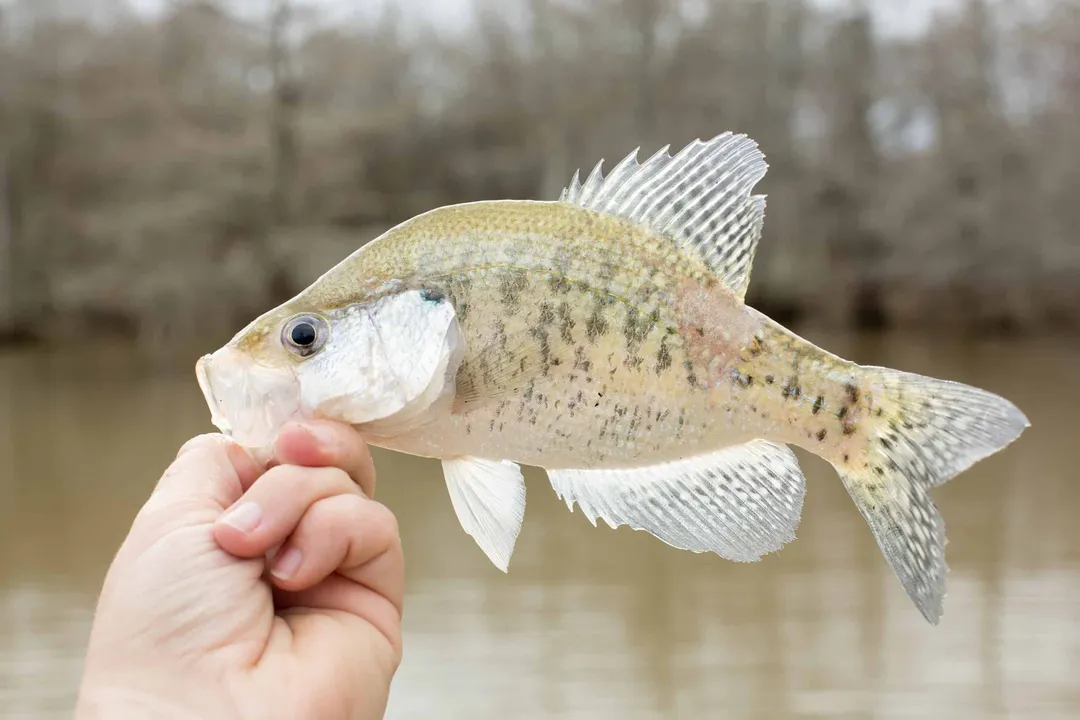
The white crappie, scientifically designated as Pomoxis annularis, [2][5][8][9] is a frequently targeted freshwater sportfish belonging to the sunfish family, Centrarchidae. [1][2][5] While highly valued by anglers across North America, its physical presentation is often confused with its close relative, the black crappie. Distinguishing between the two requires a close examination of subtle, yet definitive, physical markers, moving beyond general impressions of silver and dark markings. [1][2]
# Body Form
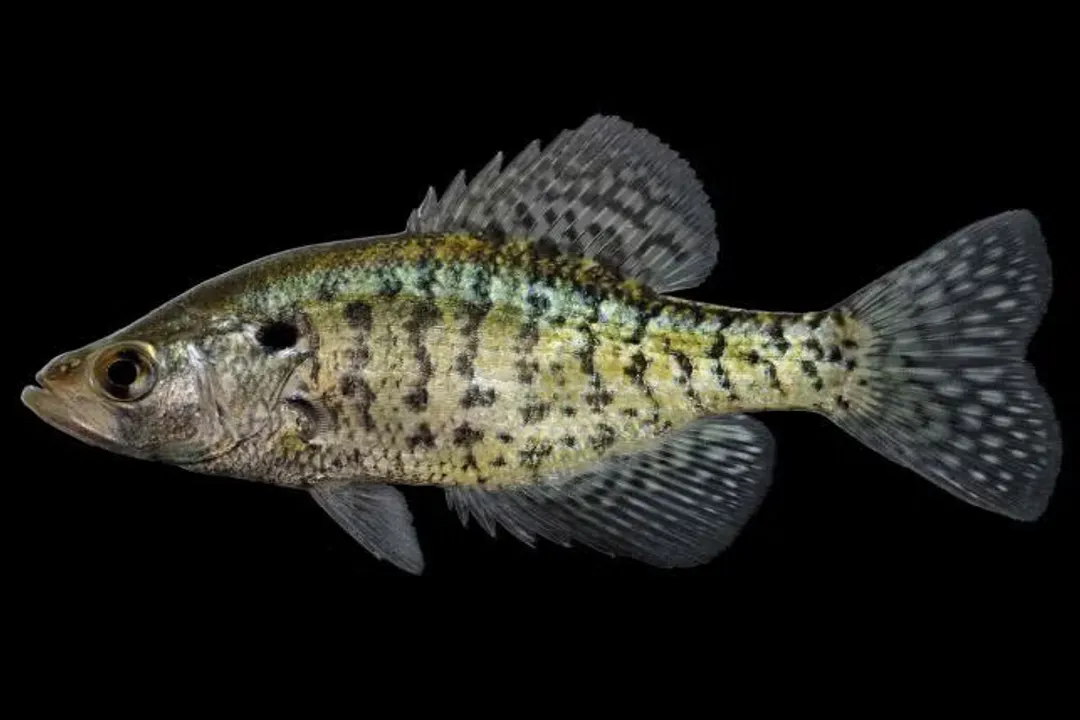
A primary physical characteristic shared by the white crappie and other centrarchids is its general shape: it possesses a deep-bodied profile that is strongly compressed laterally, often described as "slab-sided". [1][5][8][9] This compressed form means the fish is relatively thin from side to side compared to its depth. [1][5] Compared to the black crappie, the white crappie is sometimes noted as being slightly more elongated. [5] One source suggests that the depth of the body measures approximately one-third of the fish’s total length. [5] Furthermore, the upper profile of the head, starting from the forehead and extending toward the forward part of the back, exhibits a distinct concave curve. [1]
The fish is covered in ctenoid scales, which are characteristic of advanced teleosts, meaning the exposed portion of each scale features tiny, tooth-like projections known as cteni. [5] The lateral line, the sensory line running along the side of the fish, is arched and generally contains between 38 and 45 scales. [9]
# Color Pattern
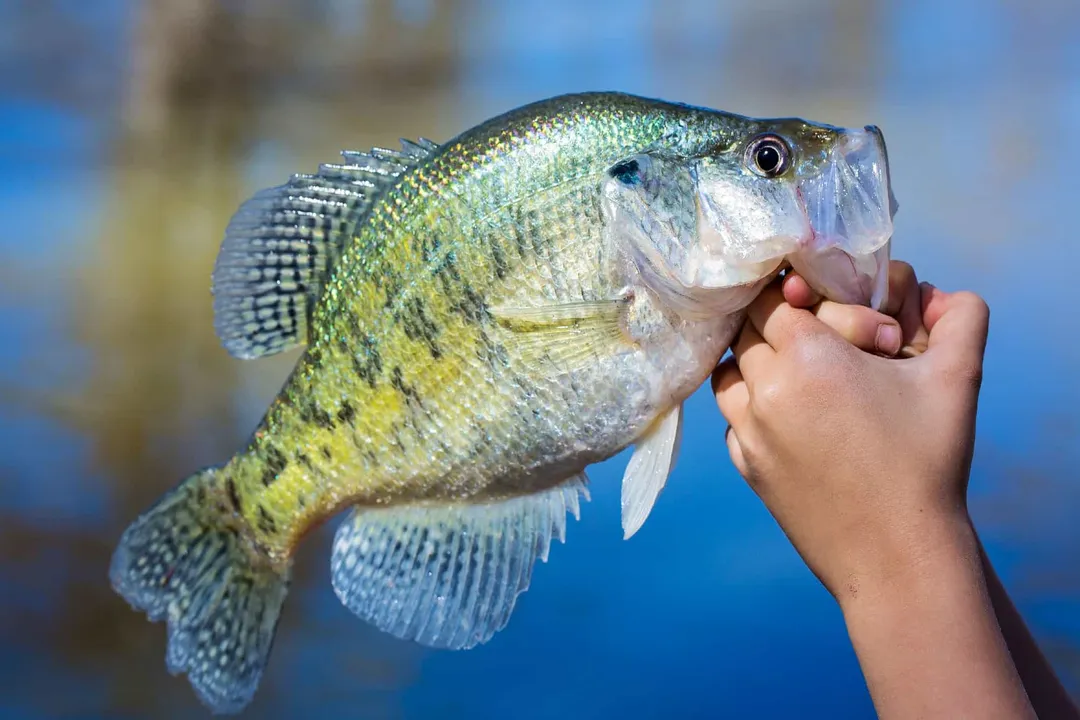
The overall impression of the white crappie is one of silver coloration. [2] Its body presents a gradient, usually being silvery-white on the belly, transitioning to a silvery-green or sometimes brown shade along the back. [3][4][5] In certain contexts, such as when viewed under sunlight, the fish appears shiny and silvery. [2]
The most crucial distinguishing visual feature from its sibling species lies in the patterning across its sides. The white crappie displays 5 to 10 dark, often faint, vertical bars that are regularly arranged along its flank. [1][5] The specific name, annularis, is Latin for "having rings," which directly references these vertical markings. [5][6] This consistent vertical alignment sets it apart dramatically from the black crappie, which features irregularly arranged speckles and blotches. [1][2] While both species share dark spots on their dorsal, anal, and caudal fins, [9] the white crappie’s body pattern remains distinctly barred. [6]
This fish is opportunistic, and its diet reflects its morphology; the large, protrusible mouth combined with long, fine gill rakers allows it to efficiently strain zooplankton when small, and then pivot to consuming larger prey like small fish later in life. [9] This physical adaptation for both fine straining and large gulp feeding supports a "pause-and-travel" search strategy, allowing rapid growth in the early juvenile stages when they consume zooplankton. [5]

# Fin Spines
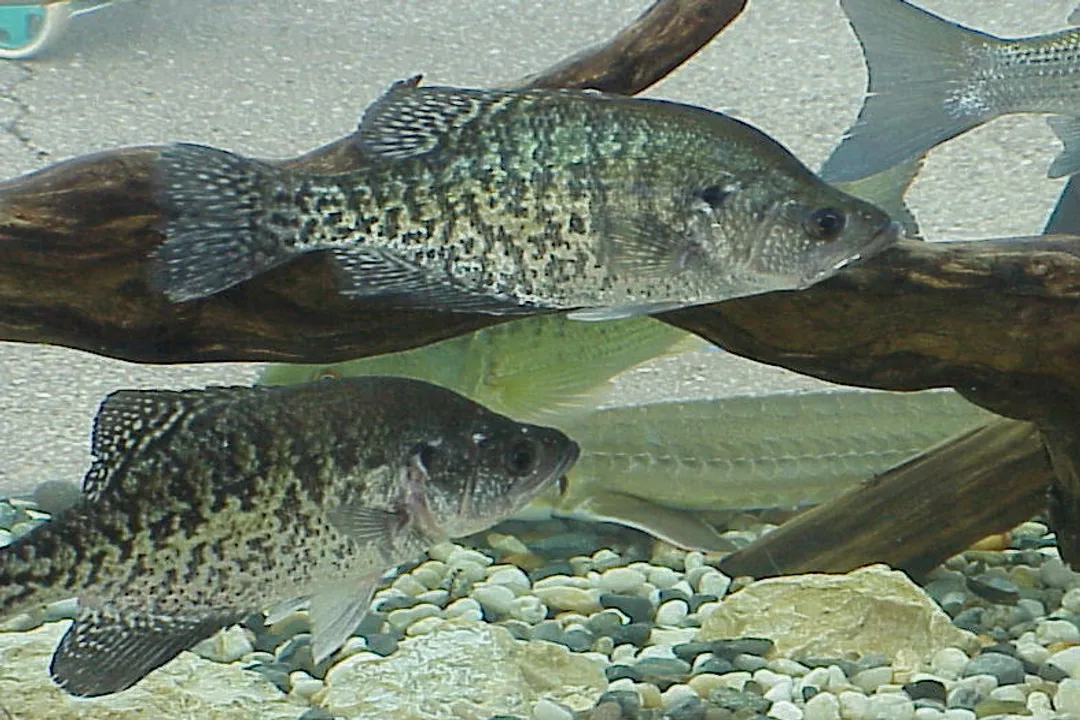
The structure and count of the fin spines offer the most reliable method for separating the white crappie from the black crappie, especially when markings are ambiguous due to water conditions or individual variation. [1][4]
The dorsal fin is composed of two connected sections—a spiny forepart and a soft-rayed rear part—with no distinct notch separating them. [1] The key difference here is the number of spines: the white crappie characteristically possesses six dorsal fin spines. [1][2][4] In contrast, the black crappie typically carries seven or eight dorsal spines. [1][2][4]
This spine count is mirrored in the anal fin. The white crappie’s anal fin is almost equal in size and length to the dorsal fin and typically features six spines. [1] Similarly, the pelvic fin contains one spine, and the pectoral fins are rounded. [9]
# Mouth Anatomy
The mouth structure plays a significant role in feeding mechanics. White crappies exhibit a terminal mouth position. [5] This mouth is noted as being relatively large and oblique when compared to the overall body size. [8][9] Because the mouth is large, the snout can appear to project slightly. [9] Inside the mouth, white crappies are armed with numerous small, conical teeth arranged in two rows. [2][5] This specific arrangement is termed cardiform, as it resembles the tool historically used for carding wool. [2][5]
Beyond feeding apparatus, the visual acuity of the white crappie is remarkable, contributing to its physical description. It possesses an extra lens in its eyeball and a high concentration of red-sensitive pigments in its retina, adaptations that enable it to see very well in low light conditions and make it highly sensitive to movement in the water. [2]
# Spawning Color
While the primary color scheme is silvery with dark vertical barring, a temporary, dramatic physical change occurs in the males during the spring spawning period. [2][6] In preparation for attracting females, males will develop pronounced dark coloration, often turning their throats and even their heads nearly black. [2][6][9] This darkening can lead to temporary misidentification if an angler is only familiar with the non-spawning coloration. [4]
# Size Metrics
White crappies are generally considered a smaller panfish, though potential size varies significantly based on local ecology and management practices. [1][6] Typically, adults reach a total length of about 9 to 10 inches. [1][2][5] They usually weigh around 2 pounds, [1] though they seldom exceed 15 inches in length. [1]
However, larger specimens are certainly recorded. In Virginia waters, they can grow beyond 16 inches. [8] Texas anglers have landed white crappies exceeding 4.5 pounds. [6] The acknowledged world record, caught in Mississippi in 1957, weighed 5 pounds 3 ounces and measured 21 inches in length. [4] While the average lifespan in unmanaged waters is short, perhaps only three to four years, the species is capable of living 8 to 10 years in well-managed fisheries. [2][5] This variation in longevity directly influences the average size encountered by anglers.
# Key Differences Comparison
Because identification hinges so heavily on differentiating P. annularis from P. nigromaculatus, summarizing the physical traits side-by-side is useful for anglers seeking confirmation.
| Feature | White Crappie (P. annularis) | Black Crappie (P. nigromaculatus) |
|---|---|---|
| Dorsal Spines | Typically 6 [1][2][4] | Typically 7 or 8 [1][2][4] |
| Body Pattern | 5–10 dark, regularly arranged vertical bars [1][5] | Irregularly arranged speckles and blotches [1][2] |
| Coloring Shade | Often lighter, more silvery-green to brown back [2][4] | Generally darker overall [2] |
| Habitat Preference | More tolerant of turbidity and less reliant on structure [3][7] | Prefers clearer water and more structure dependence [5][7] |
| Body Shape Note | Slightly more elongated [5] | - |
It is worth noting that while the dorsal spine count is the most definitive metric, the tendency for white crappie to thrive in muddier, more turbid waters compared to the black crappie, which favors clearer conditions, serves as a valuable ecological clue to identification in the field. [3][7] If you find yourself fishing a lake known for high sediment load, the fish you catch are statistically more likely to be the white crappie, assuming both species share the habitat. [3] Furthermore, the male white crappie’s temporary dark throat patch during the spawn can confuse identification against the darker baseline coloration of the black crappie, reinforcing the need to check the spine count first. [4] The sheer number of eggs produced—females potentially spawning between six and twelve times—means that overpopulation and subsequent stunting are common issues in smaller bodies of water where their high reproductive potential is unchecked by predation or environmental limits. [2][6] This rapid turnover and potential for stunting can affect the overall physical characteristics (like achieving record sizes) seen in different populations. [5]
Related Questions
#Citations
White Crappie | Louisiana Department of Wildlife and Fisheries
White Crappie | Mississippi Department of Wildlife ... - MDWFP
White Crappie Fish Facts - Pomoxis annularis - A-Z Animals
White Crappie | Missouri Department of Conservation
White crappie - Wikipedia
White Crappie (Pomoxis annularis) - Texas Parks and Wildlife
[PDF] White Crappie (Pomoxis annularis)
White Crappie (Pomoxis annularis) - Species Profile
White Crappie - Virginia Department of Wildlife Resources