White-Faced Capuchin Physical Characteristics
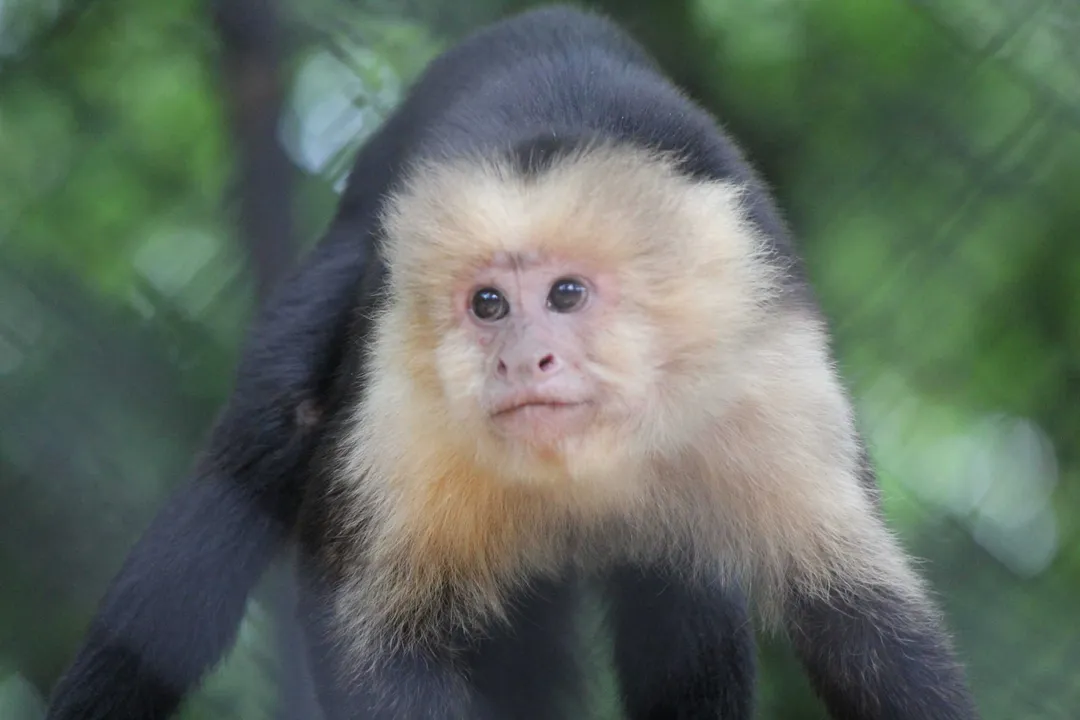
The White-Faced Capuchin, spanning a range across Central and parts of South America, is instantly recognizable, though its defining physical attributes are not just for show; they underpin its famed intelligence and adaptable lifestyle. These medium-sized primates possess a striking coloration that serves as their namesake, a pattern that clearly differentiates them in the forest canopy.
# Fur and Coloring
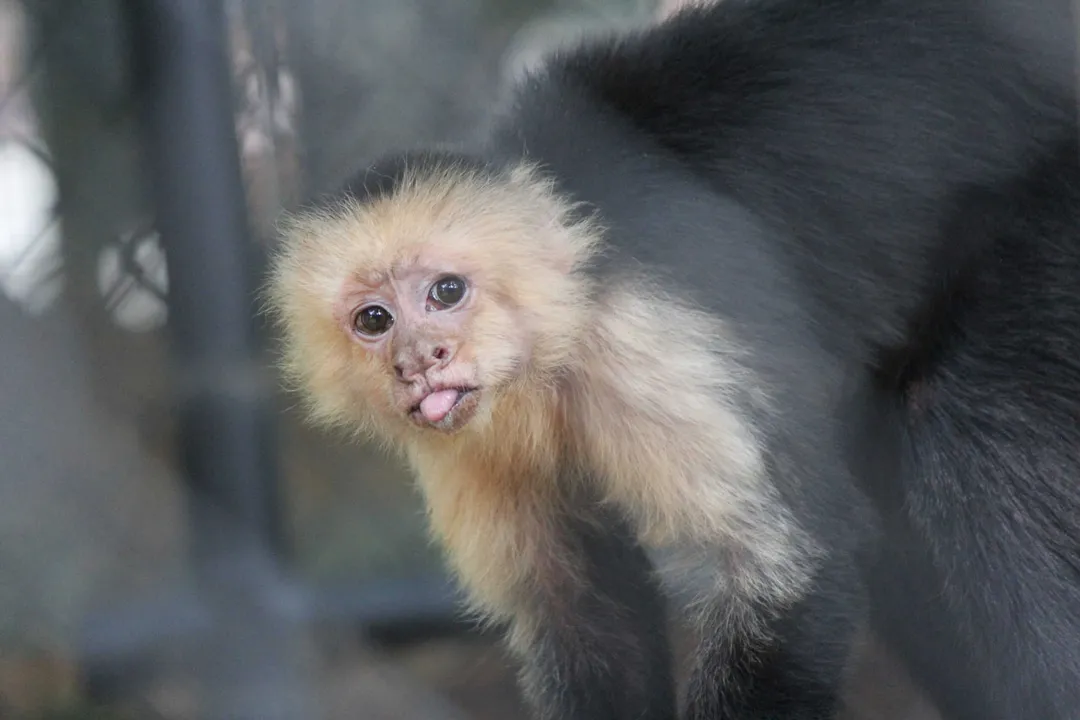
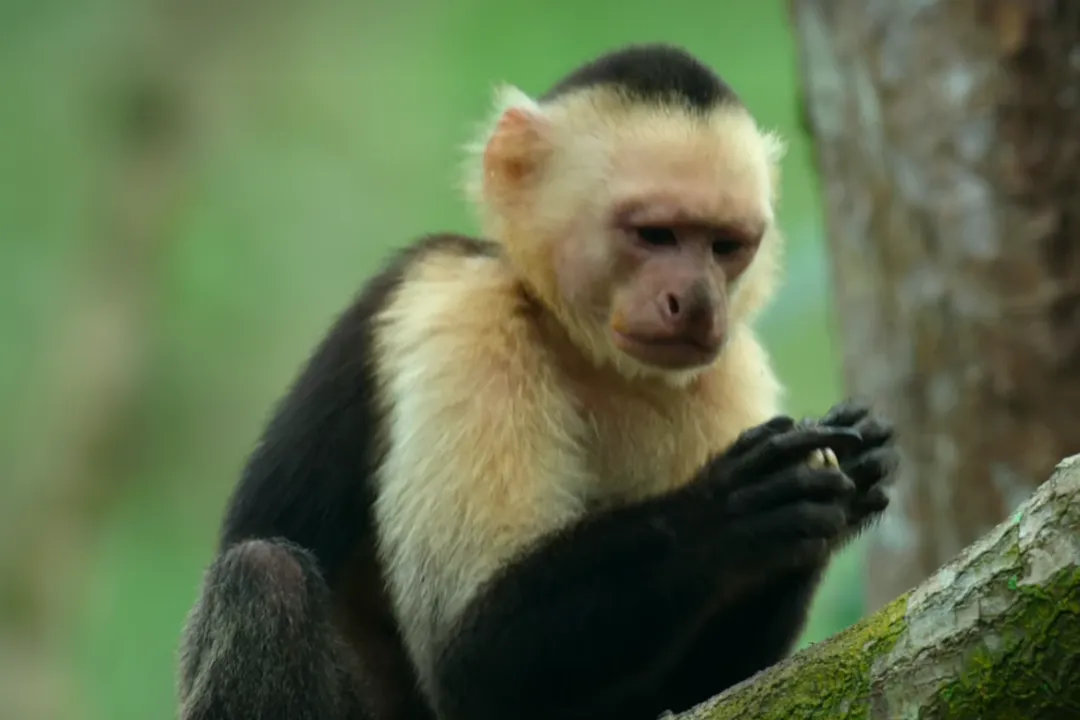
The most prominent physical characteristic is the stark contrast in fur color. The majority of the body, including the dorsum and hindquarters, is covered in solid black fur. This dark base is sharply contrasted by the lighter fur surrounding the shoulders, upper chest, neck, and throat, which ranges from white to yellowish or pale yellow. This bicoloration extends to the face, giving the monkey its common designation.
The name "capuchin" itself stems directly from their physical appearance. The patch of black fur on the crown of the head is highly distinctive, often described as a black cap. This dark cranial marking strongly resembles the hooded cowl worn by the Capuchin friars of the Order of Friars Minor, which is how the entire group of monkeys received its name. While the body is primarily black and white, the fur on the upper arms may also feature the lighter coloration.
# Facial Detail
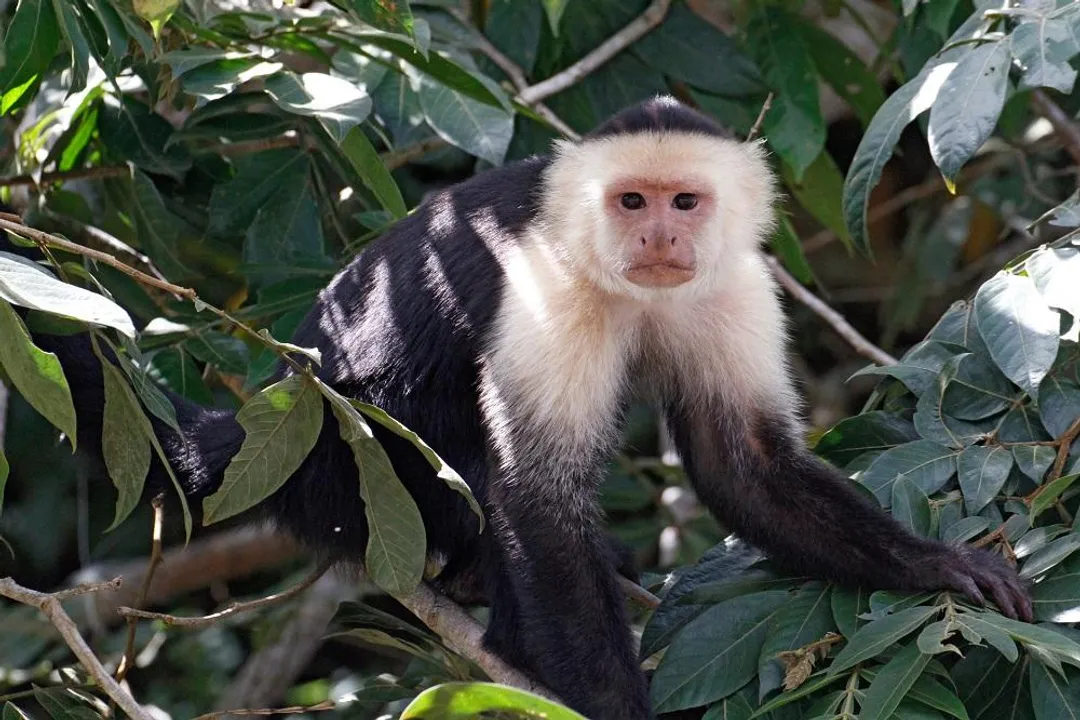
The facial region presents another clear visual marker. The skin of the face is typically described as pink or a cream/white-cream color. While much of the face is covered in lighter fur, the center of the face may be mostly hairless, revealing the pink skin underneath. Observers may notice identifying marks such as dark fur patches or dark brows situated above the eyes. This expressive facial structure is used extensively for non-verbal communication within their complex social groups.
# Size and Weight
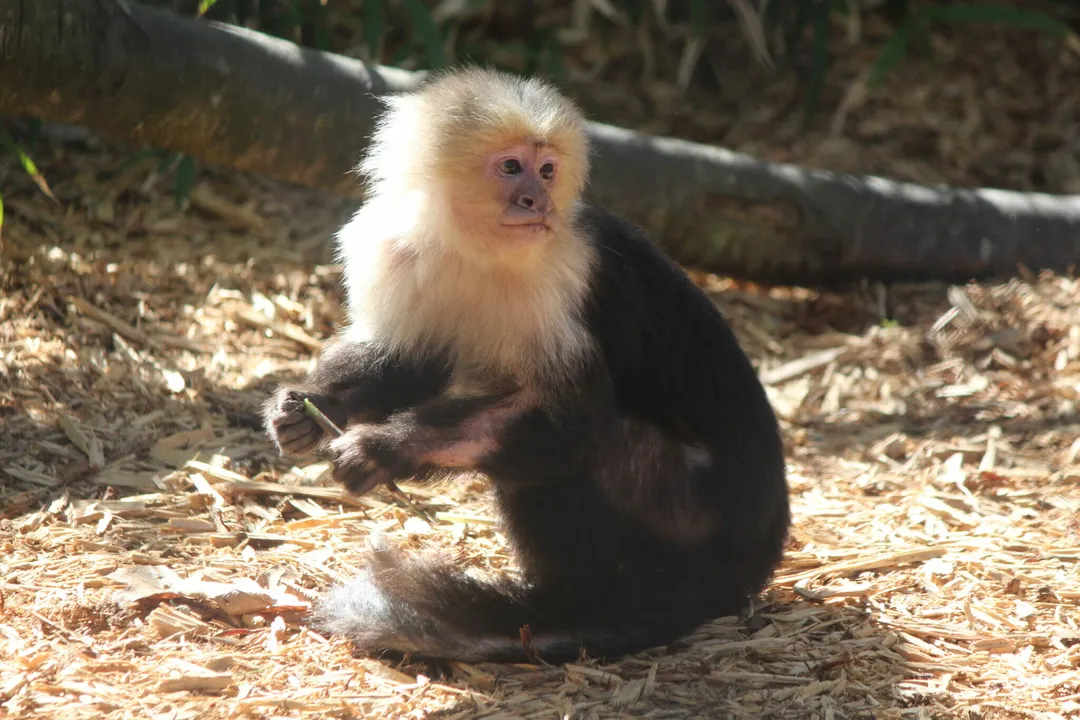
As Cebus species, they fall into the category of medium-sized monkeys. In terms of linear measurement, the head and body length (excluding the tail) generally falls between 335 and 453 millimeters, which equates to roughly 1.1 to 1.5 feet. Some generalized measurements place the length range between 30 and 56 cm.
The overall mass is quite consistent across populations, though there is a marked difference between sexes. The weight range for the species generally sits between 2 and 4 kg. For instance, the Panamanian variant shows males weighing up to 3.9 kg (around 8 lbs 10 oz), while females are lighter. In other observations, males typically weigh between 6 and 9 pounds, and females between 4.5 and 6 pounds. This established difference in mass makes sexual dimorphism a clear physical trait of this species, considered the greatest degree of sexual dimorphism among the capuchins.
It is worth noting that the Colombian white-throated capuchin (C. capucinus) and the Panamanian white-faced capuchin (C. imitator) are so similar in appearance that they were once considered the same species, separated only at the subspecies level. A subtle physical difference reported is that female Panamanian white-faced capuchins may exhibit brownish or grayish elongated frontal tufts that contrast with their pure white cheeks and throat, a feature not explicitly detailed for the Colombian counterpart. This close resemblance, despite being distinct species that diverged about 2 million years ago, highlights how species can evolve similar visual traits, making physical examination alone sometimes insufficient for definitive identification.
# The Prehensile Tail
A critical physical feature for this arboreal animal is its prehensile tail. This tail is muscular and flexible, often being held in a coiled position when the monkey is at rest or moving through the canopy. Crucially, the tail can grow to be longer than the monkey’s body. This feature functions as much more than just a counterbalance; it is an active grasping tool used to stabilize the animal when navigating thin, swaying branches or when reaching into crevices, such as a water-filled tree hole. Its length and semi-prehensile capability allow it to effectively act as an extra limb, aiding in postural support during foraging, sometimes even serving as an anchor while reaching for food below a branch.

# Locomotion and Dexterity
White-faced capuchins are primarily quadrupedal in their movement style. They are known to be agile leapers and climbers, spending most of their time in the forest canopy, often in the middle strata. Their physical structure supports their generalist feeding habits, enabling them to forage across all levels of the forest, including descending to the ground more frequently than many other New World monkeys.
A defining characteristic linked to their high intelligence is their fine motor control, particularly in their hands. Capuchins have highly developed hands with the ability to move each finger separately. This dexterity allows them to practice precision grips, such as picking up small objects between their thumb and index finger, a capability shared by only a few primates. This physical skill set directly enables their noted tool use, allowing them to manipulate stones to crack nuts or use twigs as probes. This combination of a strong, grasping tail and highly dextrous hands provides a physical platform for exploiting a very broad diet in diverse environments. It is an interesting consideration that their relatively small size, combined with this high level of manual coordination, allows them to access resources unavailable to bulkier primates, giving them a physical advantage in resource competition.
# Lifespan and Physical Development
The physical characteristics of a capuchin also relate to its longevity. In the wild, the average lifespan is often cited around 30 years, though one source suggests a range of 16 to 20 years in the wild. This is significantly shorter than their potential in protected environments, where they can reach ages of 45 to 55 years. Full adult size is generally attained around age 8. Females reach sexual maturity around age 4 but often wait until age 7 to have their first offspring, while males mature later, typically between 7 and 10 years old. The slow maturation rate is a physical consequence of their life history strategy, demanding significant parental investment over many years. It is also noted that old age can increase vulnerability to internal parasites, which can lead to severe illness or death.
# Summary of Key Physical Markers
To summarize the most notable physical traits that define the species, one might use a quick reference table.
| Feature | Description | Notes/Dimorphism |
|---|---|---|
| Overall Color | Mostly black body, white/yellow on chest, shoulders, throat, and face perimeter | Signature contrast |
| Head Marking | Distinct black fur cap on the crown | Resembles a friar's cowl |
| Tail | Prehensile; often coiled; length exceeds body length | Used for stabilization and grasping |
| Face | Pink or cream-colored skin; expressive musculature | Allows for complex visual communication |
| Size | Medium-sized New World Monkey | Head/Body Length: 335–453 mm |
| Weight | Males generally larger than females | Males: ~3–4 kg; Females: ~2–3 kg |
| Dexterity | Independent finger movement | Supports tool use and object manipulation |
The physical robustness of the White-Faced Capuchin—their size, strong tail, and independent digits—is not merely structural; it is the apparatus that permits their renowned behavioral flexibility. Their capacity to climb trees of varying heights and support their weight on thin branches using their tail, combined with the intelligence housed in their relatively large brain size for a New World monkey, allows them to thrive where other specialists might fail. This physical capability for maneuvering and manipulating objects is arguably more crucial to their survival than their coloration alone.
Related Questions
#Citations
Cebus capucinus (white-faced capuchin) | INFORMATION
Panamanian white-faced capuchin
Colombian white-faced capuchin
White-Faced Capuchin Animal Facts - Cebus Capucinus
White Faced Capuchin
Colombian White-Throated Capuchin, Cebus capucinus
Panamanian white-faced capuchin | Life on Our Planet Wiki
Capuchin Monkey: Facts, Habitat, and Behavior