What feature is absent from the White Sturgeon's specialized ventral mouth structure?
Answer
Teeth
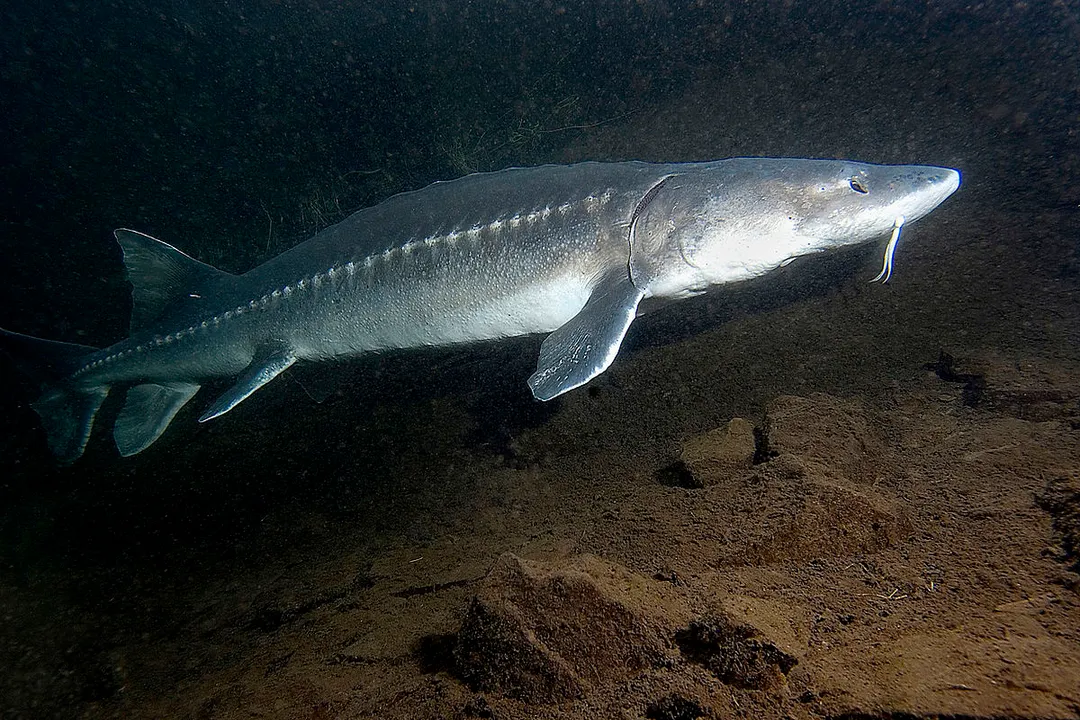
The White Sturgeon is specialized for feeding on the bottom substrate, and its mouth morphology reflects this benthic lifestyle. Its mouth is located ventrally (on the underside of the head) and sub-terminally, situated behind the extended snout. Crucially, this species entirely lacks teeth. Instead of biting or chewing, it employs large, highly protrusible lips that it extends rapidly to create a powerful suction force, effectively vacuuming prey items—such as invertebrates—directly from the riverbed or seafloor. This vacuuming action is essential for its feeding strategy in often murky waters.
Related Questions
How is the White Sturgeon's body armored instead of using typical overlapping scales?What were the maximum historical measurements recorded for the White Sturgeon?What feature is absent from the White Sturgeon's specialized ventral mouth structure?Where are the highly sensitive taste buds located on the White Sturgeon?What type of caudal fin structure links the White Sturgeon to very early fish forms?How does the landlocked Kootenai River White Sturgeon population compare in size to others?Which specific food item do Young-of-the-Year White Sturgeon consume after relying on the yolk sac?According to the California Department of Fish and Wildlife, how many mid-lateral plates do adult White Sturgeon possess?Where are the four barbels on the White Sturgeon's blunt snout positioned relative to the mouth?Why is the White Sturgeon often referred to as a 'living fossil'?