What specific materials are consumed by the destructive larval stage of the wax moth?
Answer
Beeswax, honey, and pollen stores
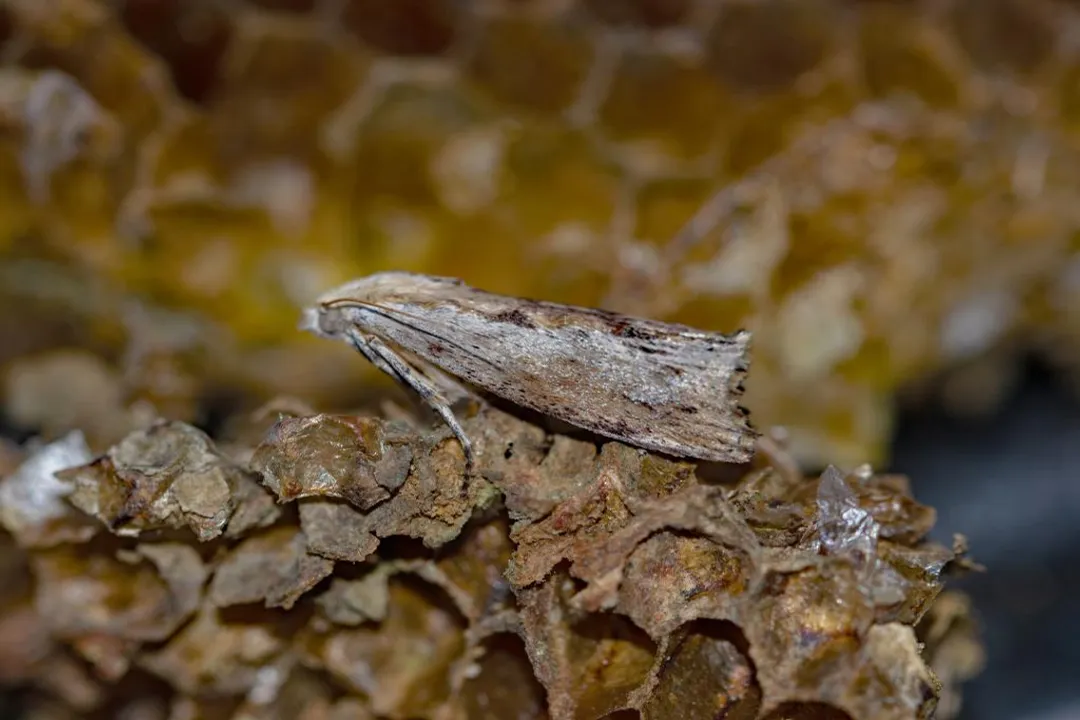
The destructive nature of the Greater Wax Moth is directly tied to its diet during the larval phase, as these caterpillars are responsible for the damage found within the hive structure. The primary materials they consume are the vital stores kept by the bees. Specifically, the larvae feed upon beeswax, which forms the physical structure of the comb, as well as the honey reserves and the stored pollen that bees collect for sustenance. This consumption pattern leads directly to weakened comb integrity and reduced food supplies for the colony.
Related Questions
What is the typical wingspan range for the adult Greater Wax Moth (Galleria mellonella)?What is the crucial physical characteristic distinguishing the Galleria mellonella larva's head capsule?What structure do Galleria mellonella larvae spin as they move through the comb structure?How is the forewing appearance of the adult wax moth generally described?What is the typical appearance of the hindwings on an adult wax moth compared to the forewings?What visual distinction aids in identifying male versus female *Galleria mellonella* coloration?What wingspan range is cited for reports of a general or Lesser Wax Moth (*Achroia grisella*)?Approximately how long can the *Galleria mellonella* caterpillar grow before pupation?What specific materials are consumed by the destructive larval stage of the wax moth?Due to what appearance do resting adult moths blend in near hive entrances or on the ground?