What are the physical characteristics of a moth?
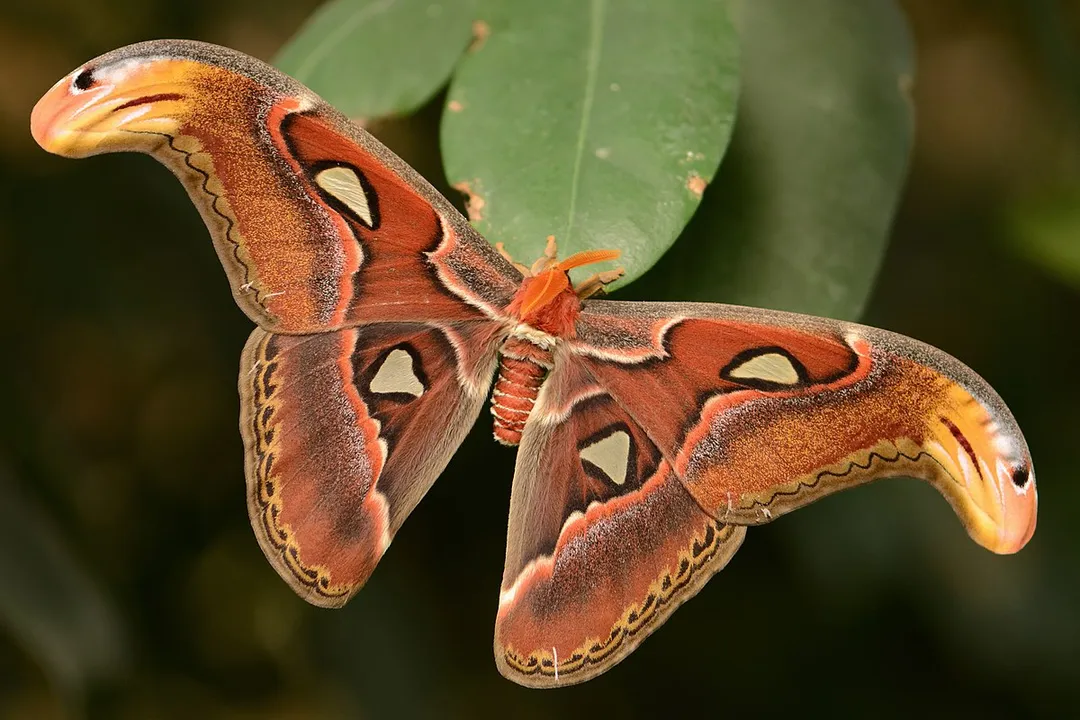
The world of insects contains astonishing diversity, and perhaps no group is more widely recognized, yet often misunderstood, than the order Lepidoptera, which encompasses both butterflies and moths. [3][10] While the common distinction often pits the vibrant, day-flying butterfly against its drab, nocturnal cousin, examining the physical characteristics of moths reveals a much more complex and fascinating group of creatures. Moths are incredibly varied, ranging from the minuscule micro-moths to the giants with impressive wingspans, and their anatomy reflects millions of years of evolutionary specialization. [1][6] To truly appreciate a moth, one must look closely at its build, from the tips of its antennae to the covering on its wings.
# Body Structure
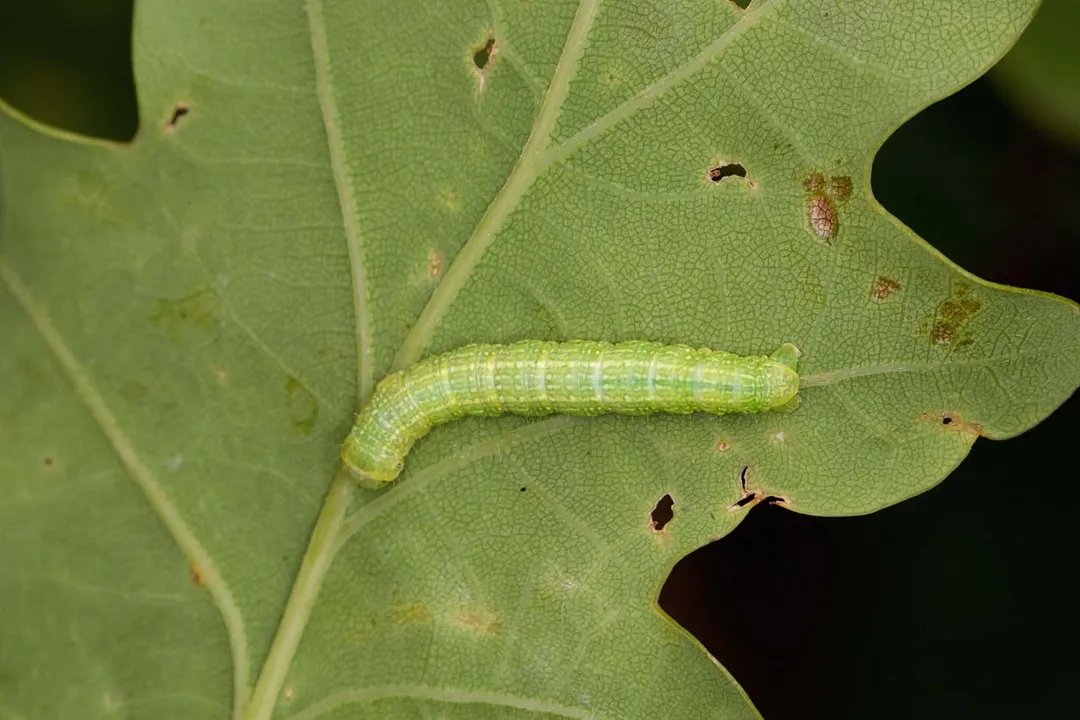
A foundational difference often cited between moths and their close relatives, the butterflies, lies in their overall body build. [3] Moths generally possess a stouter, more robust body compared to the slender, smooth bodies typical of most butterflies. [1][5] This dense body structure is often covered in a thick layer of fine, hair-like scales, giving moths their characteristic fuzzy or furry appearance. [3][5][10] This dense coat of scales provides insulation, which is particularly beneficial for species that are active during cooler nighttime temperatures or in colder climates. [1]
The thorax, the middle section of the insect's body where the wings and legs attach, is particularly well-muscled in moths to support their sometimes large wings, contributing to that sturdy look. [5] Furthermore, the abdomen is also generally broader and less streamlined than in butterflies. [10] This overall stockiness is a key characteristic for identification, though there are exceptions, as some moths, like the clearwing moths, have evolved to mimic wasps and possess more slender abdomens. [5]
When considering the head capsule, the moth’s mouthparts present another specialized feature. Most adult moths possess a coiled feeding tube called a proboscis, which functions like a straw to siphon up liquids such as nectar or tree sap. [1][5] This structure remains coiled up beneath the head when not in use. [5] While many butterflies also share this feature, the effectiveness of this siphoning mechanism is integral to the adult moth's brief, nectar-feeding lifespan. [1] It is worth noting that not all moths feed as adults; some species, particularly those with very large wings like the Luna moth, have vestigial or absent mouthparts and do not feed at all during their adult phase, living only off reserves built up during their larval stage. [10]
# Antennae Details
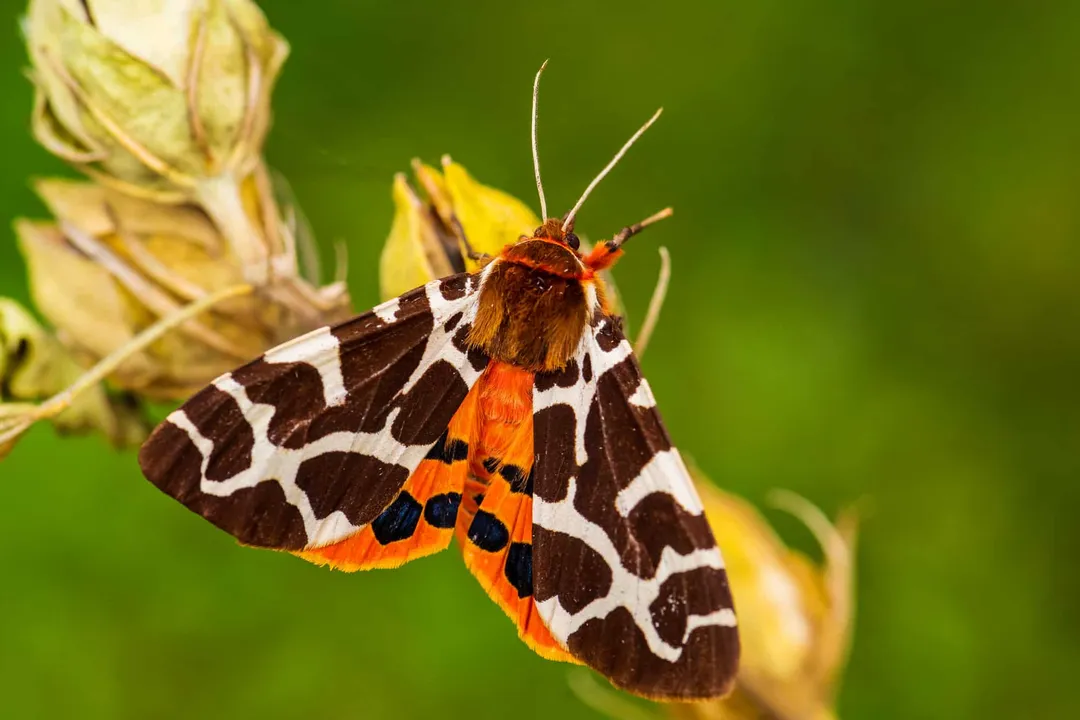
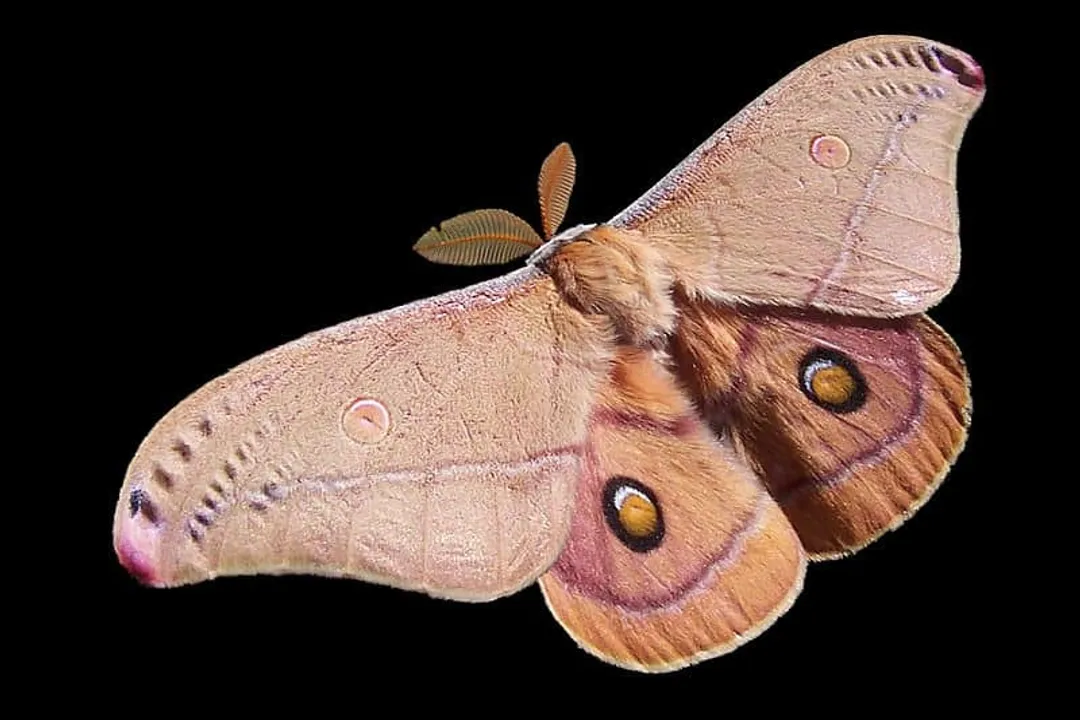
The antennae are perhaps the single most reliable physical characteristic used to separate moths from butterflies, even in species that are active during the day. [5] Moths typically have feathery or comb-like (pectinate) antennae in males, though they can be threadlike or somewhat tapered in females. [1][3] The feathery structure is vastly different from the slender antennae ending in a distinct club or knob seen on butterflies. [1][3][5]
The structure of the antennae is not just for show; it serves a critical sensory function. The feathery nature dramatically increases the surface area, allowing the moth to efficiently detect pheromones released by potential mates from great distances. [5] For instance, a male silk moth can detect a female's pheromone trail from several miles away, a feat directly attributable to the complex, branched structure of its antennae. [1]
When observing moths in the field, take a moment to look closely at these appendages—if they appear fuzzy, threadlike, or branched like tiny ferns, you are almost certainly looking at a moth, regardless of its flight pattern or coloring. [5] This is a reliable heuristic for initial classification. For example, the antennae of the giant silkworm moths, such as Hyalophora cecropia, are exquisitely branched in males, showcasing the evolutionary importance of scent detection in their reproductive strategy. [1]
# Wing Characteristics
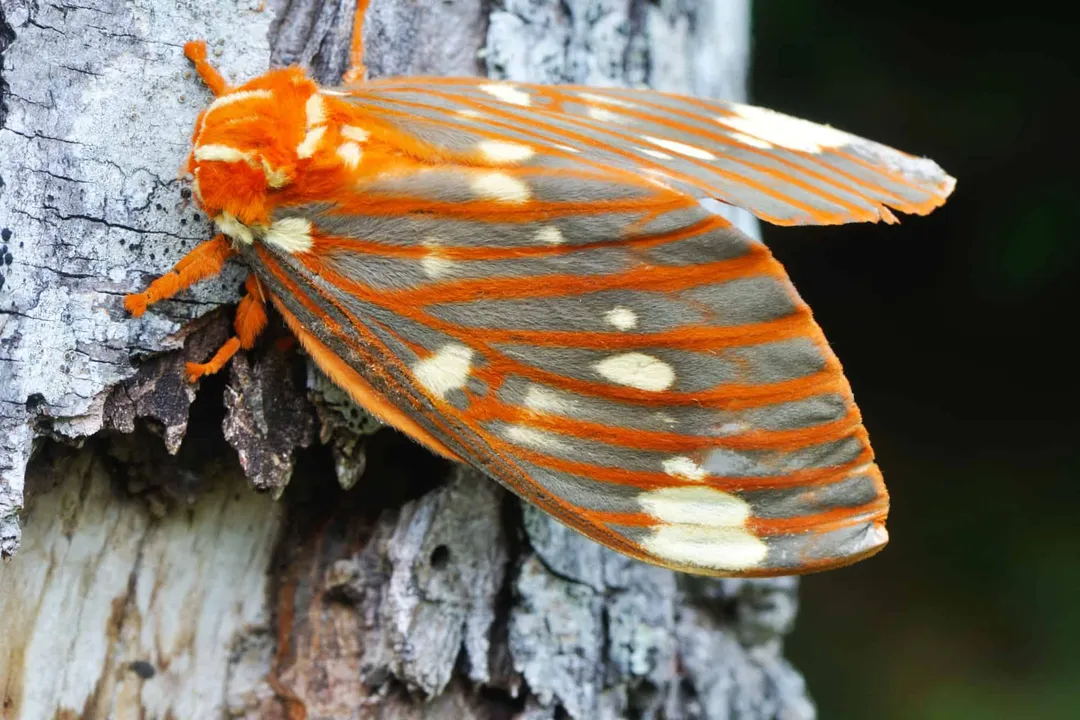
Moths possess four wings—two forewings and two hindwings—which are covered in minute, overlapping scales, giving them their color and pattern. [1][3][5] These scales are modified flattened hairs and are easily shed, which is why touching a moth's wing can leave a powdery residue on your fingers. [1][3] This scale covering is the defining feature of the entire order, Lepidoptera, which translates to "scale wings". [1]
The structure and function of the wings are complex. In many species, the forewing and hindwing are coupled together by a system of hooks and bristles (called a frenulum), allowing them to work together as a single aerodynamic surface during flight. [5] This coupled action contributes to the often powerful and steady flight of many moth species. [10]
One of the most frequently cited physical distinctions relates to how the wings are held at rest. Most moths rest with their wings folded back over their body in a tent-like manner. [1][3] In contrast, butterflies usually rest with their wings held vertically together over their backs. [1] While this is a common tendency, it is not an absolute rule, as some moths perch with their wings spread open flat, similar to a butterfly, or angled back along the body. [3][5] The common angle-winged moth, for example, is named for its distinctive way of holding its wings partially spread and angled, demonstrating the exceptions to the "tent-like" generalization. [5]
Coloration in moths is vastly different from the bright, aposematic (warning) colors often seen in butterflies. While many moths are drab, featuring shades of brown, gray, or white—excellent camouflage against tree bark or leaf litter—many others exhibit startlingly vivid colors on their hindwings, which are often concealed at rest. [1][6] These bright colors, known as flash coloration, are suddenly displayed when the moth is disturbed, momentarily startling a potential predator, giving the moth a chance to escape. [6]
# Activity Patterns
While physical appearance helps, behavior often dictates how we encounter moths. The vast majority of moth species are nocturnal or crepuscular, meaning they are active primarily at night or during twilight hours. [1][3] This nocturnal habit is what led to the common perception that moths are dull or plain, as those seen flying around lights are often only sampling a small fraction of the total diversity present. [3][6]
The intense attraction to artificial light sources is a characteristic behavior, though the exact reason remains debated among entomologists. [6] One theory suggests that nocturnal moths navigate using the moon or stars in a process called transverse orientation; if they mistake a nearby artificial light for a distant celestial body, their attempt to maintain a constant angle relative to that light source results in a spiraling, erratic flight path towards it. [6]
By contrast, butterflies are primarily diurnal (day-active). [1] This behavioral difference is intrinsically linked to physical traits; the need for insulation in cooler nights favors the fuzzy body of the moth, while the need for rapid color signaling in bright sunlight favors the often smoother bodies and brighter wing patterns of butterflies. [10]
# Life Cycle Forms
The physical characteristics of the moth extend beyond the adult stage into its larval (caterpillar) and pupal forms, offering further points of contrast with butterflies. [1]
# Pupa Stage
A significant difference occurs during the transition from larva to adult. Butterflies form a chrysalis, which is a hardened, smooth exoskeleton that often hangs exposed from a twig or leaf. [1][3][10] Moths, on the other hand, usually spin a cocoon made of silk, often incorporating surrounding leaves or debris for camouflage, within which they enter the pupal stage. [1][3][10] This silk cocoon is a physical structure spun by the caterpillar before transformation, serving as a protective casing. [3] Understanding this distinction—chrysalis versus silken cocoon—is a reliable way to differentiate between the two groups when observing overwintering insects. [1]
If we consider the sheer volume of material required, the silk used in a moth's cocoon represents a remarkable feat of biological engineering. To put this into perspective, some of the larger silk moths produce cocoons containing hundreds of meters of fine thread, built solely from specialized salivary secretions before metamorphosis begins. [1]
# Wing Scale Morphology
To gain deeper expertise in moth identification, one must look beyond color and pattern to the structure of the scales themselves. [5] While all Lepidoptera scales are modified hairs, their arrangement and texture vary considerably between species, influencing everything from camouflage to thermoregulation. [1]
For instance, some moths possess specialized scales that create optical illusions or iridescence. These structural colors are not due to pigments but how light interacts with the microscopic topography of the scale surface. [5] In contrast, the duller, pigment-based colors of many drab moths offer superior camouflage against bark textures. [1]
We can categorize moths based on wing size relative to body size, which offers an insight into their expected flight style. Small moths, often called micro-moths, might have wings so small relative to their body mass that their flight appears erratic or almost clumsy, unlike the powerful, directed flight of a large Sphinx moth or Hawkmoth, which have a high wing-loading ratio favoring speed and stability. [5] This structural comparison hints at the pressures each lineage faced—some prioritizing stealth and resting camouflage, others needing high-speed evasion or long-distance migration.
# Summarizing Key Physical Traits
For the keen observer attempting to sort the insects in their backyard, summarizing the general physical characteristics into a quick checklist can be very helpful. It is important to remember these are general tendencies, not absolute laws of entomology, but they cover the vast majority of cases:
| Feature | Typical Moth Characteristic | Typical Butterfly Characteristic |
|---|---|---|
| Body | Stout, furry, and robust [1][3] | Slender and relatively smooth [1][10] |
| Antennae | Threadlike, feathery, or comb-like (no club) [1][3][5] | Slender with a distinct club or knob at the tip [3][5] |
| Resting Wings | Folded tent-like over the body [1][3] | Held vertically over the back [1] |
| Pupal Stage | Forms a silken cocoon [1][3][10] | Forms an exposed chrysalis [1][3] |
| Activity | Primarily nocturnal (night-flying) [1][3] | Primarily diurnal (day-flying) [1] |
This table highlights the physical convergence and divergence within Lepidoptera. It's fascinating that two insects sharing the characteristic of having scale-covered wings—placing them in the same Order—have evolved such distinct physical solutions for resting, sensing, and protection during their transformation. [1][5] The evolution towards a heavily scaled, insulated body for night activity contrasts sharply with the streamlined form often favored for daytime thermal management and rapid movement. [10]
# Beyond the Obvious
When studying moth characteristics, it is easy to overlook the scale patterns that influence infrared signatures, which is an area of active research relating to predator avoidance. While sources primarily focus on visible light camouflage, a deeper appreciation of their physical makeup reveals hidden adaptations. For example, the microscopic structure of black scales on certain moths is incredibly efficient at absorbing thermal radiation, allowing them to quickly warm up their flight muscles on cool nights, a crucial advantage over diurnal insects that rely on direct sunlight for quick warming. This ability to absorb solar radiation efficiently, even in low light, gives certain species a temporal edge in accessing resources before dawn. [5][10]
Another point worth considering that reflects practical experience is the texture contrast between wings. While we note the fuzziness of the body, sometimes the wing surfaces themselves differ. Some moths possess patches of smooth, glossy scales interspersed with fuzzy areas. These smooth patches can function like polished surfaces, sometimes deflecting water during rainfall more effectively than uniformly fuzzy wings, which might become saturated and heavy. This subtle physical modification suggests that water management is just as important an evolutionary driver as camouflage in the world of moths. [5]
In summary, the physical characteristics of a moth are a collection of specialized features: a stout, scaled body providing insulation; antennae designed for acute chemical detection; wings typically held tent-like at rest; and the formation of a silken cocoon during metamorphosis. [1][3][5] These traits collectively define an insect group exquisitely adapted to the darkness and the specialized niches they occupy across the globe. [6]
Related Questions
#Citations
Moth | Description, Definition, Insect, Characteristics ... - Britannica
Butterfly and Moth Facts | Missouri Department of Conservation
Moth - Wikipedia
Moth Anatomy | Wildlife Insight
Moths | Smithsonian Institution
Everything you need to know about moths - Butterfly Conservation
[PDF] Moths | Vanderbilt Museum
Moth Insect Facts - Gynnidomorpha Alisman - A-Z Animals
Moth species characteristics and behaviors in garden ecosystems
Butterflies and moths - Agricultural Biology