What specific activity are the scalpel-like blades of the Yellow Tang explicitly *not* utilized for?
Answer
Scraping algae from rocks
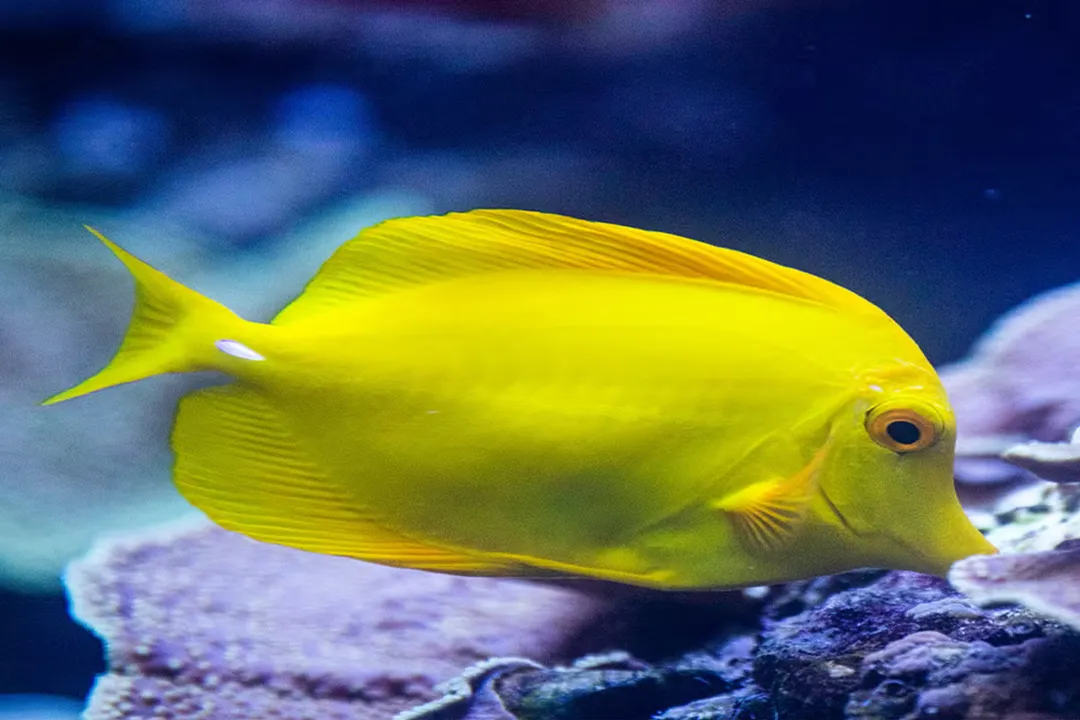
A common point of confusion regarding the surgeonfish family relates to the function of their signature caudal spines. Despite their sharp, scalpel-like nature, these blades are exclusively reserved for self-defense against predators and for enforcing dominance hierarchies among reef inhabitants. They are powerful weapons when deployed defensively. It is a definitive misconception that these appendages assist in foraging; the fish must use its mouth to scrape algae from surfaces. These blades are never used in the process of grazing or collecting food material from rock structures.
Related Questions
To which family do the *Zebrasoma flavescens* belong?What are the primary roles of the Yellow Tang's caudal peduncle spines?What is the primary wild food source consumed by Yellow Tang grazers?What is the approximate maximum length attained by an adult Yellow Tang?In which broad ocean region is the natural distribution of *Zebrasoma flavescens* concentrated?What subtle coloration change might mature Yellow Tangs exhibit on their snout area?Towards which specific fish types do Yellow Tangs exhibit high intolerance during territorial disputes?What reproductive strategy is utilized by Yellow Tangs during mass spawning events?What specific activity are the scalpel-like blades of the Yellow Tang explicitly *not* utilized for?What external parasite is noted to often appear on Yellow Tangs stressed by poor captive conditions?