What species of snake, identified as a *Psammophis notostictus*, was observed being scavenged at De Hoop?
Answer
Karoo whip snake
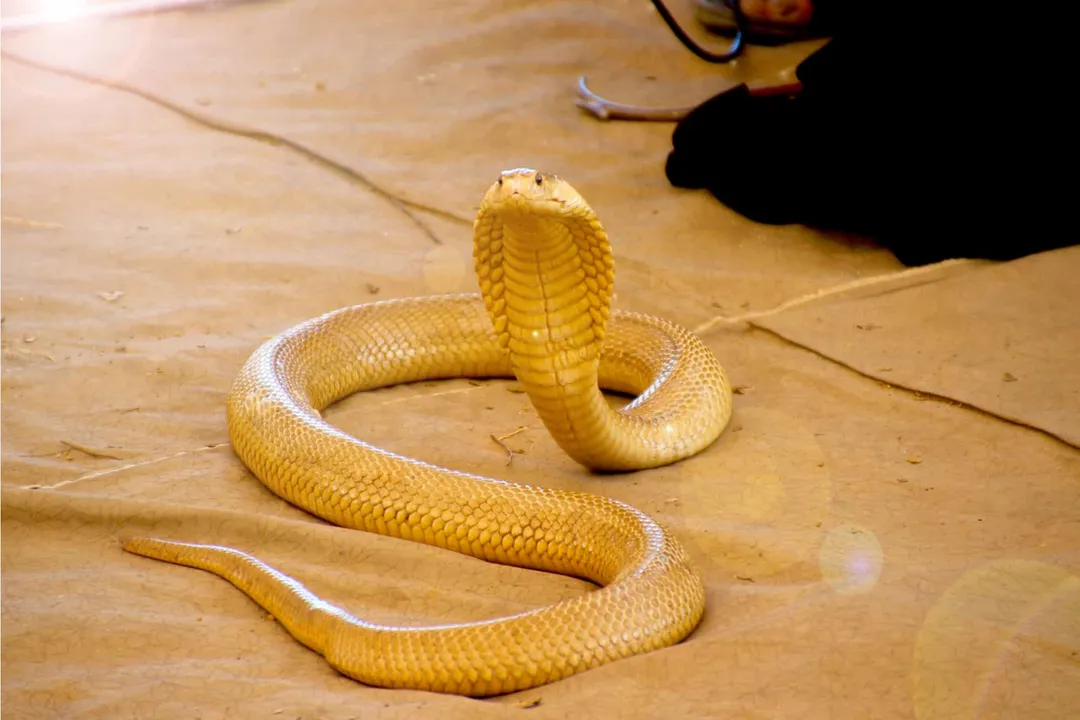
During observations of scavenging behavior in populations near De Hoop, researchers documented specific instances of Cape Cobras feeding on road-killed reptiles. One of the two deceased snakes mentioned was identified scientifically as *Psammophis notostictus*. This scientific nomenclature corresponds to the common name, the Karoo whip snake. The other species documented being scavenged was the *Psammophylax rhombeatus*, known as the spotted slug eater. These specific observations confirm that the carrion consumed by *Naja nivea* includes other snake species.
Related Questions
What consistently ranks as the most frequently consumed item in the Cape Cobra diet across multiple accounts?What unusual feeding behavior sets the Cape Cobra (*Naja nivea*) apart from many other snake species?Which specific bird species' communal nests does the Cape Cobra systematically rob in regions like the Kalahari?What type of venom characterizes the highly venomous Cape Cobra, *Naja nivea*?According to the De Hoop dietary statistics, what percentage of the Cape Cobra diet consisted of Other Snakes?Which specific predator, known for its tough hide and immunity to venom, poses a threat to adult Cape Cobras?During which primary time of day is the Cape Cobra typically actively foraging as a diurnal species?What specific element of conspecific consumption demonstrates cannibalism in the Cape Cobra diet?What species of snake, identified as a *Psammophis notostictus*, was observed being scavenged at De Hoop?What conservation status does the Cape Cobra (*Naja nivea*) currently maintain despite ongoing habitat encroachment?What primary factor contributes to the near-equal weighting of birds, lizards, and conspecifics in the De Hoop dietary data?